istd

ISTD: A Global Standard for Children’s Dance Education

The International Society of Teachers of Dancing (ISTD) stands as a beacon in the realm of dance education, particularly for young enthusiasts around the globe. Established to set and maintain high standards in dance instruction, ISTD has long influenced how dance is taught to children, ensuring that they receive not only skills but also a rich appreciation for this artistic form.

Historical Background of ISTD

The roots of ISTD trace back to the early 20th century, when a group of dance professionals recognized the need for uniformity in dance teaching methods. This led to the formation of an organization that would later evolve into today’s ISTD. The founding premise was simple yet revolutionary: to standardize dance education, making it accessible and consistent worldwide. Over the years, the society has expanded its reach, adapting to changes in the dance world while staying true to its original mission. Today, ISTD’s influence spans continents, shaping how dance is taught and appreciated by young learners.

ISTD Curriculum and Examinations

Central to ISTD’s mission is its carefully structured curriculum, which encompasses a variety of dance forms such as ballet, tap, modern, and jazz. This curriculum isn’t just about teaching steps but ensuring that students understand the essence of each movement and the creativity behind dance. Each level is designed to build on the previous one, ensuring a smooth progression in skill and understanding.

The examination system is another cornerstone of ISTD, providing milestones for students to aim for. These exams aren’t merely tests but celebrations of what students have learned and mastered. Achieving certification at each level is not just about proving skill but also about gaining confidence and a sense of accomplishment. This structured assessment method helps maintain a global standard, with each exam serving as a benchmark that is recognized worldwide.

Training and Certification for Teachers

The quality of dance education largely depends on the caliber of its teachers. ISTD recognizes this and sets high standards for instructors wishing to earn their certification. Teachers aspiring to be certified by ISTD undergo rigorous training that ensures they not only master dance techniques but also learn the best methods to teach those techniques to children. This commitment to training helps maintain uniform teaching standards across all member schools and studios worldwide.

ISTD also offers continuous professional development opportunities, which keep teachers up-to-date with the latest teaching methods and dance trends. This ongoing support is vital, as it ensures that teachers remain engaged and knowledgeable, which in turn enriches the learning experiences of their students. The ability for a teacher to grow and adapt is crucial in the ever-changing world of dance, and ISTD facilitates this growth by providing workshops, seminars, and resources that foster professional improvement.

ISTD’s Global Reach and Influence

With members in over 75 countries, ISTD’s global footprint is impressive. This wide reach is not only a testament to the quality and appeal of its curriculum but also to its ability to adapt to various cultural contexts. By collaborating with other dance education bodies and aligning with international arts organizations, ISTD ensures that its standards are globally recognized and respected. This worldwide network creates a rich community of dance educators and professionals who share knowledge, insights, and opportunities, further enriching the ISTD ecosystem.

The influence of ISTD extends beyond just setting standards. It plays a proactive role in promoting dance education around the world, organizing events and competitions that showcase the talent and hard work of its students and teachers. These events not only highlight the effectiveness of ISTD’s educational programs but also encourage a sense of community and shared passion among dancers worldwide.

Benefits of ISTD for Young Dancers

Joining an ISTD program can profoundly impact a young dancer’s life. The structured curriculum ensures that students not only learn dance but develop a deep understanding and appreciation for the art form. As they progress through levels, they build a repertoire of skills and techniques, which boosts their confidence and provides a solid foundation for future endeavors in dance or any other pursuits.
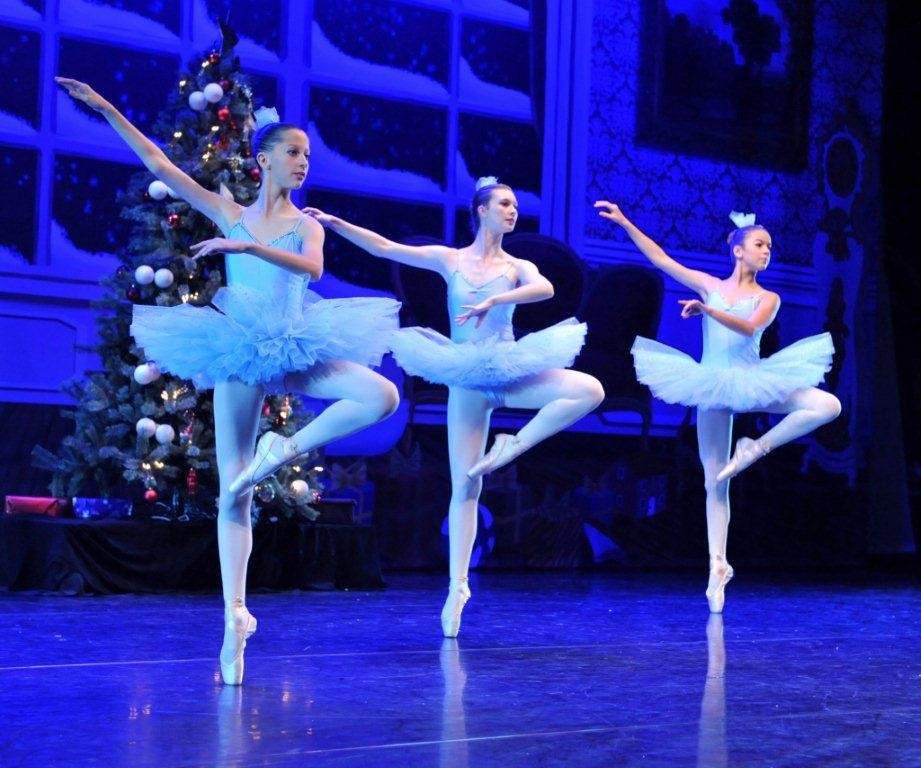
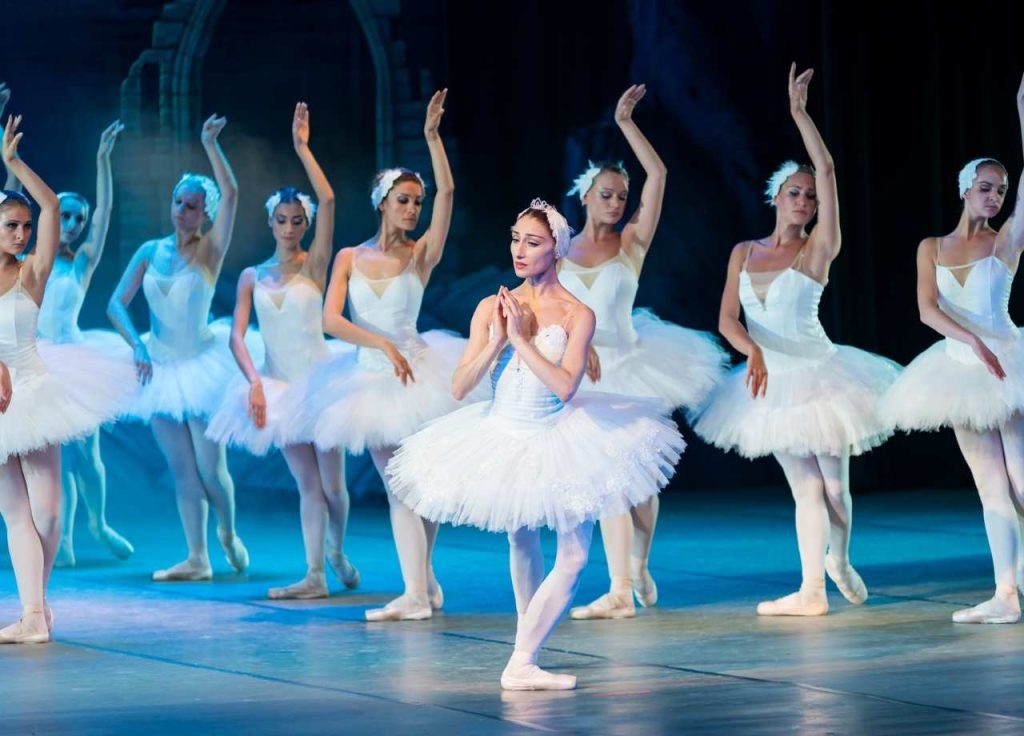
three ballerinas in same pose while on stage with Christmas decorations in the background

Participation in ISTD exams and competitions can be particularly transformative. These events are not just about assessment but celebration. They allow students to showcase their talents, receive valuable feedback, and experience the joy of performing in front of an audience. Such experiences are invaluable in building self-esteem and motivation, which are essential qualities not only in dance but in all areas of life.

The ISTD also opens doors to numerous opportunities, from scholarships and advanced training programs to potential career paths in teaching or professional dance. For many young dancers, these opportunities are the first steps towards fulfilling lifelong dreams in the world of dance, making ISTD an integral part of their growth and success.

Challenges and Adaptations

In its journey to uphold a high standard of dance education globally, ISTD faces several challenges, particularly in adapting to new teaching environments like digital and remote learning. The shift to online classes has required a rethinking of how dance can be taught effectively without the traditional, in-person studio setting. ISTD has responded by developing resources and guidelines that help teachers and students make the most of virtual classrooms, ensuring the continuity of education during times when meeting face-to-face is not possible.

Another significant challenge is addressing the diverse needs of students from different cultural and socio-economic backgrounds. ISTD is committed to making dance education as inclusive and accessible as possible. This means adapting syllabi to be more culturally sensitive and finding ways to lower barriers to entry for students who might not have easy access to traditional dance training facilities.

Choosing The Right School

The Ballet Centre Dubai is the ideal place for ISTD dance training, offering a nurturing environment where students can thrive under expert guidance. Their team of ISTD-certified instructors combines technical precision with a passion for teaching, ensuring every student receives personalized attention. With state-of-the-art facilities and a commitment to fostering creativity and discipline, the centre stands out as a beacon for dance education in the region. Whether your child is beginning their dance journey or aiming to refine their skills, the Ballet Centre provides an exceptional platform to learn and grow.

Conclusion

As ISTD continues to pave the way in standardized dance education for children, it remains a pillar in the dance community, nurturing skilled, confident, and well-rounded dancers. Whether you’re a teacher looking to enhance your qualifications, a student aspiring to develop your dance skills, or a parent considering dance classes for your child, ISTD offers a pathway to excellence in dance that is recognized and respected worldwide.

So why not take a closer look at what ISTD can do for you or your child’s dance journey? It might just be the step you need to take your passion for dance to the next level.
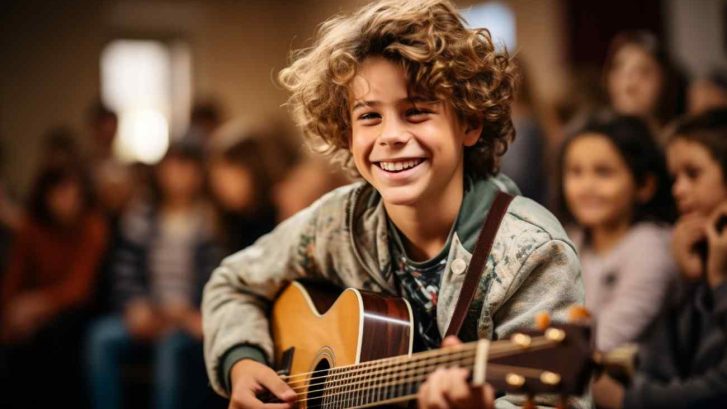
guitar classes

How Guitar Lessons Spark Kids’ Love for Music

Music and children go together like rhythm and beats. Introducing kids to music through guitar lessons can be a doorway to not only learning an instrument but also developing a profound love for musical expression. The guitar, with its appealing sound and hands-on playability, often emerges as a favorite among young learners. Its strings offer a tangible way for kids to feel the music they’re creating, making the experience both fun and educational.

The Psychological Benefits of Learning Guitar

When a child picks up a guitar, the benefits extend far beyond just learning to strum a tune. The process of engaging with music through a guitar can significantly boost cognitive functions. For instance, as they learn to read music and translate it into hand movements, they are enhancing their memory and concentration skills. This mental exercise can improve their ability to focus in other academic areas as well.

Learning an instrument like the guitar also offers children a unique way to express their emotions. It can be a healthy outlet for releasing the joys or frustrations of their day. As they progress and start playing songs they love or creating their own music, they gain a sense of accomplishment. This boost to their self-esteem can be particularly impactful during the formative years, where every small success builds their confidence.

Educational Advantages of Guitar Lessons

Incorporating guitar lessons into a child’s life also brings educational advantages that touch on various aspects of learning. The first, and perhaps most obvious, is gaining a grounding in music theory. Understanding the basics of notes, chords, and scales is akin to learning a new language—a musical one that enhances intellectual development.

Rhythmic skills are another crucial benefit. Playing the guitar requires a good sense of timing and coordination, skills that are transferable to many other areas of life and learning. Furthermore, exploring different genres and styles of music through guitar playing can broaden a child’s historical and cultural knowledge. From classical to rock, each style offers its own history and influences, providing a rich educational tapestry.

Social Impacts of Guitar Playing

Learning to play the guitar doesn’t just nurture a child’s individual skills; it also opens up a world of social opportunities. For young musicians, playing in a group, whether it’s a school band, a local music group, or simply jamming with friends, helps them understand the value of teamwork. This group interaction can enhance their ability to communicate and cooperate with others. It’s about taking turns, listening to each other, and blending their sounds harmoniously. These are valuable life lessons in understanding and respecting others’ contributions.

Moreover, regular guitar lessons and practice sessions offer a structured setting for receiving and giving feedback. Learning how to handle constructive criticism is an essential social skill, and it’s one that music lessons teach subtly and effectively. Kids learn to take advice from their instructors and peers, use it to improve their skills, and also offer their own feedback in a supportive manner. This not only helps them improve as musicians but also teaches them the importance of constructive communication.

Building a musical community is another significant benefit. As children attend lessons and meet other music enthusiasts, they form connections that can last a lifetime. These connections are often based on a shared passion for music and can provide emotional and social support, enriching their lives beyond just the musical aspect.

The Role of Parents and Educators

Parents and educators play a crucial role in a child’s musical journey, especially when it comes to learning an instrument like the guitar. One of the first steps is choosing the right instrument. The size and type of guitar can make a significant difference in how comfortably a child can learn to play. Similarly, finding the right teacher who can connect with the child and understand their unique learning needs is vital. A good match can ignite a child’s passion for music, while a poor match might dampen their enthusiasm.

Creating a supportive environment is also key. This means encouraging regular practice without making it a chore. Parents can help by setting up a consistent schedule and space for practice, free from distractions and conducive to learning. It’s important for parents to show interest in their child’s progress, attend recitals, and listen to practice sessions, all without putting undue pressure on them.

Finally, recognizing and nurturing a child’s musical interests can have a profound impact. If a child shows a keen interest in a particular style of music or enjoys playing by ear, for instance, parents and teachers can support this by providing appropriate resources and opportunities. This encouragement helps kids feel valued and understood, which can motivate them to further explore and develop their musical talents.

Challenges and Solutions in Learning Guitar

Every musical journey comes with its set of challenges, and learning the guitar is no exception. Younger children, for example, might find it hard to focus during lessons or struggle with the physical aspects of playing, such as finger placement and strumming techniques. To address these challenges, teachers can employ creative teaching methods that incorporate games and storytelling to keep lessons engaging and relevant.

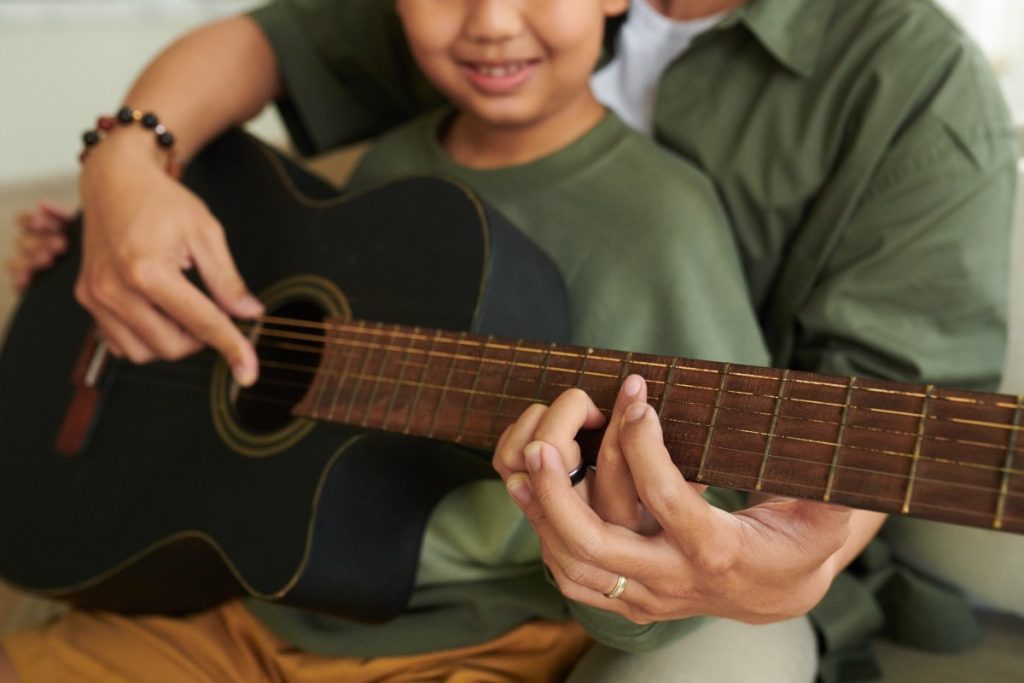
Father Teaching Son Playing Guitar as child smiles

Using technology can also be a game-changer. There are numerous apps and video tutorials available that make learning both interactive and fun. These tools can complement traditional lessons by allowing kids to practice at their own pace and in a way that feels more like play than work.

Celebrating small victories and setting achievable goals can make the learning process rewarding and prevent frustration. Over time, with patience and consistent effort, most children can overcome the initial hurdles and find joy in making music with their guitar.

Adaptive Teaching Strategies

For young guitar learners who face challenges such as short attention spans or difficulty in building finger strength, adaptive teaching strategies are essential. Teachers can tailor lessons to be more interactive and dynamic, using visual aids and physical activities that help reinforce musical concepts and techniques. For example, incorporating color-coded strings can make learning chords easier, while simple finger exercises can be turned into fun competitions to build strength and dexterity.

Games that mix music theory with play are also beneficial. These can include rhythm matching games, musical quizzes, or apps that gamify learning progress. Such methods not only make the learning process enjoyable but also help maintain the child’s interest and enthusiasm over longer periods.

Patience and Persistence: Keys to Musical Mastery

The journey to becoming proficient at guitar requires patience and persistence, not just from the students, but from parents and educators as well. It’s important to set realistic expectations and understand that progress in music, as in any skill, does not happen overnight. Regular encouragement and positive reinforcement can help children push through periods where they feel like they’re not improving.

Encouraging children to stick with their practice can be as simple as setting small, achievable goals and celebrating when they meet them. This approach helps build a sense of accomplishment and a positive association with music learning. It’s about showing them that persistence pays off, and that each little step forward is worth celebrating.

Exploring Guitar in Dubai: A Thriving Hub for Young Musicians

For parents looking to introduce their kids to music, guitar Dubai options are abundant, offering a range of high-quality lessons tailored to young learners. With world-class music academies, experienced instructors, and a vibrant musical community, Dubai is a fantastic place for children to develop their passion for the guitar. Whether enrolling in structured lessons or joining local jam sessions, young musicians in Dubai benefit from a nurturing environment that blends tradition with modern teaching techniques, making learning the guitar an exciting and rewarding experience.

Conclusion

Guitar lessons offer more than just music education for kids. They provide a foundation in discipline, boost cognitive abilities, and foster social skills that extend well beyond the music room. For parents and educators looking to enrich a child’s life through music, the guitar is a fantastic tool due to its versatility and the unique advantages it offers.

If you’re considering guitar lessons for your child or your students, remember that the right approach and a supportive environment can make a significant difference. So why not pick up a guitar and see where this musical journey can take your young learner? Encourage them to strum their first chord today, and watch as they develop a lifelong love for music.

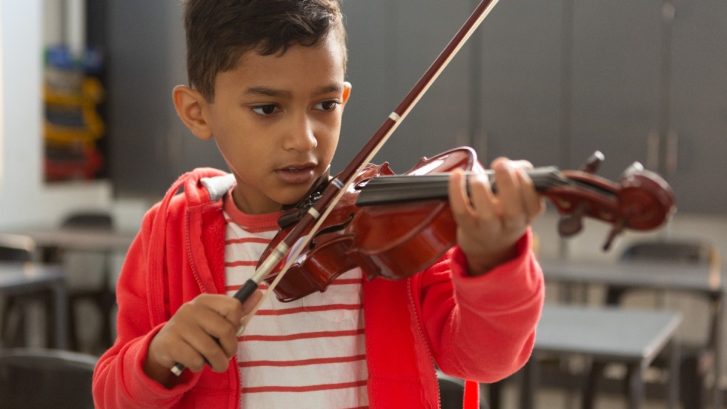
Front view of cute mixed-race schoolboy playing violin in classroom at elementary school

The Amazing Benefits of Violin for Young Learners

When we think about the violin, images of orchestras and elegant solo performances often come to mind. This stringed instrument, known for its beautiful and complex sound, has been a cornerstone of classical music for centuries. However, beyond its artistic value, the violin offers significant benefits to children who undertake its study. Engaging with this instrument from a young age can lead to profound cognitive, physical, and emotional development.

Historical Context of the Violin

The violin first appeared in its earliest form in the 16th century in Italy, quickly becoming central to Western music traditions. Its design and playability have seen refinements over the centuries, allowing for a range of expressions from the dramatic to the subtle. Young virtuosos like Mozart and Mendelssohn, who played and composed from tender ages, are testaments to the early and intimate relationship between children and the violin. Their legacies continue to inspire a new generation of young violinists, proving that starting young can lead to exceptional mastery and a deep love for music.

Cognitive Benefits

Perhaps the most significant impact of violin playing on young learners is cognitive development. Engaging with music, especially complex forms like that produced by the violin, stimulates the brain in unique ways. For one, it requires the musician to memorize patterns and structures, boosting memory power. Children learning the violin must also translate written notes into hand movements, enhancing their ability to interpret abstract symbols—a skill closely linked to mathematics and language learning.

Moreover, playing the violin demands a high level of problem-solving skills. Each piece of music presents a new set of challenges that players must navigate, from interpreting the emotions conveyed in the score to adjusting their technique to achieve the perfect sound. This constant analytical activity sharpens critical thinking skills, which are applicable in many other areas of study and daily life.

Lastly, the violin can significantly enhance a child’s focus and attention to detail. Learning to play requires concentration, as even slight variations in finger position or bowing can change the music’s quality. This intense focus can carry over to academic settings, helping young learners excel in their studies and maintain better overall concentration during tasks.

Physical Benefits

When it comes to physical development, the violin proves to be much more than just an instrument. It is a tool for enhancing fine motor skills and physical coordination. Each time a child picks up the violin, they engage in a delicate dance of fingers, hands, and arms. Managing the bow requires precise arm movements and control, while fingering the strings demands agility and fines. This intricate balance of motions helps to sharpen fine motor skills which are crucial not just for musical performance but for everyday tasks such as writing and using small objects.

Moreover, playing the violin is a subtle yet effective way to improve posture. Children must maintain a specific stance to hold and play the violin correctly—standing straight, holding the violin with the left shoulder, and balancing it with the chin. This encourages good posture, which over time can become a habit extending beyond music lessons. The strength and stamina needed for holding the violin also promote muscular development in the upper body, contributing to overall physical health.

Emotional and Social Benefits

The emotional benefits of violin playing are profound. Music, by its very nature, is an emotional art form, and learning to express oneself through the violin can help young learners connect with their inner feelings. Playing the violin allows children to express joy, sadness, and a myriad of emotions in between, providing a constructive outlet for their feelings. This emotional expression is a healthy way for children to explore and deal with complex emotions, contributing to emotional maturity.

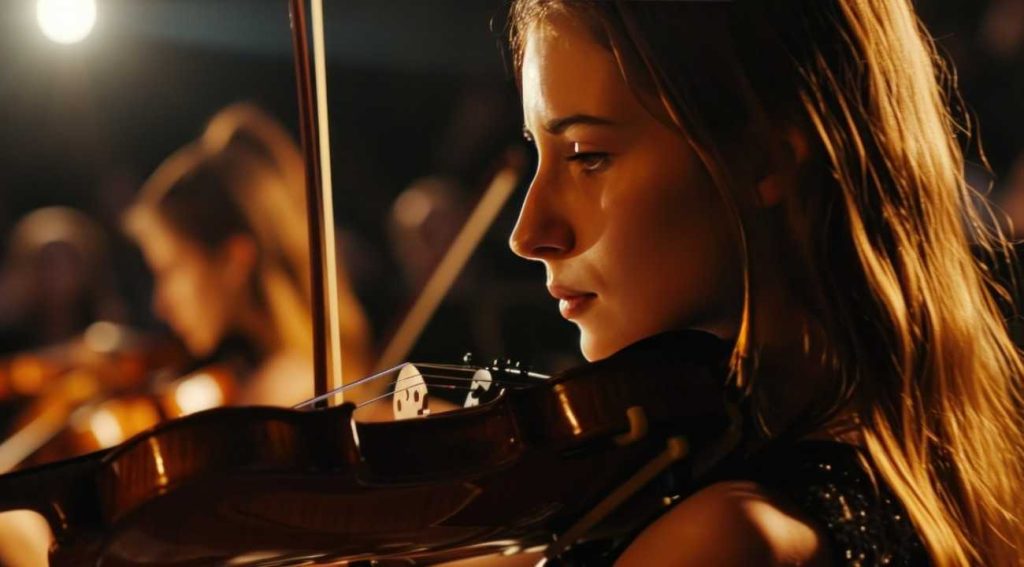
learn violin in dubai

Furthermore, learning the violin opens up numerous social opportunities. Joining an orchestra or ensemble is not just about making music together; it’s about being part of a community. For young violinists, this community can be a place of belonging and a source of support. Collaborating with others in a group teaches children valuable social skills such as teamwork, communication, and mutual respect. These experiences are instrumental in building confidence and self-esteem, as children see the results of their contributions to group efforts.

Academic Advantages

The influence of violin playing on academic success is well-documented. Numerous studies have shown that children who engage in musical training perform better in a range of academic subjects, particularly in languages and mathematics. The process of learning to read music involves recognizing patterns and structures, skills that are directly applicable to the mathematical concepts of sequencing and proportion.

Additionally, music education has been linked to better reading abilities in young learners. The skills developed through music reading, such as phonological awareness and auditory discrimination, are fundamental to reading spoken language. Children who practice the violin regularly often show an enhanced ability to concentrate and pay attention in class. The discipline and focus required to master a musical instrument translate into improved academic performance across the board.

Long-Term Benefits

The advantages of learning the violin extend far beyond childhood and adolescence. For many, this early musical training paves the way for lifelong engagement with music, whether as a hobby or a professional pursuit. Regular practice and performance develop a discipline and resilience that can serve students well throughout their lives, encouraging a persistent work ethic and an ability to face challenges head-on.

Additionally, the violin can foster a profound appreciation for culture and the arts. As young musicians explore different composers and musical styles, they gain insights into various cultural and historical contexts, enhancing their cultural literacy and broadening their worldview. This aesthetic awareness can enrich personal experiences and social interactions, promoting a more nuanced understanding of the world.

Conclusion

From boosting cognitive abilities and physical coordination to enhancing emotional expression and social skills, the benefits of learning the violin are comprehensive and impact every facet of a young learner’s life. The skills and disciplines they acquire go on to support academic excellence and personal growth long into adulthood.

So, if you’re considering a new activity for your child or looking for a way to enrich their education and personal development, why not explore violin lessons? It’s more than just music; it’s a foundation for a lifetime of learning and enjoyment. Let’s help them start this journey and see where it takes them!

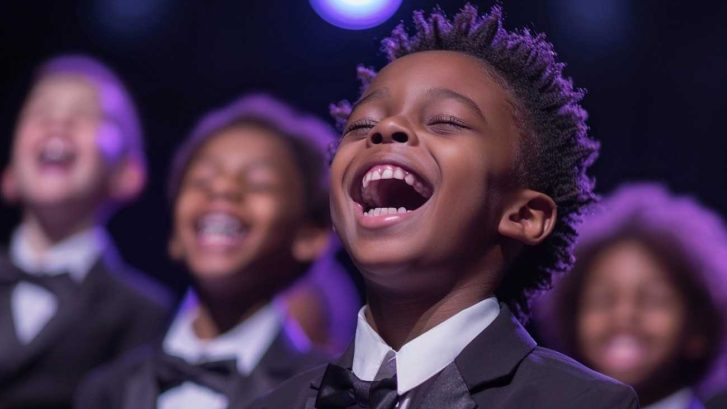
Young boys dressed in tuxedos singing

Performing Arts for Kids: Fun, Focus, and Growth

The performing arts offer more than just a chance to play dress-up and learn lines. For children, these activities serve as a foundation for personal development across multiple areas of their lives. From the school stage to the dance studio, kids who engage in these forms of expression often find themselves equipped with skills that extend far beyond the basic ability to entertain. This exploration looks into how acting, dancing, and musical performance can shape a child’s capacity for fun, focus, and growth.

The Fun Element: Engaging Children Through Performing Arts

One of the most visible aspects of performing arts is the sheer joy it brings to children. Whether it’s the thrill of nailing a dance routine or the excitement of taking on a new persona on stage, these activities are naturally designed to be enjoyable. This enjoyment is critical as it serves as the initial hook that draws children into the world of arts. What begins as play, often develops into a passionate pursuit, making performing arts an ideal avenue for exploration and self-discovery.

The engagement doesn’t stop at the individual level. Group performances and ensembles create a sense of community among young participants. This community aspect helps sustain interest as children enjoy not only the activities themselves but also the social interactions they foster. When kids work together to put on a show or concert, they share moments of success and challenge, creating memories that enhance the fun of participating.

Cultivating Focus: The Discipline Behind the Performance

While performing arts are fun, they are not without structure. The discipline required to learn lines, master dance moves, or perfect musical pieces teaches children an important life skill: focus. This focus is cultivated through regular practices where children must pay attention to detail, from their physical movements to their emotional expressions.

The benefits of this disciplined approach are far-reaching. It instills a work ethic that can help in academic and personal life. The repetitive nature of rehearsals encourages a mindset where persistence and dedication lead to improvement and eventually, success. This is a valuable lesson in an age where instant gratification is the norm. Kids learn that real achievement takes time and effort, and the pride they feel in their performance is directly linked to the work they put in.

These structured activities also teach children how to manage their time efficiently. Balancing school, homework, and other extracurriculars with rehearsals and performances can help children develop time-management skills from an early age. This is particularly beneficial as they grow and face more complex challenges.

Growth and Development Through Performing Arts

Participating in the performing arts serves as a catalyst for comprehensive personal development in children. Emotional growth is particularly evident, as children learn to understand and express a range of emotions through their performances. Whether portraying a character in a play or expressing a theme through dance, children explore new emotional landscapes, which can lead to a greater understanding of themselves and others. This emotional exploration helps develop empathy, as they put themselves in someone else’s shoes, so to speak, understanding different perspectives and feelings.

Social benefits are equally significant. Performing arts require collaboration; children must work closely with others, whether they are fellow actors, dancers, or musicians. This teaches them the importance of teamwork and communication. They learn to listen to others, share their ideas, and resolve conflicts. These social skills are vital and transfer well into other areas of life, including school and family interactions.

Cognitively, the performing arts encourage children to use their memory, attention to detail, and problem-solving skills. Learning lines, choreography, or musical scores boosts memory capacity and attention to detail. Meanwhile, interpreting a role or a piece of music can be a complex problem-solving activity, challenging children to find the best way to express artistic ideas. This enhances creative thinking, which is critical not only in academic settings but in everyday life decisions.

Performing Arts and Academic Performance

The skills gained through performing arts often translate into improved academic performance. Research suggests a correlation between arts involvement and higher academic achievement; children engaged in the arts tend to have better grades and are more likely to achieve academic honors. The reasons are multifaceted but clear. The focus and discipline learned through performing arts help children in their studies. The ability to sit and concentrate for long periods during rehearsals can make homework sessions more productive.

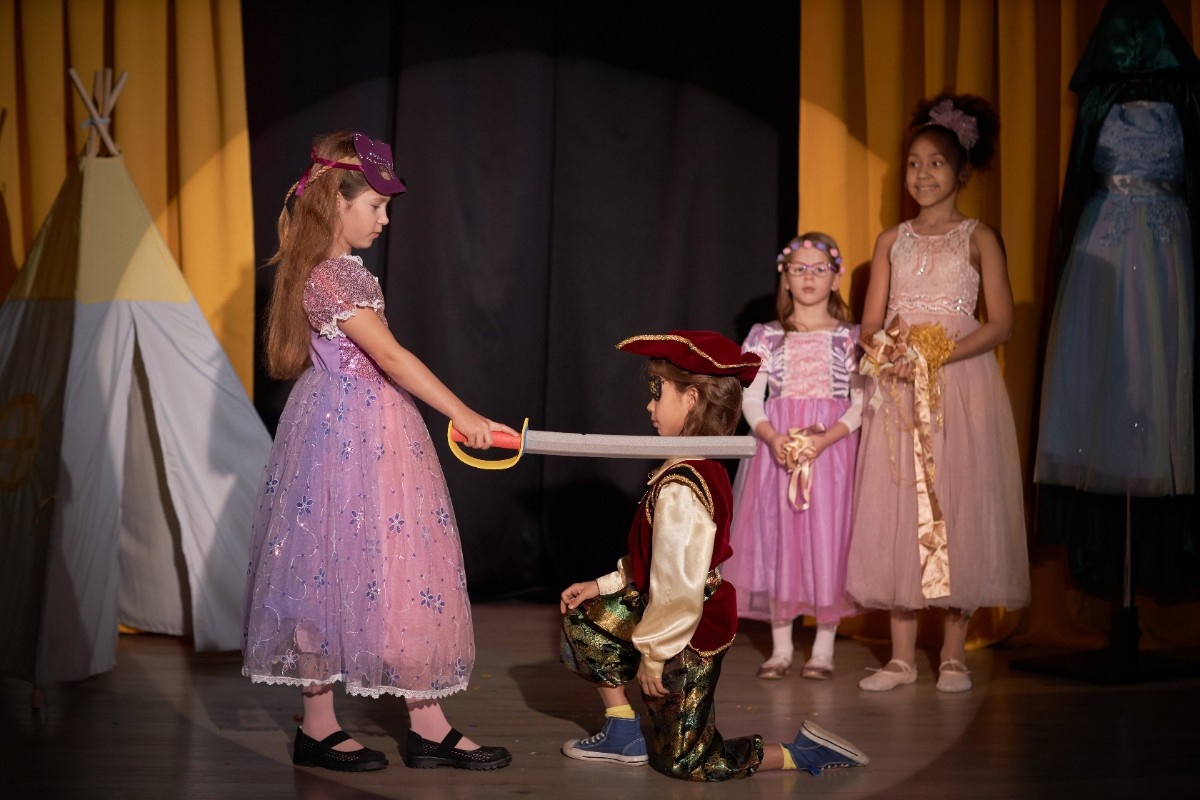
Girl on Stage in School Play as boy is knighted by the girl

Additionally, the creative thinking skills developed in the arts can enhance problem-solving abilities in math and science. The interpretative skills used in determining how to play a character or perform a dance can be used in interpreting literature and historical events. Not to mention, the improved memory skills help with vocabulary and fact retention across subjects.

Building Confidence and Self-Expression

One of the most profound benefits of performing arts is the growth in confidence and self-expression that it fosters in young participants. Standing up on stage, a child is not just performing; they are also putting themselves and their abilities on display. This can be daunting, but with positive feedback and the support of peers and mentors, children learn to overcome their fears and embrace their talents.

The applause that follows a well-delivered performance can be incredibly affirming for a child. It confirms their ability and hard work, boosting their self-esteem. Over time, the confidence gained from performing can influence every aspect of a child’s life, making them more willing to raise their hand in class, take on leadership roles, and express their opinions.

Moreover, performing arts provide a platform for personal expression that might not otherwise be available in the typical school curriculum. Through the roles they play, the dances they perform, and the songs they sing, children explore various aspects of their identity. They have the opportunity to express thoughts and emotions that might be difficult to articulate in other formats. This form of expression is vital for emotional health and develops a sense of individuality.

Inclusivity in Performing Arts

Performing arts programs offer unique opportunities to embrace inclusivity, making them accessible to children from all walks of life, including those with different abilities and cultural backgrounds. These programs can be especially empowering for children who might feel marginalized in other settings. By adapting performances to include various languages, themes from different cultures, or modified roles that accommodate physical or developmental challenges, organizers can foster a welcoming environment for all participants.

This inclusive approach not only enriches the program with diverse perspectives but also teaches all participants valuable lessons about acceptance and respect. Children learn that everyone, regardless of their background or abilities, has something valuable to contribute. This can be a powerful antidote to the exclusion they might encounter elsewhere, reinforcing the idea that the arts are a realm where everyone can shine.

How to Get Your Child Involved in Performing Arts

Getting your child involved in performing arts can begin with something as simple as attending a school play or visiting a local theater performance. For parents looking to encourage an interest in the arts, start by exploring what your child is most drawn to—be it music, dance, or drama—and then look for classes or workshops in your area. Many community centers, schools, and independent studios offer a range of options that cater to different age groups and skill levels.

It’s also important to encourage regular practice and to be a supportive audience. Regular practice at home can reinforce the skills learned in classes, while your presence at performances shows your child that you value their efforts and are proud of their progress. If your child is nervous about performing, reassure them that it’s natural to feel a bit anxious and that every performer goes through it.

Conclusion

The performing arts are more than just an extracurricular activity. They are a vibrant avenue for fun, focus, and growth that can significantly impact a child’s development. From boosting cognitive and social skills to enhancing emotional expression and confidence, the benefits are profound and lasting. So why not see what a class or workshop could do for your child? Whether they’re stealing the spotlight or working magic behind the scenes, the skills and memories they develop will last them a lifetime. Let’s give our kids the stage and watch them shine.

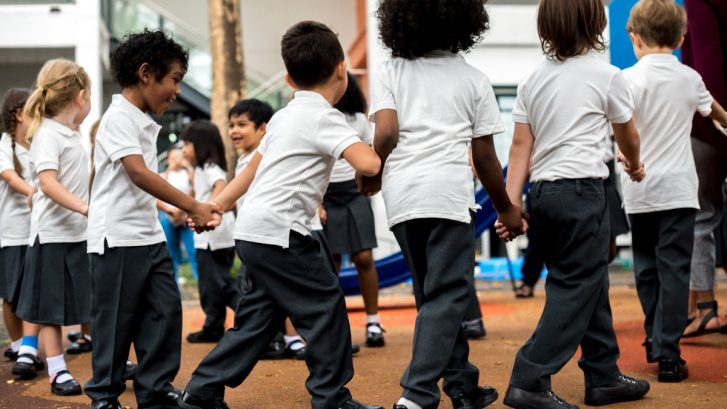
Group of diverse kindergarten students standing holding hands

How Tap Dancing Classes Boost Rhythm and Coordination

Tap dancing is more than just a fun activity; it’s a complex dance form that offers significant benefits in rhythm and coordination. At first glance, tap might seem like a series of quick steps and noisy taps, but there’s a rich tradition behind those rhythmic beats that can enhance both physical and mental abilities.

The Basics of Tap Dancing

Tap dancing involves wearing shoes fitted with metal taps on the heels and toes, which create a percussive sound when struck against a hard surface. This dance form combines elements of musicality, rhythm, and dance movements to produce captivating performances. It’s unique in that dancers are required to become musicians as well, using their feet to create timely beats and rhythms.

The essence of tap dance is its focus on timing and rhythm. This requires dancers to not only perform complex footwork but also to do so in sync with the accompanying music, whether it’s a swinging jazz number or a pulsing contemporary piece. The key to mastering tap is not just in making noise but in making music with your feet. Learning the basic steps—like shuffles, flaps, and cramp rolls—is the first step towards understanding the rhythmic patterns that are the heartbeat of tap dancing.

Understanding Rhythm Through Tap Dancing

In tap dancing, rhythm is everything. It’s about more than just following a beat; it’s about internalizing this beat and expressing it through precise and intentional footwork. Dancers learn to listen to the music and their own tapping to maintain a consistent tempo and rhythm. This practice develops a keen auditory sense that is crucial for musicality in dance.

Regular tap classes challenge dancers to think on their feet—literally. As they practice, they begin to naturally feel the tempo and changes in the music, which teaches them how to anticipate and react during their performances. This skill is invaluable not just in dance but in everyday life where timing and rhythm are often overlooked yet essential skills.

Improving Coordination with Tap Dancing

Tap dancing is not just about the feet; it requires full-body coordination. Dancers must coordinate their footwork with arm movements and body positions while maintaining proper dance posture. This level of coordination is developed through repetitive practice and increasingly complex routines that require dancers to execute different movements simultaneously.

For instance, a tap dancer might need to perform a series of quick steps while rotating their arms and maintaining an upright posture. This multitasking sharpens the mind and body, teaching them to work in harmony. Such coordination is crucial, as it enhances not only dance skills but also the ability to perform multiple tasks efficiently in other areas of life.

Through tap dance, individuals learn to control their bodies with precision and elegance, making it an excellent form of exercise for improving overall body coordination and agility. The physical demands of executing precise movements accurately also enhance muscle memory, contributing to smoother, more fluid movements both on and off the dance floor.

Cognitive Benefits of Learning Tap Dancing

Tap dancing isn’t just about moving your feet; it’s a mental exercise too. Every tap dancer knows that remembering the sequences and steps requires concentration and a sharp memory. This is particularly true as dancers advance and the routines become more complex. Juggling different rhythms and steps challenges the brain, keeping it as active as the feet.

The process of learning and mastering new tap routines boosts cognitive functions in multiple ways. It improves focus because dancers must concentrate not only on their steps but also on the timing and the music. This kind of focused practice can help sharpen attention spans over time, which is beneficial both on the dance floor and in daily tasks.

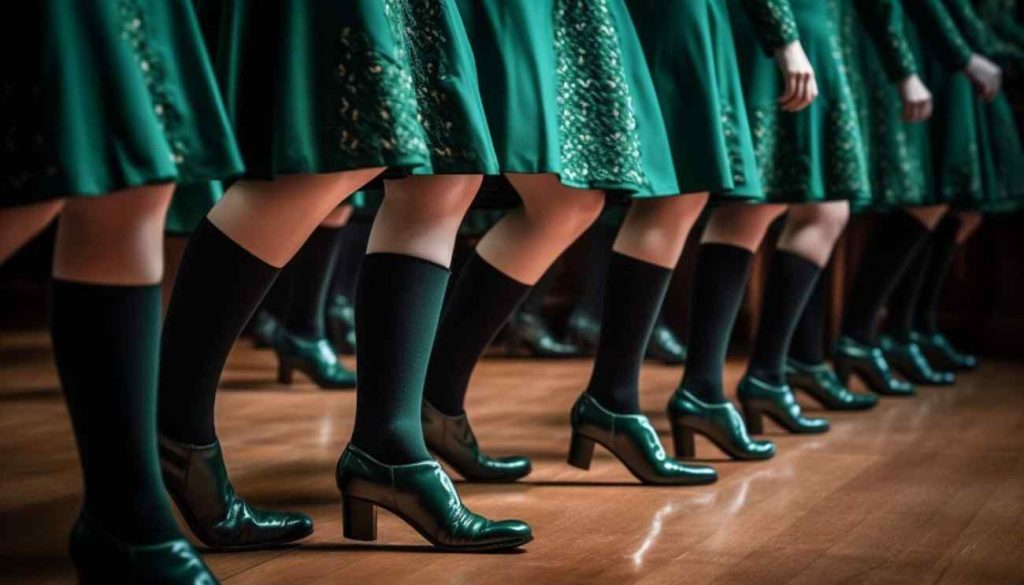
women weating green skirts black socks and tap dancing shoes in a line

Moreover, tap dancing is an excellent workout for your memory. Dancers often have to remember long, intricate combinations and perform them in perfect sync with music and other dancers. This regular mental workout increases neural plasticity, which is the brain’s ability to reorganize itself by forming new neural connections. Over time, this can lead to quicker learning and better memory retention, not just in dancing but in other areas of life as well.

Physical Health Benefits

Dancing may seem like it’s all about the steps and the music, but it’s also a full-body workout that can contribute significantly to overall physical health. Tap dancing, with its rapid footwork, requires agility and cardiovascular endurance. Regular tap dance sessions can improve cardiovascular health by elevating the heart rate, similar to how jogging or cycling would.

Balance and agility are other significant benefits of tap dancing. Navigating the quick steps and intricate combinations typical of tap helps strengthen the core and improve balance. This can be particularly beneficial as we age, as maintaining balance and core strength can help prevent falls and related injuries.

Furthermore, tap dancers often experience increased flexibility and strength. The movements involve bending, twisting, and often jumping, which helps stretch and tone various muscle groups. Regular practice not only builds lean muscle but also enhances muscular endurance, making everyday activities easier and reducing the risk of injury.

Social and Emotional Benefits

The social aspects of tap dancing are often as enriching as the physical and mental ones. Tap classes are usually communal, offering a chance to meet new people and build friendships around a shared interest. For many, the dance studio becomes a community hub where all the worries of the day melt away with the music and rhythm.

This social interaction boosts emotional well-being. Engaging with others in a fun, active setting can significantly lessen feelings of stress and anxiety. What’s more, the very act of tap dancing can be a joyful way to express oneself. Dancers often speak of the sheer happiness that comes from tapping their way across the floor, the rhythms creating a soundtrack to their own movements.

Moreover, the emotional highs of mastering a new tap routine or nailing a performance can increase self-confidence and provide a sense of accomplishment. These are not just feelings; they are profound responses that can elevate mood and outlook, providing a positive impact well beyond the dance studio.

Emotional Uplift from Tap Dancing

Participating in tap classes can be a significant emotional booster. The very act of rhythmic tapping is an exercise in self-expression, allowing dancers to channel emotions through their movements. The satisfaction of mastering a tap sequence offers a genuine sense of achievement, bolstering self-esteem. Additionally, the upbeat and rhythmic nature of tap music, combined with the physical activity, can help elevate moods and combat stress. It’s a natural mood enhancer, where the endorphins released during physical activity meet the joy of dancing to create a potent mix of feel-good factors.

Practical Applications of Tap Dancing Skills

The skills developed in tap dancing extend beyond the dance studio. The rhythm and coordination honed on the dance floor have real-world applications, too. For example, athletes can improve their agility and footwork, while musicians might find a better sense of timing and rhythm through tap. Even non-performers find that the concentration and pattern recognition skills gained from tap help in their everyday tasks, making them more adept at handling complex situations and multitasking.

The benefits of tap dancing are as practical as they are profound, helping individuals develop a disciplined approach to learning and an adaptable mindset, both of which are valuable in any life scenario.

Conclusion

Whether you’re looking to improve your physical fitness, enhance your cognitive abilities, enjoy a vibrant social environment, or simply have fun, tap dancing offers all these benefits and more. It’s an engaging, energizing form of exercise that enriches your life, keeps your brain active, and your body agile. So why not lace up those tap shoes and step into a class? Tap into the rhythm of life, meet new friends, and discover what you can achieve with just a bit of tap!

dubai dance academy

How to Pick A Good Dance Academy

Choosing the right dance academy is a decision that can shape your dance career or enhance your passion for the art. Whether you’re stepping onto the dance floor for the first time or you’re an experienced dancer aiming to hone your skills, the place where you train is crucial. Let’s walk through the considerations that can help you select an academy that not only meets your needs but also inspires you to excel.

Understanding Your Dancing Goals

Before you start looking at different dance academies, it’s important to clear about what you want to achieve. Are you dancing just for fun, looking to stay active, or do you have aspirations to compete professionally? Your goals will dictate the type of academy you should be looking for. For instance, if you’re into dance as a hobby, a local community academy with a relaxed environment might be ideal. On the other hand, if you’re aiming to make a career out of dance, you’ll want an institution that offers rigorous training and has a track record of producing professional dancers.

Types of Dance Styles Offered

The variety of dance styles an academy offers can also influence your choice. Each dance form, from ballet to hip-hop, has its own set of techniques and expressions. If you have a specific style in mind, look for an academy that specializes in that area. An academy focused on ballet, for example, will have the right facilities, knowledgeable instructors, and a curriculum that’s geared towards classical training. Alternatively, if you’re still exploring different styles, find a place that offers a range of classes so you can try out various styles and see what fits best.

Faculty and Instructors

The quality of instruction is perhaps the most critical factor. A good teacher does more than teach dance; they inspire and challenge you. Look into the qualifications and background of the instructors at the academy. Experienced and well-trained instructors can provide the technical skills needed to excel. Also, consider the teaching style of the faculty; it should match your learning preferences. If possible, attend a few classes or watch a session to get a feel for how instructors interact with students. This can tell you a lot about how supportive an environment the academy offers.

Facilities and Location

The physical space where you’ll be training is another important consideration. A good dance academy will have spacious, well-maintained studios with proper flooring, which is essential for preventing injuries. Look for a place with ample room and good lighting, which will make your training sessions more enjoyable. Additionally, consider the location of the academy. It should be conveniently located to encourage regular attendance. If it’s too far away, the commute might become a barrier to consistent training, which is crucial for any dancer’s development.

Class Size and Structure

When picking a dance academy, the class size can significantly influence your learning experience. Smaller classes mean more personalized attention from the instructor, allowing you to progress faster and get immediate feedback on your technique. On the other hand, larger classes might give you less direct interaction but provide a lively environment that can be highly motivating. Think about what learning atmosphere you thrive in. Some dancers excel in a bustling class, while others need the quiet focus of a smaller group.

Also, take a look at how the classes are structured. Does the academy have a clear progression pathway from beginner to advanced levels? This structure is crucial as it ensures that you’re building your skills on a solid foundation, without missing crucial steps along the way. A well-organized curriculum will help you understand your progress and milestones, which can be incredibly satisfying and motivating.

Performance Opportunities

One of the joys of dancing is the chance to perform. Performances give you a goal to work towards and can be tremendously rewarding. When choosing your dance academy, consider what performance opportunities they offer. Does the academy host annual recitals? Are there opportunities for competitive dance? Or perhaps they have an end-of-year showcase?

These events are not only fun but also play a critical role in your development as a dancer. They teach stage presence, improve your confidence, and provide a taste of professional dancing if you’re looking to pursue dance as a career. Also, they are a great way to see all your hard work pay off. When visiting potential academies, ask about their calendar of performances and the types of venues they use. It’s a bonus if they have connections with local theaters or other professional platforms.

Community and Culture

The vibe of an academy can make a big difference in how much you enjoy going to classes. It’s important to find a place where you feel supported not just by the teachers but also by fellow students. A positive, welcoming environment fosters a sense of community that can keep you motivated through the inevitable ups and downs of dance training.

When you visit, pay attention to how people interact. Do the students seem happy and engaged? Are the teachers approachable and attentive? Don’t hesitate to talk to other students and ask about their experiences. A strong community feel can make all the difference, especially if you’re spending several hours a week at the studio. You want to ensure it’s a place where you can build friendships and feel a part of something bigger than yourself.

Tuition and Additional Costs

Now, let’s talk about costs, which can be a deciding factor for many. Understandably, dance classes are an investment. When considering different academies, be clear about the tuition fees and what they cover. Some might include costumes and recital fees in their upfront costs, while others may charge extra for these items.

It’s also worth asking about payment plans or scholarships that could make the training more affordable. Remember, the cheapest option isn’t always the best. Consider what you’re getting for your money—quality instruction, good facilities, performance opportunities, and a supportive community are often worth paying a bit more.

A mother and daughter wearing ballet dance wear as they sit and watch something on a latop

Moreover, factor in other potential costs like dance wear, travel to competitions, and any additional workshop fees. A good academy will be transparent about all potential expenses from the start, allowing you to budget effectively and avoid any surprises down the line.

Visit and Trial Classes

Visiting the dance academies you’re considering is a step you shouldn’t skip. Think of it as test-driving a car before you buy it. Most academies offer trial classes, which are a fantastic way to get a real feel for the teaching style and the class dynamics. During your visit, observe not just the class itself but also how the instructors interact with students before and after class. Are they approachable and knowledgeable? Do they provide feedback in a way that’s constructive and encouraging?

Additionally, take note of the facilities during your visit. Are the studios well-maintained? Is there enough space for everyone? This is your chance to ask any lingering questions you might have about schedules, performances, class sizes, and anything else you’re curious about. Remember, the more information you gather, the better equipped you’ll be to make the right decision.

Reviews and Testimonials

Lastly, take some time to look up what other people are saying about the academies you’re considering. Online reviews and testimonials can be very telling. They can provide insights into how well the academy delivers on its promises and how satisfied students and parents are with their experiences. Look for comments about the quality of teaching, the atmosphere, and the overall satisfaction with the progress made by students.

While reviews are helpful, keep in mind that everyone’s experience is unique, and what works for one person might not be perfect for another. Use reviews as a guide, not the sole deciding factor.

Ballet Centre Dubai

Ballet Centre Dubai offers a comprehensive environment tailored to both aspiring dancers and those passionate about the art. With experienced instructors, top-notch facilities, and a welcoming community, Ballet Centre ensures each dancer receives the guidance they need to thrive. Whether for recreational dance or professional training, Ballet Centre Dubai provides the perfect foundation for growth and excellence in every step.

Conclusion

Choosing the right dance academy is a big decision, but it doesn’t have to be overwhelming. By clearly understanding your goals, evaluating the styles, instructors, and facilities, and considering the overall environment and costs, you can find a place where you will thrive. Remember, the best academy for you is one that aligns with your personal dance ambitions and feels like a second home. So take your time, do your homework, and trust your gut. Ready to lace up those dance shoes and start your journey? Go out there and find the perfect dance academy that hits all the right notes for you. Happy dancing!

ballerina outfit

Guide to Ballerina Outfits: Styles and Essentials

The outfit you choose plays a significant role not just in how you perform but also in how you feel while dancing. A well-chosen ensemble supports the dancer’s body, allowing for the precise, graceful movements that ballet is known for. Let’s break down the core components of a ballet dancer’s wardrobe, focusing on why each piece is crucial and what options you have.

Core Elements of a Ballerina Outfit

Starting with the leotard, it’s more than just a tradition in ballet attire. The leotard is the foundation of a dancer’s outfit because of its snug fit that allows instructors and choreographers to observe the dancer’s form closely. There are several styles to consider, each with its own benefits. Tank leotards are popular for their comfort and ease of movement, while camisole leotards offer delicate straps that provide freedom for the upper body, making them ideal for performances where aesthetics might be as crucial as functionality. Long-sleeve leotards offer more coverage and support, which can be beneficial in cooler environments or for dancers who prefer a modest look. Material-wise, most leotards are made from blends of cotton, nylon, or spandex—each fabric offering benefits like breathability, durability, and stretch.

Next are tights, which are more than just a uniform piece—they are essential for muscle warmth and flexibility. Ballet tights come in a variety of styles: footed tights cover the entire foot, offering a clean line and protection; footless tights end at the ankle, which can be practical for contemporary styles or rehearsals where you might switch to bare feet or other footwear. Convertible tights have a small hole under the foot, making it possible to roll them up to cool down or apply foot care between routines without removing the tights. The classic colors are pink, black, and tan, with pink often used to extend the line of the leg in classical ballet performances.

Skirts in ballet, such as the wraparound or the pull-on, add an aesthetic layer to the practical attire beneath. While not always used in class, they are essential for certain types of performances and can be a beautiful part of a dancer’s practice attire as well. Wrap skirts tie at the waist and can be adjusted for fit and comfort, offering a flutter of fabric that enhances movement and grace. Pull-on skirts, made from soft, stretchy materials, are straightforward to wear and offer a sleeker look. For performances, especially in classical ballet, tutus define the silhouette and are often custom-fitted and designed to match the production’s aesthetic theme.

Additional Outfit Essentials

Consider the rehearsal or class environment when choosing warm-up gear. Items like leg warmers, knit shorts, and ballet sweaters are practical; they keep muscles warm and ready to move. Many dancers throw these on during the first part of class or during breaks to maintain body heat, which is crucial for flexibility and injury prevention.

For hair, it’s all about keeping it neat and out of the way. A tidy bun is the most common hairstyle because it ensures that hair doesn’t distract during class or performances. Securing this with hairpins and a net helps keep everything tidy throughout vigorous movements.

Undergarments are another layer of the outfit often overlooked but vital. Specialized dance undergarments are designed to be seamless and supportive without showing under leotards and tights. These pieces provide the necessary coverage and support, allowing dancers to move with confidence and ease.

Choosing the Right Style for Different Ballet Classes and Performances

Your ballet attire should reflect the type of class or performance in which you are participating. In classical ballet classes, traditional colors and styles are often required. A clean, simple leotard and pink tights facilitate a uniform look that allows instructors to easily assess form and technique. For contemporary dance or character classes, you might have more freedom to express yourself with different colors and cuts, depending on the teacher’s preferences.

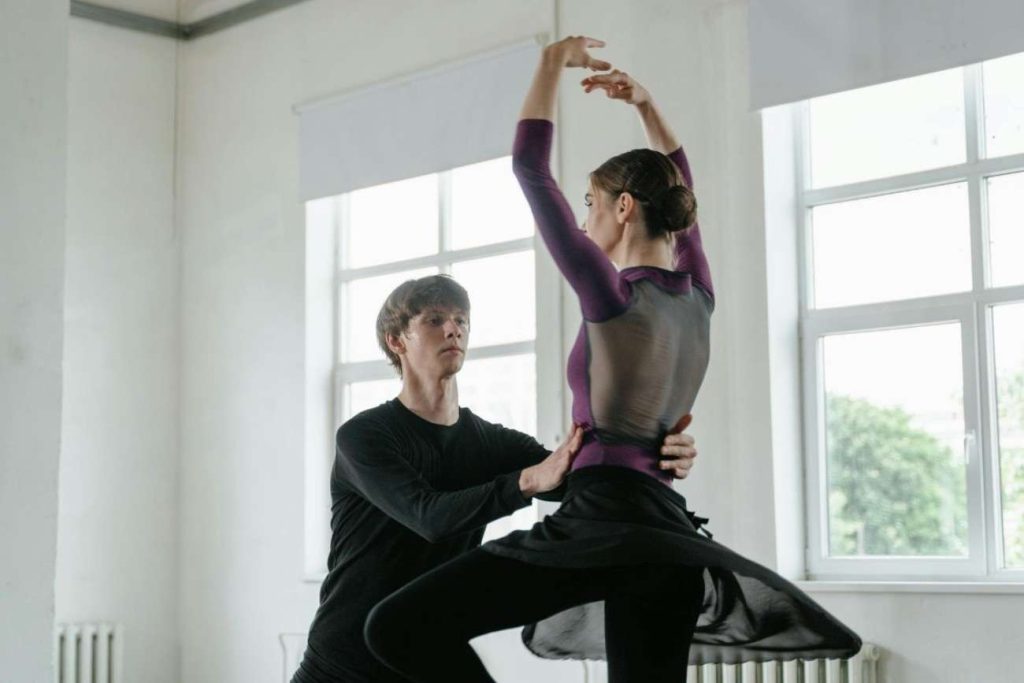
a balletina in a pose with hands up while a male ballet dancer holds her waist

Advanced dancers often need specialized attire for different performances. For example, partnering work might require more supportive leotards and tights that provide extra security. Recitals and auditions call for polished outfits that stand out yet still adhere to the often strict guidelines of ballet dress codes. Knowing the requirements and expectations of your ballet school or company can guide your choices, ensuring you not only look the part but also feel comfortable and supported in your movements.

Fitting Tips and Sizing Advice

Finding the right fit for your ballet attire is crucial. It can make the difference between a distraction-free class and one where you’re constantly adjusting your outfit. When it comes to leotards, the fit should be snug to allow your instructor to see your body alignment and muscles as you move. However, it shouldn’t be so tight that it cuts into your skin or restricts your breathing. If you find the seams are pressing into your skin or you’re leaving class with red marks, it’s a sign your leotard is too tight. On the other hand, excess material or bunching indicates a leotard that’s too loose, which can get caught or shift during movements.

For tights, the key is ensuring they complement the fit of your leotard without causing discomfort. Tights should be smooth against the skin with no wrinkling or sagging. Convertible tights are particularly handy as they allow dancers to switch between covered toes or bare feet during rehearsals or classes without needing to change entire outfits. A good pair of tights acts as a second skin, providing support and enhancing the lines of your legs without restricting circulation.

Ballet shoes are perhaps the most personalized part of a dancer’s wardrobe. They should feel like a part of your foot, offering protection and flexibility. Shoes that are too small can cause long-term damage to toes and nails, while shoes that are too large won’t offer the necessary support, making slips more likely. Leather shoes will stretch and mold to your feet, offering durability and a classic look, whereas canvas shoes are lighter and often preferred in warmer climates or more humid studios. Satin shoes are typically reserved for performances due to their aesthetic appeal but are less durable for daily use.

Care and Maintenance of Ballerina Outfits

Taking care of your ballet outfits not only keeps them looking good but also extends their life, ensuring they continue to perform as needed. Leotards require gentle washing, often by hand, with a mild detergent to preserve the fabric’s elasticity and finish. Air drying is preferable as high heat from dryers can break down the material and cause it to lose its shape. For tights, similar care is required. They should be washed carefully to avoid snags and stretched out on a flat surface to dry.

Pointe shoes present a unique challenge. They wear out quickly with frequent use, but their life can be extended through proper care. Dancers often alternate between pairs to allow each to dry out fully between uses, preserving the shoe’s shape and hardness. When it comes to storing tutus and other skirts, keep them hanging in a way that prevents crushing the material or distorting their form. Hanging them in a bathroom during a shower can also help smooth out wrinkles without needing an iron.

Budgeting and Where to Buy

Sticking to a budget without compromising on quality is possible. Look for sales at local dancewear stores, and consider subscribing to online retailers’ newsletters to catch deals. Building a relationship with a local store can also lead to tips about upcoming promotions and new items that might suit your needs perfectly.

Remember, your ballet outfits are an investment in your dance journey. They should make you feel confident, elegant, and poised, ready to take on any challenge in class or on stage. Whether you’re a beginner just starting out or a seasoned dancer looking to upgrade your wardrobe, take the time to choose pieces that reflect both your personal style and the demands of your dance regimen.

So why not take a moment today to review your current ballet gear? Check for wear and fit, and maybe it’s time to treat yourself to that new pair of shoes or a beautiful new leotard that you’ve been eyeing. After all, every dancer deserves attire that elevates their performance and sparks joy in their practice.

dance stretches

Best Stretches For Ballet Dancer Flexibility

Flexibility isn’t just an advantage in ballet; it’s a fundamental necessity. Dancers with a higher degree of flexibility often find it easier to achieve the demanding postures and movements required in ballet, from basic pliés to complex leaps and turns. Additionally, being flexible significantly reduces the risk of injuries, which can be career-limiting or even ending. Maintaining and enhancing flexibility is therefore a cornerstone of a dancer’s daily routine.

Warm-up Essentials Before Stretching

Before diving into any stretching routine, it’s vital to warm up the muscles to prevent strains and injuries. A proper warm-up increases blood flow, which prepares the body for the intense stretching that follows. It can be as simple as a five-minute jog or some light aerobic exercises. The goal is to get the heart rate up and the muscles warm. Skipping this step can lead to less effective stretches and an increased risk of pulling a muscle.

Static vs. Dynamic Stretches

Once the body is warmed up, it’s time to move into actual stretching. There are two primary types of stretches relevant to ballet dancers: static and dynamic. Static stretches involve holding a position for a period, usually around 15-30 seconds. These are great for increasing flexibility over time and are typically done at the end of a workout when the muscles are most pliable.

Dynamic stretches, on the other hand, involve moving parts of the body slowly and controlled through a full range of motion. These are particularly useful at the start of a workout after a warm-up as they help prepare the body for the range of motions required in dance. Examples include leg swings, which ready the hip joints, and arm sweeps, which loosen the shoulders. For dancers, dynamic stretches not only increase muscle temperature and flexibility but also enhance muscular performance and coordination.

Importance of Consistency and Routine

For ballet dancers, incorporating a regular stretching routine is as essential as the dance practice itself. Flexibility gains are only maintained through consistency; sporadic stretching will yield minimal and short-lived results. Dancers should aim to stretch daily, integrating it as a non-negotiable part of their training regimen. The routine doesn’t need to be lengthy—a focused 20-minute session can suffice, but it should cover all major muscle groups with particular attention to those most engaged in ballet movements.

By building a habit of consistent stretching, dancers not only improve their flexibility but also their posture, balance, and overall dance technique. This disciplined approach contributes significantly to a dancer’s ability to perform complex ballet routines and maintain peak physical form. Regular stretching also helps in quick recovery from the daily stress that a dancer’s body undergoes, keeping them agile and less prone to injuries.

Upper Body Stretches

Starting with the neck and shoulders, gentle rolls can relieve the tension that builds up from maintaining a poised posture. Roll your shoulders slowly backwards five times, then forward. Extend this motion to the neck by letting the head drop forward gently and roll from one shoulder to the other in a semi-circle movement, avoiding dropping the head backward which can strain the neck.

Next, focus on the arms and wrists, which are integral for expressions and maintaining balance. A simple stretch involves extending one arm across the body at shoulder height and using the other arm to pull it gently towards the chest, stretching the shoulder muscles. For the wrists, extend your arm in front of you with the palm facing outward and gently pull back on your fingers with your opposite hand, then push them downwards. These stretches keep the joints supple and muscles engaged for those delicate positions and movements.

Upper back stretches are also vital as they support the spine and prevent the rounding of shoulders that can occur from frequent forward poses. A beneficial stretch here involves interlacing your fingers and extending your arms forward, palms facing outward, and rounding your upper back. You’ll feel a nice stretch across the shoulder blades, which counters the tightness from daily training.

Core and Back Stretches

Moving down to the core, which acts as the center of all movements in ballet, engaging and stretching the abdominal muscles is essential. Lying on your back and performing a series of pelvic tilts not only warms up the lower spine but also engages the core muscles. Following up with a “cat-cow” stretch, where you arch your back towards the ceiling then dip it towards the floor while on all fours, enhances spinal flexibility and strengthens the abdominal muscles.

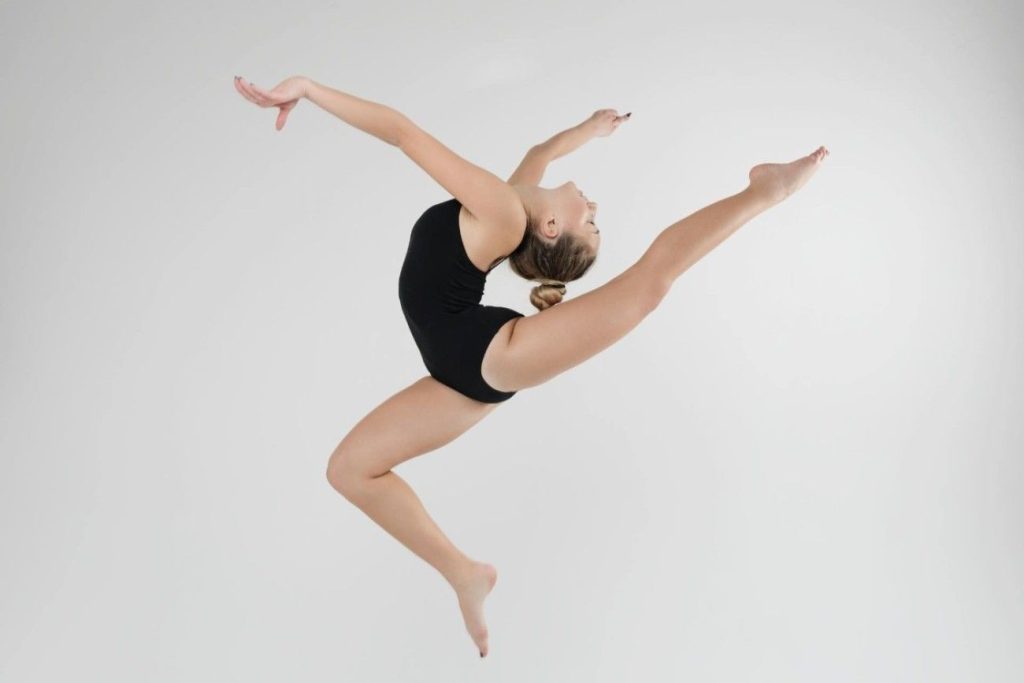
A young ballet dancer in mid air doing a ballet pose

For the lower back, a simple yet effective stretch is the “child’s pose” from yoga. Sitting back on your heels with your knees wide apart, stretch your arms forward on the floor and press your chest towards the ground. This stretch relieves tension in the lower back and extends through the spine up to the shoulders, relaxing areas that are crucial for backbends and lifts in ballet.

Lower Body Stretches

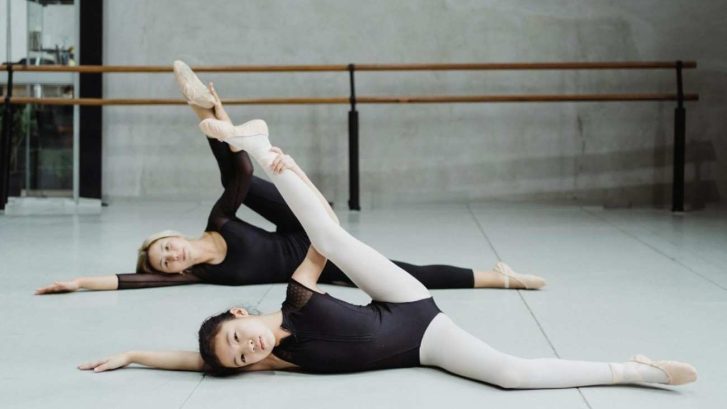
The importance of lower body flexibility in ballet cannot be overstated—this is where the real magic happens for dancers. Starting with the hips, exercises like the butterfly stretch, where you sit with the soles of your feet together and gently press down on your knees with your elbows, open up the hip joints and prepare them for rotations and splits.

Stretching the hamstrings is next, crucial for leaps and high kicks. A simple forward bend with legs straight and reaching for your toes does wonders. If flexibility allows, deepening this stretch by lying on your back and using a towel or strap to pull a straight leg closer to your body can further enhance the stretch.

Quadriceps and hip flexors should also be a focus. A classic stretch is the standing quad stretch—pulling one foot towards the buttocks and holding it there, feeling a stretch down the front of the thigh. For the hip flexors, a lunge position with one knee on the ground and the other foot forward, pushing the hips down towards the floor, opens up the hip area, essential for maintaining those graceful ballet postures.

Pointe Readiness Stretches

Preparing for pointe work demands specific attention to the feet and ankles to ensure they are strong and flexible. Ankle stretches such as pointing and flexing the feet can enhance the range of motion and prevent injuries. Sitting with legs extended, alternately point and flex your feet vigorously; this not only stretches the ankles but also activates the lower leg muscles crucial for pointe work.

Toe exercises are equally important. Try spreading your toes wide, then squeezing them together; this increases toe control, which is essential for balance on pointe. Additionally, using a resistance band around the toes for pointe and flex movements helps strengthen the tiny muscles in the feet.

Advanced Flexibility Techniques

For those aiming to achieve greater flexibility, incorporating advanced stretches such as splits and backbends into the routine is vital. Start with a thorough warm-up, then gradually work into a split by sliding down into the position as far as your flexibility allows, using support if needed. For backbends, begin by lying on your back and pushing up into a bridge, gradually walking your hands closer to your feet as your spine becomes more supple.

It’s crucial to approach these advanced techniques with caution and to listen to your body to avoid overstretching or injury. Progress might be slow, but consistency will yield improvements.

Cool Down and Recovery

After a rigorous stretching session, cooling down is essential. Simple, gentle stretches, similar to those used in the warm-up but slower and more deliberate, help the muscles relax and begin the recovery process. This might include a gentle walk around the studio or some light static stretches that allow the body to cool down gradually.

Rehydrating and perhaps using foam rollers can further aid in muscle recovery, ensuring that the body is ready for the next day’s training. Regularly incorporating these recovery practices helps maintain long-term flexibility and health.

Personal Stretching Experiences and Adjustments

Many experienced dancers attribute their success and longevity in ballet to their dedication to a personalized stretching routine. They often share stories of how tweaking their routine helped overcome plateaus or recover from injuries. It’s a reminder that while general advice is beneficial, personal adjustments make all the difference.

Adjusting stretches to cater to personal needs or current flexibility levels is crucial. Not everyone can perform every stretch immediately, and recognizing personal limits is key to effective stretching without injury.


In Conclusion

Remember, the goal of stretching isn’t just to achieve those impressive positions but to maintain your body’s health, ensure longevity in ballet, and enhance performance through improved flexibility and strength. Make stretching a consistent part of your routine, and you’ll see the benefits in every aspect of your dance.

Ready to take your flexibility to the next level? Start integrating these stretches into your daily practice, and watch as your performance transforms. Let’s keep moving and improving, one stretch at a time!

ballet modern

The Difference Between Classical Ballet And Modern Ballet

Ballet, with its grace and discipline, transcends simple dance to embody a profound form of artistic expression. Yet, not all ballet dances to the same tune. The branches of classical and modern ballet each take unique stances on technique, performance, and expression. Their differences highlight the evolution of the art and how it continues to adapt and resonate with audiences worldwide.

Historical Development

The seeds of classical ballet were sown during the Renaissance, flourishing under the patronage of the Italian courts before taking root in the French Royal court. Here, it was more than entertainment; it was an extension of courtly manners, a mirror to the splendor and poise expected at the palace. As it matured, figures like Marius Petipa codified ballet techniques and choreographed what would become iconic performances, setting the gold standard for classical ballet that emphasized a strict framework of movement and posture.

Modern ballet began to pirouette away from these conventions in the early 20th century. Visionaries like Isadora Duncan and Martha Graham sought to express more personal and complex themes. They broke from the rigidity of classical form to emphasize human emotion, storytelling, and the exploration of new movements. This era saw a shift towards greater creative freedom, inviting dancers to use their bodies as instruments of deeper expression rather than mere vessels of technical perfection.

Key Characteristics

Classical Ballet

Classical ballet is synonymous with fairy tales. The stories of princesses, magical realms, and quests for love are brought to life through precise movements and technical skill. The dancer’s body must adhere to a specific vocabulary of steps, each performed with an ethereal lightness and effortless grace. This adherence to technique is complemented by the music—often orchestral—that guides the narrative flow and adds a layer of dramatic intensity.

The visual spectacle is just as important, with elaborate costumes and intricately designed sets that transport audiences to another time and place. The goal is to maintain an air of fantasy and perfection, an escape into a world where every line is clean, every movement is refined.

Modern Ballet

Conversely, modern ballet throws open the doors to innovation. Here, traditional ballet techniques are often fused with elements from other dance forms, creating a style that is more grounded and relatable. Modern ballet might not always tell a story but instead convey emotions or abstract concepts. The music choices reflect this shift, incorporating everything from classical pieces to modern compositions and sometimes silence.

The attire and stage designs also mirror this minimalist approach, focusing more on the dancer’s ability to communicate through movement rather than through the surroundings. It’s about connecting with the audience on a human level, presenting themes that are relevant and resonant.

Philosophical and Artistic Intentions

The underlying intentions of classical and modern ballet differ significantly, shaping the way each style approaches performance and choreography. Classical ballet aims to showcase the pinnacle of dance technique, focusing on a universe where beauty, form, and precision are paramount. It’s about maintaining traditions and offering an almost otherworldly perfection that adheres to established rules and standards. Audiences expect to see a display of flawless execution that adheres to a centuries-old artistic tradition.

In contrast, modern ballet is often more about the choreographers and dancer’s personal expression. It prioritizes individuality and the human experience, pushing beyond traditional boundaries to explore deeper, often more complex emotions. Where classical ballet seeks to transcend reality, modern ballet aims to reflect it, presenting works that engage with contemporary issues and feelings. It’s less about escaping the world and more about understanding it through movement and metaphor.

Training and Performance

Training for classical ballet is rigorous. From a young age, dancers are immersed in a structured curriculum that scales in difficulty as they master the foundational techniques. This training is not just about physical ability; it’s also about adopting an art form’s culture—learning the discipline, respect, and dedication required to perform at high levels. Ballet schools like the Vaganova Academy in Russia and the Paris Opera Ballet School in France are famed for their demanding environments where precision in technique is just the starting point.

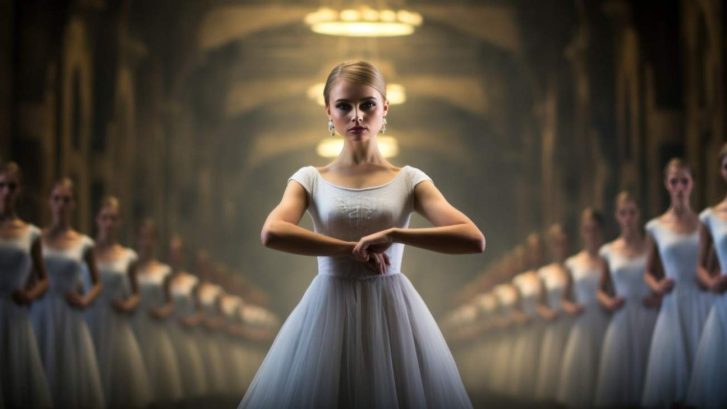
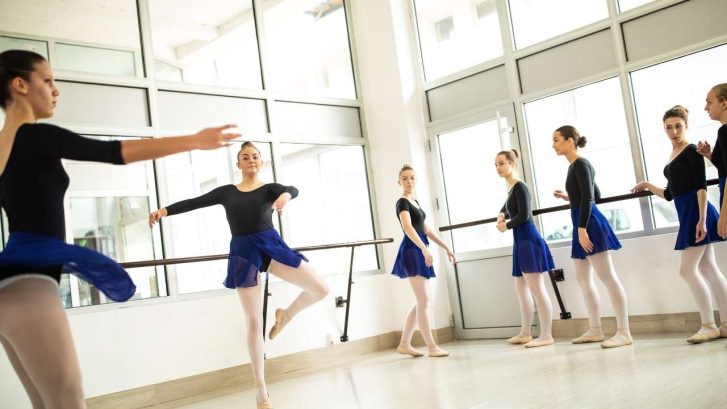
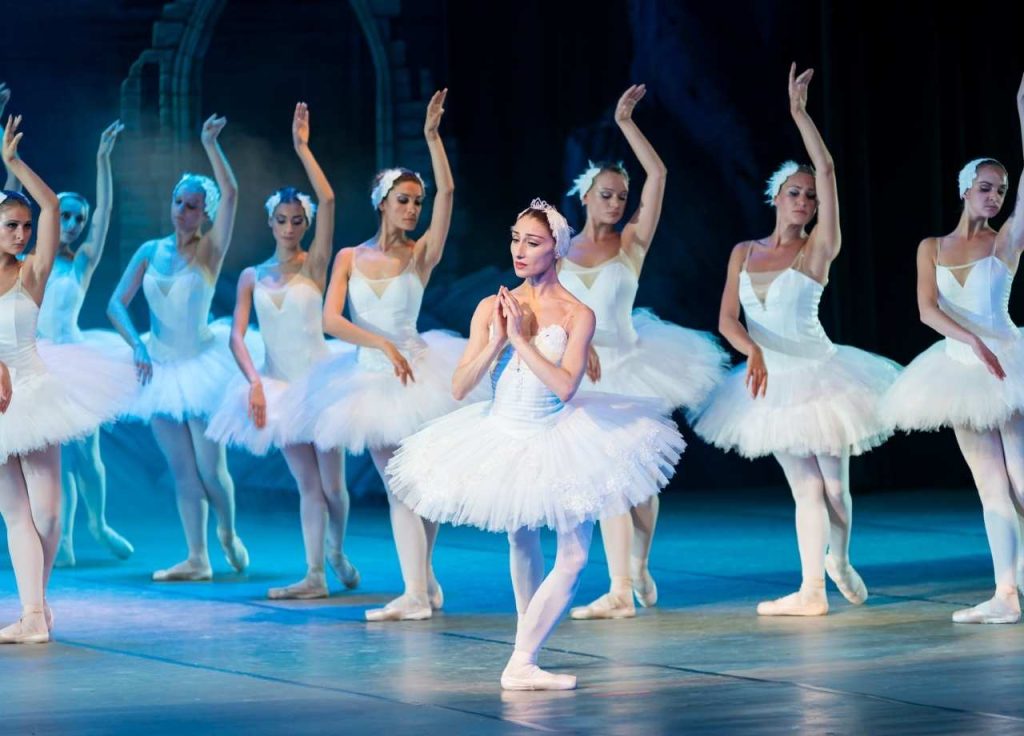
A ballerina in the middle of other ballerinas performing

Modern ballet training, while also challenging, often allows for a broader exploration of dance forms. Dancers may train in classical techniques but are also encouraged to explore contemporary dance, improvisation, and even non-dance movement practices like yoga or Pilates to enhance their versatility. This approach reflects the genre’s inclusive philosophy, where expression and impact are as valued as technical precision. Schools and companies often emphasize creativity and adaptability, preparing dancers to perform a wide range of repertoire from classical to avant-garde pieces.

Audience and Cultural Reception

The audience for classical ballet often consists of those who appreciate the refinement and historical aspects of the art. Performances are typically held in grand theaters and are considered high-culture events, attracting an audience that values the preservation of artistic heritage and the beauty of structured, disciplined movement. This audience appreciates the connection to a long tradition of ballet that offers a glimpse into the past and upholds the aesthetics of bygone eras.

Modern ballet speaks to a potentially different crowd. It often attracts a younger, more diverse audience interested in themes that resonate with contemporary life. The settings for modern ballet performances can vary widely—from traditional theaters to unconventional spaces like warehouses or outdoor parks—reflecting the genre’s flexibility and its appeal to those who might find classical ballet less accessible or relevant to their experiences. Modern ballet’s ability to challenge norms and push artistic boundaries often draws a crowd eager for innovation and connection to current societal dialogues.

Influential Works And Choreographers

Exploring the prominent figures and performances in both ballet forms illuminates the depth and breadth of ballet as an art form. Classical ballet boasts iconic works such as “Swan Lake” and “The Nutcracker,” choreographed by Marius Petipa and Lev Ivanov. These ballets are pillars of the classical repertoire, celebrated for their technical precision and grand storytelling. They encapsulate the quintessence of classical ballet, with their elaborate costumes, detailed sets, and symphonic scores that continue to enchant audiences worldwide.

Modern ballet has its own set of landmark works that have shifted the landscape of dance. Choreographers like George Balanchine with “Apollo” and Alvin Ailey with “Revelations” have brought new perspectives and techniques to the forefront of ballet. These works emphasize innovation, exploring new forms of expression within ballet and often addressing or reflecting contemporary social issues. Their contributions have paved the way for future generations of dancers and choreographers to keep the art form alive and relevant.

Conclusion

Classical and modern ballet each offer unique vistas into the capabilities of human movement and artistic expression. Whether you lean towards the pristine lines of classical ballet or the emotive gestures of modern performances, each style has something incredible to offer. Dive into the diverse world of ballet by attending performances or exploring these dance forms through classes. There’s a whole world of movement waiting for you to discover it—why not take the first step and see where it leads you?

How Music Affects Your Ballet Performance

Ballet and music are like two sides of the same coin, with their partnership tracing back centuries. At its heart, ballet is a physical expression of music, telling a story or portraying emotions through fluid movement, all guided by a musical score. Understanding this connection can dramatically enhance a dancer’s performance.

The Role Of Music In Ballet

Music isn’t just background noise for ballet; it’s a driving force that shapes the narrative and sets the pace. The right piece can transform a sequence of steps into a powerful story. Consider a ballet like “Swan Lake,” where Tchaikovsky’s score complements the dancers’ movements to convey the drama and emotion of the story. The tempo, rhythm, and mood of the music dictate the movements and expressions the dancers perform. Faster music might encourage quick, sharp movements, while a slower, somber piece would see dancers moving with deliberate, flowing motions.

This synchronization between music and dance is crucial. It ensures that the ballet isn’t just a visual spectacle but an immersive experience. The audience, whether they’re ballet novices or aficionados, feels the music through the dancers’ movements. This connection is why seasoned choreographers spend considerable time selecting the perfect score for a piece, understanding that music will guide the audience’s emotional journey through the performance.

Psychological Effects Of Music On Dancers

The impact of music on dancers extends beyond the physical performance. It plays a significant role in how dancers interpret their roles and convey the ballet’s emotional depth. Music influences mood and can enhance a dancer’s ability to express complex emotions during a performance. A haunting melody might draw out a poignant sense of longing, while a lively allegro can bring out a sense of joy or excitement.

Moreover, music aids in concentration and memory. Dancers often use the music’s structure to memorize complex sequences and cues, which is essential during rehearsals and performances. The familiarity of a musical piece can provide a mental map, helping dancers navigate through their routines more fluidly and with greater confidence.

Physical Impact Of Music On Ballet Performance

Musically, ballet demands that dancers not only hear the beat but also anticipate and interpret it physically. The rhythm helps dancers time their movements with precision, crucial for the synchronization seen in ensemble pieces. When dancers align their movements to the music’s rhythm, the performance looks more cohesive and polished.

Tempo is another critical factor. It affects the energy and intensity of the dance. A sudden increase in tempo can signal a shift in the narrative, prompting dancers to adjust their energy and movements accordingly. This adaptation requires dancers to be acutely aware of the music, using its tempo as a cue for their physical exertion and emotional output.

Music As A Tool For Choreography In Ballet

Choreography in ballet is much more than arranging dance steps; it involves an intricate dialogue between movement and music. The choreographer’s task starts with selecting a piece of music that not only inspires movement but also complements the narrative of the ballet. This music sets the stage for the entire choreographic process, guiding the creation of sequences that reflect the tempo and mood of the score.

When choreographers choose music, they think about how it will frame the story they want to tell. The music’s rises and falls, its crescendos and diminuendos, can dictate the climax and resolution of the story being told through dance. It’s not just about matching beats to steps; it’s about using music to enhance the storytelling, making the audience feel the tension or relief dictated by the score.

This careful selection and integration of music are why certain ballets remain timeless. The music isn’t just played in the background; it’s a central character that dances along with the performers, equally responsible for conveying the ballet’s emotional weight and narrative depth.

Interpreting Music In Ballet

From a dancer’s point of view, interpreting music through ballet is a unique challenge. Each piece of music evokes different emotions and images, which dancers must translate into physical expression. This requires a deep understanding of the music’s every nuance, from the overt melodies to the subtlest harmonies.

Dancers learn to listen to music not just for the beat but for the story it tells and the feelings it evokes. This musical interpretation is what makes each performance unique, as each dancer brings their own emotional response and expressive style to the music. It’s about more than executing choreography; it’s about embodying the music, making it visible through their movements.

Techniques for expressing musical nuances include varying the intensity of movements, using facial expressions to reflect the mood of the music, and even adjusting the timing of gestures to align with musical phrases. This deep, responsive connection between dancer and music can elevate a performance, making it a truly immersive experience for both the performer and the audience.

Training And Rehearsals

Effective training in ballet involves more than repetitive practice of steps; it also includes learning how to work with different types of music. During rehearsals, dancers practice with the music repeatedly, which helps them internalize the tempo and emotional tone of the piece. This repeated exposure allows dancers to experiment with how they can best express the music through their movements.

Instructors often emphasize the importance of musicality in dance, encouraging students to listen actively to the music as they rehearse. This training helps dancers develop a rhythmical intuition, an instinct for how their movements can best reflect the music’s character. By rehearsing with a variety of musical styles, dancers become more versatile in their performances, able to adapt their dancing to the demands of different musical contexts.

The rehearsal space is where music and dance truly begin to weave together, forming the tight bond seen in performances. It’s where dancers refine their ability to not just dance to the music but to interpret it, using their bodies to make the music’s emotional and narrative content clear. This preparation is crucial, as it ensures that once on stage, the dancers can fully embody the music, delivering a performance that resonates with clarity and emotion.

Performance And Audience Perception

The magic of a ballet performance is not just in the steps and the physical prowess of the dancers; it’s also in how the music enhances the connection between the performers and the audience. Music has a profound impact on how the audience perceives and experiences a ballet. It sets the emotional tone and enriches the visual storytelling, making the narrative more accessible and engaging.

Ballet performance by woman with one at the centreholding her hands together in a ballet pose

An audience might not remember every step, but they will recall the overall feeling conveyed by the performance—how it made them feel at the moment, driven largely by the interplay of music and movement. When dancers are in sync with the music, their performances seem more vivid and expressive, often leaving a lasting impression on those watching.

Challenges And Considerations

Working with music in ballet isn’t always straightforward. One challenge dancers often face is adapting to complex musical scores that require highly precise timing. Mastering such scores can be demanding, as it requires an impeccable sense of rhythm and timing to ensure the dance aligns seamlessly with the music.

Another consideration is the choice between live and recorded music. Live music can elevate a performance, offering a vibrant and dynamic accompaniment that adapts to the dancers’ movements. However, it also requires dancers to be more adaptable and responsive to slight variations in tempo and expression that a live orchestra might bring.

Conclusion

In ballet, music is far more than a backdrop; it’s a vital component that transforms dance into a richer, more expressive art form. Whether you’re a dancer, choreographer, or someone who simply loves ballet, appreciating the role of music can offer deeper insights into this beautiful performance art. So next time you watch a ballet, pay close attention to the music—not just as a separate element, but as a part of the whole experience that shapes everything you see on stage. And if you’re a dancer, remember, every rehearsal with music is an opportunity to deepen your connection to your art. Why not dive into your next practice session with a fresh appreciation for the music that moves with you?

1 2 3 4 6