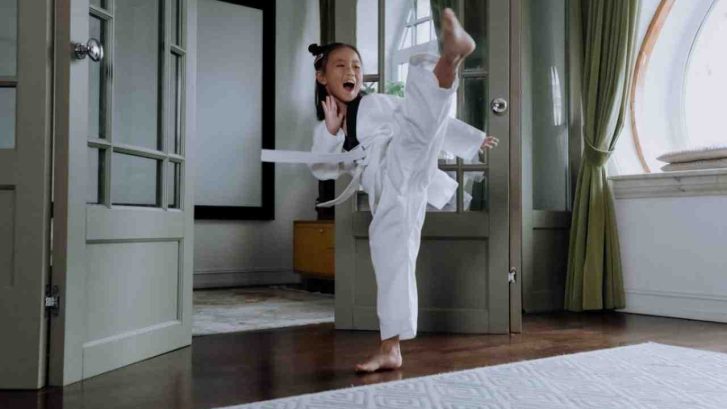
karate vs taekwondo

Which Is Better For Child Development: Karate vs. Taekwondo?

When it comes to martial arts for children, parents often find themselves weighing the pros and cons of Karate and Taekwondo. Both martial arts are well-respected and offer a wide range of developmental benefits, but which one is better for child development? In this blog post, we’ll explore both Karate and Taekwondo, focusing on their impact on children’s growth, and highlight why Taekwondo may be the better option for your child.


The Importance Of Martial Arts for Child Development


Martial arts have long been associated with physical and mental growth. They help children develop essential life skills such as discipline, self-confidence, respect, and perseverance. Whether it’s Karate or Taekwondo, the structure and routine of martial arts training offer children an outlet for energy while teaching valuable lessons about themselves and their environment.

Martial arts also support physical health by improving flexibility, coordination, balance, and overall strength. Regular practice can increase a child’s concentration, patience, and ability to handle stressful situations—all essential traits for success both in and out of the classroom.

A Closer Look At Karate

Karate originated in Okinawa, Japan, and focuses heavily on self-defense techniques through strikes (punches, kicks, knee strikes, and elbow strikes). Karate teaches balance and strong body positioning, emphasizing defensive moves to ward off potential attacks. Children learn specific “katas,” or choreographed movements, that are designed to simulate combat against multiple opponents.

Benefits Of Karate For Child Development:

Focus and Discipline: Karate is structured around learning repetitive movements and memorizing katas, which requires intense focus. This helps children develop a disciplined mindset and the ability to concentrate for extended periods.

Self-Control: Karate emphasizes calm and controlled responses to conflict, helping children learn to manage their emotions and reactions.

Defensive Mindset: While teaching children how to defend themselves, Karate also stresses the importance of avoiding unnecessary violence, helping kids develop a peaceful approach to conflict resolution.

However, Karate’s teaching methods can sometimes be more rigid, as traditional techniques are often passed down without much room for adaptation. This may make it less dynamic for some children who prefer more varied and active forms of martial arts.

A Closer Look At Taekwondo

Taekwondo, originating from Korea, is one of the most dynamic martial arts. It is famous for its emphasis on high, fast kicks and agile footwork. Taekwondo incorporates both hand and foot techniques but places greater emphasis on flexibility, speed, and explosive power. Children in Taekwondo classes practice drills that focus on enhancing strength, speed, and stamina while also developing mental acuity.

Benefits Of Taekwondo For Child Development:

Physical Fitness and Flexibility: Taekwondo’s high-energy kicks and movements improve cardiovascular health, flexibility, and muscle strength. The wide range of movements also helps children enhance their agility and coordination, making it an excellent choice for overall physical development.

Confidence Building: The progression through colored belts in Taekwondo provides clear goals for children, boosting their confidence with each level they achieve. This belt-ranking system encourages perseverance and goal-setting, as students must master certain skills to advance to the next level.

Mental Focus: Taekwondo requires significant mental sharpness to execute techniques quickly and precisely. The combination of physical activity and mental discipline strengthens a child’s ability to focus on tasks in other areas of their life, such as schoolwork.

Self-Defense and Self-Esteem: Although Taekwondo is often viewed as more of an offensive martial art due to its kicking focus, children also learn defensive techniques that help them feel safer and more confident. The empowerment that comes from knowing how to protect oneself can greatly improve a child’s self-esteem.

Why Taekwondo Is Better For Child Development
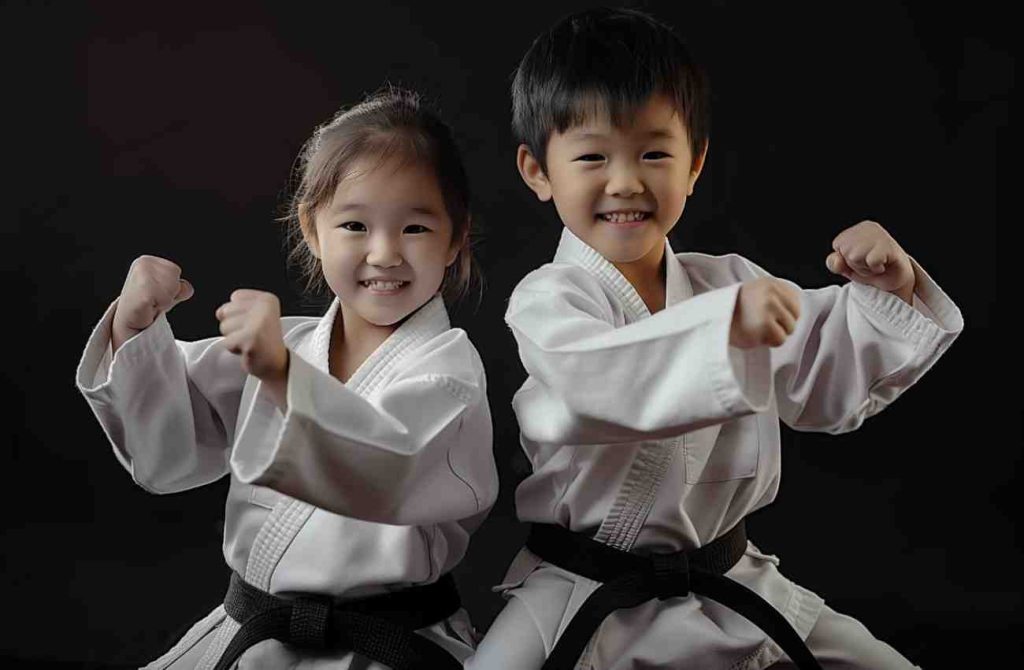
Two children wearingblack belt karate uniform

While both Karate and Taekwondo offer substantial developmental benefits, Taekwondo has some unique advantages that make it more suitable for children in certain areas:

Emphasis on Movement and Flexibility: Taekwondo’s fast, high kicks and dynamic movements promote better flexibility, which can be more beneficial for a growing child’s physical development. It encourages agility, balance, and body awareness, all of which are crucial during the formative years.

Higher Energy and Engagement: Children who enjoy more energetic, fast-paced activities may find Taekwondo more exciting. The continuous, high-energy nature of Taekwondo drills keeps kids engaged, making it a better fit for children who have high energy levels or short attention spans.

Encouragement of Positive Risk-Taking: Taekwondo encourages students to push their limits, whether it’s learning a higher kick, executing a new technique, or striving for the next belt. This positive risk-taking helps children overcome their fears and develop a resilient mindset that will benefit them in all areas of life.

Modern Approach to Training: Taekwondo tends to be more adaptable to modern teaching styles, making it easier for instructors to tailor lessons to each child’s strengths and weaknesses. This flexibility can make the learning experience more fun and less rigid, allowing children to progress at their own pace.

Global Popularity: As an Olympic sport, Taekwondo offers children opportunities to compete internationally and gain exposure to a wider martial arts community. The global reach of Taekwondo adds to its appeal, as children can aspire to compete at high levels while learning about different cultures and values.

Choosing the Right Martial Art For Your Child

Ultimately, the decision between Karate and Taekwondo will depend on your child’s personality, interests, and developmental needs. Both martial arts offer incredible benefits for physical, mental, and emotional growth. However, if your child enjoys a more active, fast-paced sport that emphasizes flexibility, agility, and confidence, Taekwondo may be the better choice.

For parents in Dubai looking to introduce their children to martial arts, The Ballet Centre offers top-quality Taekwondo classes led by experienced instructors. Whether your child is new to martial arts or has some prior experience, Taekwondo can help them develop essential life skills while having fun in a supportive environment.
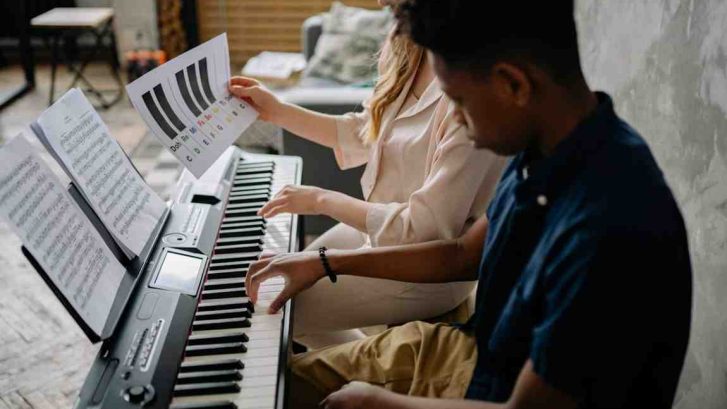
piano lessons for children

What Age Should Children Start Piano Lessons?

Learning to play the piano is a rewarding and enriching experience for children, offering them a variety of developmental benefits. However, one of the most common questions parents ask is, “What age should my child start piano lessons?” While there’s no one-size-fits-all answer, there are several factors to consider when determining the right time for your child to begin learning the piano. In this post, we’ll explore the best age to start piano lessons, the advantages of early musical education, and how to determine if your child is ready.

Why Consider Piano Lessons For Children?

Before diving into the appropriate age to start lessons, it’s important to understand why piano lessons are such a valuable pursuit for children. Learning to play the piano offers numerous benefits that extend beyond music itself:

Improved Cognitive Development: Playing the piano engages both hemispheres of the brain, promoting improved memory, problem-solving skills, and cognitive flexibility.

Enhanced Motor Skills: Piano playing helps develop fine motor skills, hand-eye coordination, and finger strength, especially in young children.

Discipline and Focus: Learning a musical instrument requires practice and concentration, teaching children valuable lessons in patience, discipline, and perseverance.

Boosted Emotional Intelligence: Piano lessons give children an expressive outlet, helping them develop emotional awareness and creative thinking.

Given these wide-ranging benefits, it’s no surprise that many parents want to introduce their children to the piano early. However, starting at the right time is key to ensuring a positive and productive learning experience.

The Ideal Age To Start Piano Lessons

While there is no definitive answer, most experts agree that the best time for a child to start piano lessons is between the ages of 5 and 7 years old. This age range is often considered ideal because it aligns with key developmental milestones that make learning the piano more accessible and enjoyable for children.

Here’s why:

Physical Readiness: At around 5 years old, children typically have developed the fine motor skills necessary to press piano keys with adequate strength and coordination. Their hands are also large enough to navigate the keyboard, making it easier for them to play simple melodies and scales.

Cognitive Development: By the age of 5, most children have started to grasp basic concepts like counting and recognizing patterns, which are essential for understanding music theory and reading sheet music.

Attention Span: Children in the 5–7 age range generally have longer attention spans than toddlers, enabling them to focus on lessons for 20–30 minutes at a time. This level of focus is crucial for making progress in learning the piano, as it requires consistent practice and concentration.

Starting Piano Lessons Before Age 5

While 5–7 is the most common starting age, it’s not unheard of for children to begin piano lessons earlier,

even as young as 3 or 4 years old. However, early beginners typically require a different approach to

learning the piano, as their physical and cognitive abilities are still developing.

If you’re considering starting your child before the age of 5, here are a few things to keep in mind:

Shorter Lessons: Very young children may not have the attention span for full-length lessons, so sessions should be kept short—around 10 to 15 minutes—and highly interactive to maintain their interest.

Focus on Play: Early lessons for children under 5 should be fun and playful, emphasizing exploration and experimentation with sounds rather than strict adherence to technique.

Parental Involvement: Parents will need to play an active role in reinforcing lessons at home. Helping your child stay engaged through practice sessions and encouraging their curiosity about music will be key to their progress.

Indicators That Your Child Is Ready For Piano Lessons

If your child is approaching the recommended starting age but you’re unsure if they’re ready, there are a few signs to look for that can help guide your decision:

Interest in Music: Has your child shown interest in playing the piano or other musical instruments? Do they often sing, hum, or tap along to music? A natural curiosity about music is one of the best indicators that your child may be ready for piano lessons.

Ability to Follow Instructions: Piano lessons require the ability to listen carefully and follow instructions from a teacher. If your child can follow simple directions and show patience during tasks, this is a good sign they may be ready for structured lessons.

Finger Independence: While young children are still developing their fine motor skills, it’s important that they have some degree of control over their fingers. If your child can comfortably use individual fingers to

press keys or manipulate small objects, they may be physically ready for piano lessons.

Attention Span and Focus: Can your child stay engaged with an activity for 15 to 30 minutes? Piano practice requires concentration, so it’s important that your child is capable of maintaining focus during lessons.

Parental Support: Starting piano lessons is a commitment, not just for the child but for the parents as well. Regular practice is essential for progress, so consider whether your child—and your schedule—allows time for consistent practice at home.

Piano Lessons And Child Development

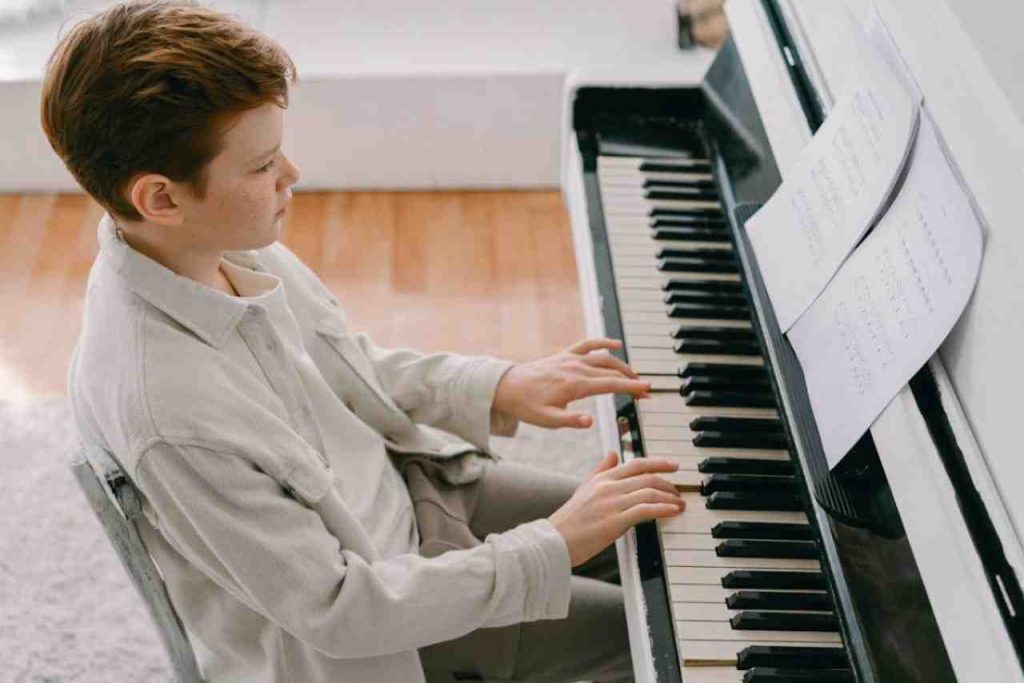
Young boy sitting and playing piaono while reading sheet music

Piano lessons offer a wide range of developmental benefits for children beyond musical ability. Here’s how starting piano at a young age can enhance various aspects of your child’s growth:

Boosting Academic Skills: Learning to read music introduces children to patterns, fractions, and sequences, which can help improve math and reasoning skills.

Building Emotional Resilience: Mastering the piano involves overcoming challenges, whether it’s learning a difficult piece or performing in front of others. This process builds emotional resilience and teaches children how to handle frustration and disappointment.

Developing Creativity: The piano is a versatile instrument that allows for a high degree of personal expression. Through improvisation and composition, children can tap into their creative potential and develop unique ways of expressing themselves.

Social Skills and Confidence: Piano lessons often involve performance opportunities, whether in front of peers, family, or in recitals. Performing builds self-confidence and helps children develop social skills by learning how to interact in structured, group settings.

Piano Lesson Structure For Young Beginners

If you decide to start your child on piano lessons, it’s important to choose a lesson structure that suits their age and developmental stage. For young beginners, lessons should:

Be short and frequent: 20- to 30-minute lessons two or three times a week are ideal for children under 7, with time in between for home practice.

Be playful and interactive: Lessons for young children should incorporate games and activities that make learning fun. This could include clapping rhythms, singing along to melodies, or playing matching games with musical notes.

Focus on basic music theory: Early piano lessons should introduce simple concepts like the names of the piano keys, the basics of rhythm, and hand positioning without overwhelming the child with complex theory.

Conclusion: Starting Piano Lessons At The Right Age

While most children are ready to begin piano lessons between the ages of 5 and 7, every child develops at their own pace. If your child shows an interest in music, demonstrates focus, and has the physical coordination necessary to play the piano, they may be ready to begin lessons. For parents in Dubai, The Ballet Centre offers piano lessons tailored to young beginners, providing a fun and supportive environment to nurture your child’s musical journey.

ballet positions

Ballet Positions For Beginners Explained

If you’re curious about ballet, understanding the basic positions is your first step towards mastering this elegant art form. Ballet isn’t just a series of steps and movements; it’s a language of its own, communicated through the body. For those beginning this journey, grasping the fundamental positions serves as the foundation for all ballet movements.

The allure of ballet lies in its precision and grace, but achieving this takes practice and understanding. Start by envisioning ballet as more than dance—it’s a discipline that melds artistry with physical strength. Whether you’re taking up ballet for fun, fitness, or aiming to go professional, knowing these core positions will immensely enhance your ability to perform and enjoy the dance.

The Five Basic Ballet Positions

Each of the five basic ballet positions lays a structural base for the more complex movements seen in performances. Here’s a breakdown:

First Position: Feet and Arms

  • Stand with your heels together and toes pointing outwards, making a wide angle. This position is all about alignment and symmetry. Your arms should form a soft round shape, almost like holding a giant beach ball, with your hands just in front of the belly button. Keep your shoulders down and back relaxed, letting your arms float effortlessly.
  • First position is critical because it teaches balance and body alignment. Watch out for rolling your feet inward or lifting your heels; both are common errors. Engaging your core will help stabilize your stance.

Second Position: Feet and Arms

  • From the first position, slide your feet apart until they are about a shoulder-width distance. The arms lift from the first position to a strong horizontal line at shoulder height, palms facing downward. This position feels more open but requires control to maintain a smooth, even line from fingertips to toes.
  • The challenge here is not to let your arms droop or to overextend your feet. Like the first position, maintaining a relaxed yet engaged posture will make a difference in how effectively you execute second position.

Third Position: Feet and Arms

  • This less commonly used position acts as a bridge in more advanced routines. Place one foot in front of the other, heel to arch, with the front foot’s heel touching the inner arch of the back foot. Raise your front arm to be rounded overhead, while the other arm stays rounded at navel level.
  • It’s a great position for learning coordination as it involves a complex arrangement of limbs. Remember, the key here is the alignment of the heel to arch, not heel to toe, which can throw off your balance.

Fourth Position: Feet and Arms

  • Move your front foot forward from third, about one foot-length ahead. The arms mirror the complexity of the leg work; one arm extends forward and slightly rounded at shoulder height, and the other mirrors the first position’s rounded shape above your head.
  • Fourth position tests your balance and control. Ensure your weight is evenly distributed between both feet and that your body isn’t leaning forward or backward.

Fifth Position: Feet and Arms

  • The pinnacle of ballet’s basic stances, fifth position requires you to bring your feet tightly together, with the toe of the back foot touching the heel of the front. Both arms are held rounded overhead, creating a frame for your face.
  • Fifth position is often the goal for visual symmetry and elegance in ballet. Avoid squeezing your feet so tightly that it causes tension up the leg; instead, aim for a natural close fit that still allows for fluid movement.

Core Techniques to Support Positions

Understanding ballet positions is one thing, but performing them with proper technique is where the real challenge lies. Good technique supports every ballet position and helps prevent injuries. Here are some key areas to focus on:

Posture and Alignment

Good posture is the backbone of ballet. It begins with a straight spine and hips aligned over your feet. Whether you’re in first position or fifth, keeping your back straight and avoiding any slouching are crucial. Visualize a string pulling you up from the top of your head, elongating your spine and neck upwards, not just when you’re dancing but in everyday activities too. This habit not only improves your dance but also brings a better presence and confidence in your day-to-day life.

Alignment in ballet is not just about keeping your back straight; it’s also about ensuring your hips, knees, and feet are properly lined up. Misalignment can lead to strain and injury. So, whether you’re practicing at the barre or performing in the center, always check in with your body to ensure you’re aligned.

Balance and Coordination

Balance in ballet is fundamental. It requires both physical and mental focus. Practicing yoga or Pilates can help you develop the core strength that supports balance. Also, try balance exercises like standing on one foot while brushing your teeth or simple relevés (rising to your toes) at the kitchen counter.

Coordination in ballet involves the ability to execute movements with different parts of your body in a harmonious manner. To improve this, break down each movement and position into smaller parts, practice them slowly, and then combine them fluidly. This slow and deliberate practice helps muscle memory kick in, which is essential for smoother transitions in dance routines.

Strength and Flexibility

Strength is crucial, particularly in your legs, core, and back. Incorporate exercises like squats, lunges, and planks into your daily routine to build the muscle strength needed for ballet. Strong muscles will make it easier to hold those beautiful positions and perform ballet movements with grace.

Flexibility is another cornerstone of ballet that allows for full range of motion. Regular stretching is vital. Focus not just on your legs but also your back and arms. Start and end your day with a stretching routine that includes dynamic stretches to warm up the muscles and static stretches to improve flexibility over time.

Common Challenges for Beginners

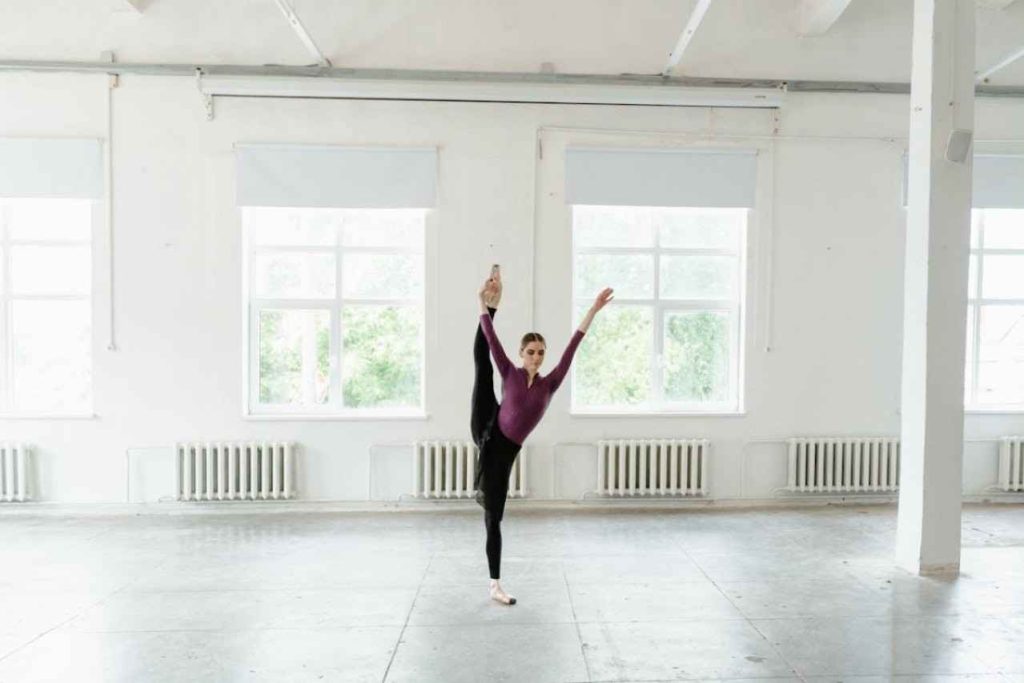
Woman in ballet studio, she is lifting one foot above her head

Every beginner faces hurdles when starting ballet. Knowing what these challenges are can help you address them more effectively:

Turning Out Feet from the Hips

One of the most common challenges is achieving a proper ‘turnout,’ where the legs are rotated outward from the hips. Many beginners try to force the turnout at the knees or ankles, which can lead to injury. Focus on strengthening the hip rotator muscles through specific exercises and always warm up thoroughly before practicing your turnout.

Maintaining a Relaxed Yet Controlled Arm Posture

Arm positions in ballet are as important as foot positions. Beginners often tense up, which can make arm movements look stiff and unnatural. Practice your arm positions by imagining you are moving them through water; this visualization can help you achieve the fluid, graceful motions needed.

Overcoming Stiffness and Increasing Fluidity

Stiffness is another hurdle for many beginners. Incorporate activities that promote movement fluidity, such as swimming or a dance style like contemporary, which focuses on fluid movements. Also, observe and learn from experienced dancers; notice how they transition smoothly from one position to another.

Practicing Ballet Positions

To make real progress in ballet, consistent practice is key. Here are some tips on how to practice effectively, especially when you’re away from the dance studio:

At Home Practice Tips

Safe practice at home starts with creating the right space. Clear an area where you have enough room to extend your arms and legs fully. If you don’t have a ballet barre, use a sturdy chair or countertop to help maintain balance during exercises.

When practicing at home, it’s crucial to use a mirror. This will help you observe and correct your form in real time. Focus on the alignment of your body and the precision of your positions. Being able to visually track your progress can significantly speed up your learning curve.

Incorporating Positions into Daily Ballet Routines

Start integrating the positions into simple routines. This not only makes your practice more interesting but also helps your body understand how to flow from one position to another. Create short combinations, like transitioning from first to second position with a plié, or from third to fifth with a relevé.

Rehearse these combinations regularly, aiming to smooth out the transitions and maintain proper form throughout. As these become more comfortable, you can begin to add music, which will challenge you to match your movements to a rhythm, a fundamental skill in dance.

Feedback and Improvement

Even when practicing alone, feedback is invaluable:

Seeking Constructive Criticism

  • Whenever possible, get feedback from more experienced dancers or instructors. If you’re taking classes, ask your teacher for specific advice on improving your positions and overall technique.
  • If you’re practicing primarily at home, consider recording your sessions and reviewing them. You might also join online communities or forums where you can share videos and receive advice and encouragement from fellow ballet enthusiasts.

Monitoring Progress

  • Keeping a practice diary can be extremely helpful. Note what you practiced, what felt good, what needs improvement, and any insights from instructors or your own observations. Seeing your progress written down can be a powerful motivator.
  • Celebrate small victories along the way. Whether it’s nailing a perfect fifth position or feeling more balanced in your pirouettes, acknowledging these achievements will boost your confidence and enthusiasm for ballet.

Now that you know the essentials of ballet positions and how to practice them effectively, the next step is yours to take. Whether you’re practicing for fun or with professional aspirations, remember that every dancer starts with the basics. So lace up your ballet shoes, find a space, and start practicing. Ballet may be challenging, but it’s also incredibly rewarding. Ready to dance?

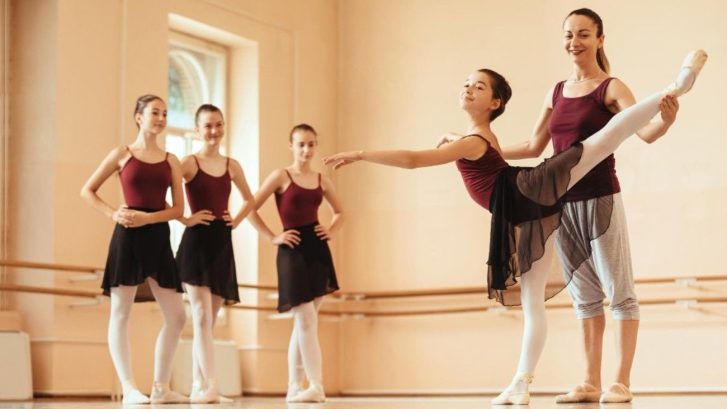
Ballerina's leg being held up in position by colleagues while three others look on

Finding A Ballet Practice Room in Dubai: What to Look For

As Dubai’s cultural scene expands, more people are taking up ballet, either for professional training or as a hobby. Finding the right practice room can significantly impact your ballet journey, whether you’re preparing for a performance or honing your technique. Here, we’ll discuss what makes a practice space suitable and appealing for ballet dancers.

Key Features Of An Ideal Ballet Practice Room

Space is crucial in a ballet practice room. Dancers need ample room to leap, turn, and stretch without restrictions. Ideally, a room should be large enough to mimic a stage environment, allowing dancers to practice full routines as they would perform them. Alongside space, the type of flooring is critical. Sprung floors are preferred because they absorb impacts, reducing the risk of injuries. They provide the right balance of grip and give, which is essential for ballet that involves a lot of jumping and precise footwork.

Mirrors are another vital component. A well-placed, wall-to-wall mirror helps dancers monitor their form and alignment, crucial for improving technique and preventing injuries. The presence of barres is equally important; they should be sturdy and at the correct height to support a variety of exercises. Some rooms offer portable barres, which can be beneficial for adjusting the space based on the number of dancers or the type of practice.

Location Considerations

When selecting a ballet practice room, its location is as important as its physical features. It should be easily accessible by public transport, making it convenient for daily commutes. The safety of the neighborhood is also paramount, especially if you find yourself walking to and from the studio late in the evening or early in the morning.

Consider the amenities around the studio. Having cafes, stores, or even a simple grocery shop nearby can be a big plus, providing everything you need before or after a long practice session. It’s about making the practice routine as smooth and hassle-free as possible, allowing you to focus solely on your art.

Facility Amenities

The quality of the facility’s amenities can greatly enhance your practice experience. Look for studios that offer spacious and clean changing rooms, which make a big difference in comfort and convenience. Proper ventilation and air conditioning are must-haves in a ballet studio. Maintaining a comfortable room temperature is crucial, as it helps prevent muscle injuries and fatigue.

A good sound system is also essential for ballet practice. Music plays a significant role in ballet, and a high-quality sound system can help ensure that the music is crisp and clear, allowing dancers to stay in rhythm and fully immerse in their practice.

Renting Vs. Membership Options

Choosing between renting a ballet studio or opting for a membership can affect both your wallet and your practice routine. Renting a space on an as-needed basis might seem economical at first, especially if you’re not practicing daily. However, if ballet is a significant part of your life, a membership might be more cost-effective. Memberships often come with perks like access at more flexible times and the use of additional facilities such as weight rooms or swimming pools. You’ll need to weigh the frequency of your practices against the costs and benefits of each option to decide which works best for your budget and schedule.

Scheduling And Availability

Another key factor in selecting a ballet studio is understanding the scheduling system. Studios often have peak and off-peak hours, which can influence both the availability of space and the cost of sessions. Peak hours typically coincide with evenings and weekends when most people are free from work or school commitments. If your schedule allows for flexibility, taking advantage of off-peak hours could mean more space and less interference from other dancers.

It’s also important to consider how studios manage their bookings. Some use online systems that allow you to reserve spaces ahead of time, while others might operate on a first-come, first-served basis. An efficient booking system can save you the hassle of arriving at the studio only to find it overcrowded or fully booked. Always check how far in advance you need to book and how cancellations are handled to avoid any surprises.

Community And Cultural Fit

The community within a ballet studio can significantly enhance your dancing experience. A studio that fosters a supportive community can provide networking opportunities with other dancers, which might lead to collaborations or learning new techniques. It’s also worth considering the cultural fit. Some studios might focus more on competitive ballet, while others may foster a more relaxed, creative environment.

Additionally, the availability of skilled instructors can make a difference. Experienced instructors not only teach technique but also provide mentorship and can guide you in developing your ballet career or passion. Visiting the studio and possibly attending a few sessions can give you a sense of the community and teaching style, helping you decide if it aligns with your goals and expectations.

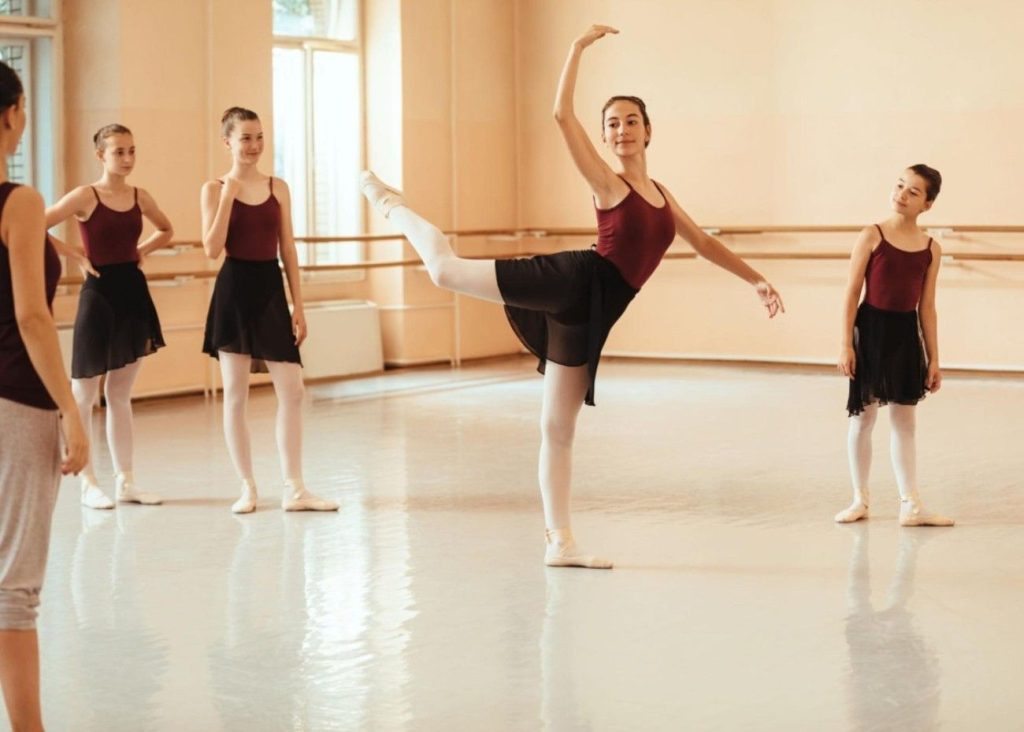
Ballerina posing in the middle of her class while her four colleagues look on

In choosing the right ballet practice room, consider how the studio’s culture and community align with your personal ballet goals. Whether you are looking for rigorous training or a community that inspires creativity, the right environment will enhance your growth and enjoyment in ballet.

Legal And Operational Aspects

Before you commit to a ballet practice room, it’s crucial to understand the legal and operational details involved. Most studios require you to sign a lease or membership agreement that outlines the terms of use. Make sure you read these documents carefully to understand your rights and responsibilities, such as cancellation policies, payment terms, and any restrictions on use.

Also, familiarize yourself with the studio’s rules and regulations. These might cover everything from acceptable behavior in the studio to specific dress codes or the allowed types of footwear. Knowing these rules can help ensure that you fit well with the studio’s operational style and avoid any potential conflicts.

Personal Experiences

Personal anecdotes from other dancers can be incredibly valuable. Try to speak with current or past members of the studios you’re considering. They can offer insights that you won’t find on a website or brochure, such as how crowded the studios get, what the peak hours really look like, or even tips on which instructors might best suit your ballet style and goals. Their experiences can help you gauge the atmosphere of the studio and what it might be like to practice there regularly.

Conclusion

Choosing the right ballet practice room in Dubai involves more than just evaluating the physical space. It’s about considering the costs, the community, the studio’s rules, and the overall environment. Take your time to visit multiple locations, talk to the instructors and members, and really feel out the atmosphere. Remember, the right studio is out there for everyone. It’s just a matter of finding the place where you feel you can grow, learn, and enjoy every moment of your ballet journey. Why not start checking out some studios this week?

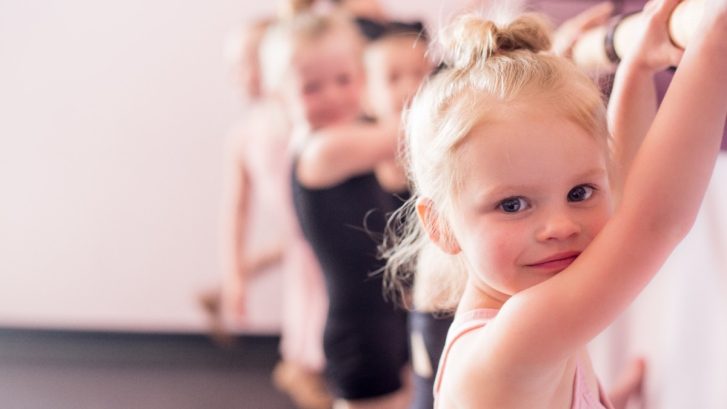
Tiny dancers at a ballet barre

Ballet Classes For Toddlers and Children

Ballet isn’t just a dance form; it’s a pathway to physical and cognitive development for toddlers and children. Across the globe, and particularly in places like Dubai where diverse cultures meet, ballet schools offer programs tailored to young novices. These classes not only introduce children to the basics of dance but also encourage discipline, creativity, and a healthy lifestyle from a young age.

Understanding Ballet Classes

Ballet is often seen as the foundation of dance education, providing a structured environment where young dancers learn to move with grace and precision. But it’s more than learning to pirouette or master the five positions; it’s about developing coordination, rhythm, and the ability to follow directions and cooperate with peers. For toddlers, these classes might focus more on simple movements and story-telling through dance, which keeps learning fun and engaging.

Parents often ask when it’s the right time to start ballet classes. Generally, children as young as two or three can join toddler-specific groups where the focus is on building motor skills and basic dance etiquette through playful activities. As children grow, the training becomes more structured, gradually preparing them for formal ballet techniques. This gradual progression is crucial as it aligns with their physical and psychological development, ensuring they enjoy each session without feeling overwhelmed.

Choosing The Right Ballet Class

When you start looking for a ballet class, whether in Dubai or elsewhere, you’ll find a variety of options tailored to different age groups and skill levels. It’s important to choose a school that not only teaches ballet techniques but also creates a supportive and nurturing environment. Look for qualified instructors who are experienced in teaching young children and who communicate clearly about the goals and methods of their classes. A good school will offer a balanced curriculum that promotes both the joy of dance and the discipline it requires.

Each ballet class typically follows a structured format, starting with a warm-up to prepare the body for dance and reduce the risk of injuries. This is followed by barre exercises, which are essential for building technique and strength. Younger children might use props or engaging music to keep them interested and active. The class usually ends with a cool-down period to relax the muscles and reflect on the session. Understanding this routine can help parents set the right expectations for their children and discuss what they learned after each class.

Preparing For Ballet Class

Knowing what to wear to ballet class is vital for any parent new to this world. Traditional ballet attire includes a leotard, tights, and ballet slippers. This attire isn’t just about aesthetics; it’s functional, allowing teachers to see the dancer’s movements clearly and correct posture or technique as needed. For toddlers and young children, many schools also allow tutus or skirts, which can make the experience more exciting and enjoyable for them.

Choosing the right ballet gear is just as important as picking the class. Ballet shoes should fit well and provide the necessary support for the foot, while leotards should allow freedom of movement without being too loose or tight. It’s a good idea to visit a dancewear store where professionals can help you select the right items. Remember, the right gear can make a significant difference in how a child experiences their dance class.

Physical And Health Considerations

Ballet is a physically demanding art that requires a mix of strength, flexibility, and endurance. For young dancers, it’s about more than just turning and jumping; it’s about developing a body that can carry them through each movement safely and effectively. A common misconception is that all ballet dancers need to be tall. In truth, ballet welcomes all body types. The key is the strength and flexibility to perform movements with grace and precision, not height.

Starting ballet at a young age can provide foundational skills that benefit children in all walks of life. It enhances physical fitness by improving cardiovascular health, muscle tone, and posture. Ballet also increases flexibility and balance, which can help children in other sports and physical activities. However, like any physical activity, there is a risk of injury. That’s why it’s crucial to ensure that children are taught by knowledgeable instructors who understand the needs of young bodies. Teachers should emphasize proper form and technique to prevent common dance injuries, such as strains and sprains.

Another important aspect of ballet training is the psychological benefit. Ballet requires mental focus and discipline, which can help improve cognitive abilities, such as memory and concentration. It also teaches children the value of hard work, perseverance, and the satisfaction of mastering new skills.

Supporting Your Child In Ballet

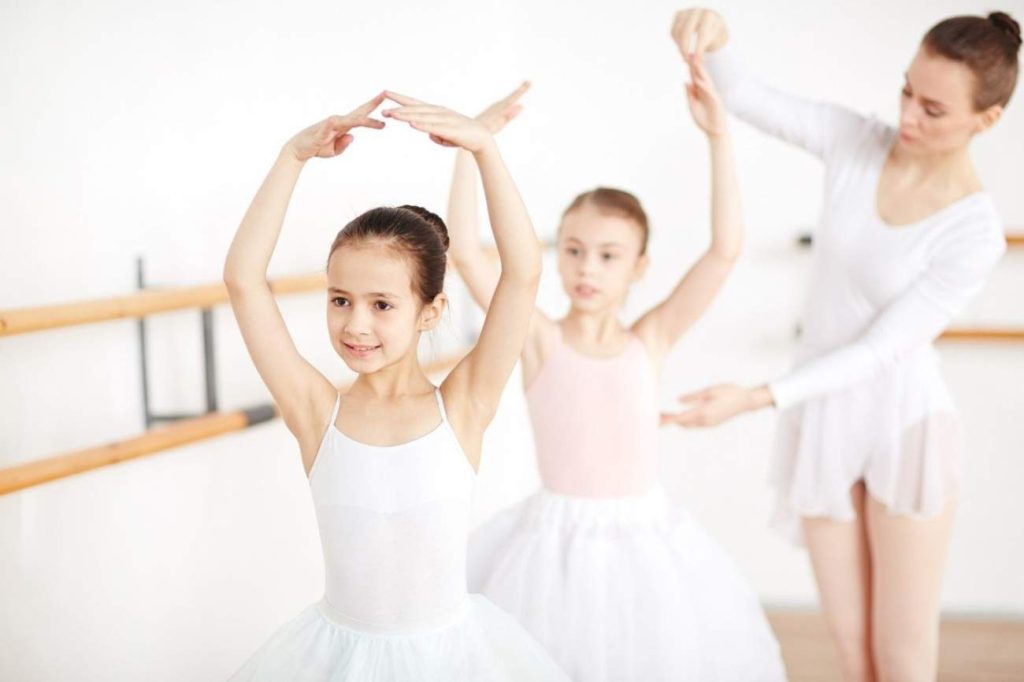
Twochild ballerinas being postion by teacher and their all wearing white

Watching a child fall in love with ballet is a beautiful experience for many parents. However, the journey can sometimes be as challenging as it is rewarding. As children advance in their training, they may face physical and emotional hurdles. Parents and guardians play a crucial role in supporting their child through these challenges.

One of the most significant contributions a parent can make is being present. Attending recitals and practices not only shows your child that you value their efforts, but it also gives you a firsthand look at their progress and the teaching methods of the instructors. Communicating with teachers can provide insights into your child’s development and how you can support their learning at home.

It’s also important to foster a positive environment that encourages persistence and resilience. Ballet can be demanding, and not every day will end in triumph. Celebrate the successes, and when there are setbacks, emphasize the value of effort and improvement over perfection. Encourage your child to express how they feel about their classes and any struggles they might be facing. This open line of communication can help you gauge their enthusiasm for the activity and their readiness to continue or advance.

Progress And Milestones

As children continue in ballet, parents will notice certain milestones that mark their progress. These can range from mastering specific techniques to participating in their first performance. It’s important to recognize and celebrate these milestones, as they often represent hours of hard work and dedication.

Ballet schools typically have structured levels that children advance through as they develop their skills. Each level will have its own set of skills that students are expected to learn. Parents should be aware of these milestones and discuss them with their child’s instructors to better understand the progression and expectations.

Additionally, encouraging regular practice at home can be beneficial. This doesn’t have to be rigorous; even a few minutes of stretching or practicing positions can make a significant difference in a child’s comfort and confidence in class. The key is consistency and making sure that practice is a fun extension of their classes, not a chore.

Emotional And Social Benefits

Ballet is more than physical training; it’s a social experience that can enhance a child’s emotional well-being. In a ballet class, children learn to work as part of a group, listen to instructions, and express themselves without words. These activities help develop empathy and emotional intelligence. As they interact with peers and instructors, children learn valuable communication skills that can help them navigate other social settings.

The structured nature of ballet also provides a unique opportunity for children to develop self-discipline and confidence. Each class can reinforce a sense of achievement and self-worth as they understand the connection between effort and improvement. This understanding can be incredibly empowering for young children, boosting their confidence in all areas of life.

Supporting Your Child’s Ballet Journey

As your child delves deeper into ballet, your support is crucial in keeping their passion alive. Whether it’s ensuring they have the proper dancewear, attending their performances, or simply asking about their class, your involvement makes a difference. Your encouragement helps them persist through the inevitable challenges and celebrate the joys of dancing.

However, it’s also important to keep things balanced. While it’s great to encourage regular practice and celebrate achievements, it’s essential to ensure that your child still enjoys the process. Dance should be something they look forward to, not a task. It’s about finding joy in movement and expression, not just executing perfect steps.

Conclusion

Ballet offers a blend of physical, emotional, and social growth opportunities for children. If you’re considering ballet classes for your child, take the time to find a reputable school that aligns with your child’s interests and personality. Remember, the goal is to foster a love of dance that will enrich their lives in countless ways.

Curious to see how ballet could benefit your child? Why not sign them up for a trial class? It’s a great way to get started and see firsthand the joys and benefits of ballet. Dance into the opportunity and watch your child embrace a new world of expression and creativity.

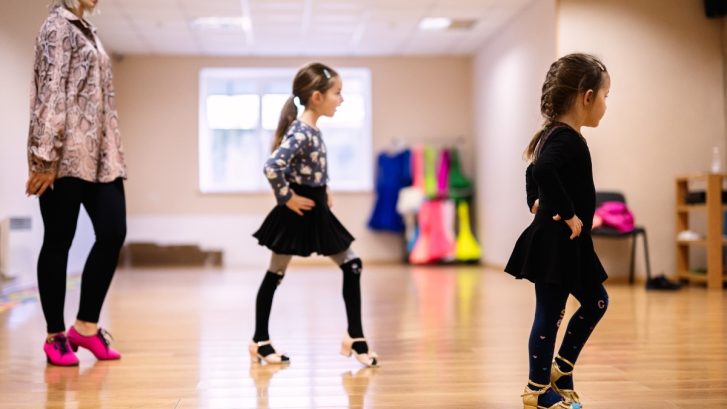
Young Girls Learning Dance Moves in Classroom with Instructor

Learning The Art Of Irish Dance In Dubai

Irish dance, with its lively steps and vibrant music, holds a special place in the hearts of those who cherish cultural traditions. This dance form, often celebrated through its public performances and competitions, carries a rich history that dates back centuries in Ireland. Today, it not only continues to thrive in its homeland but has also found a warm welcome in the cosmopolitan city of Dubai.

Understanding The Basics Of Irish Dance

Irish dance is a rhythmic marvel that combines grace, agility, and precision. Distinctive for its rapid leg movements while keeping the upper body largely still, this dance form offers a visual spectacle that can captivate any audience. But before one starts to learn Irish dancing, a grasp of its historical roots enriches the learning experience. Originating from traditional Irish dances that were performed at feasts and celebrations, it evolved significantly through the centuries, shaped by various social and political influences. This evolution has turned it into a structured dance form known worldwide, celebrated not only for its physicality but also as a vehicle for storytelling and cultural expression.

The Rise Of Irish Dance In Dubai

Dubai, a bustling global hub known for its skyscrapers and luxury shopping, is also a melting pot of cultures, making it a fertile ground for diverse cultural expressions like Irish dance. The city’s openness to global influences and its substantial expatriate community have led to a growing interest in cultural forms from around the world. Irish dance, in particular, resonates with both expats and locals alike, offering a slice of Irish culture through its energetic steps and engaging performances.

Irish dance classes in Dubai cater to a wide range of enthusiasts, from beginners to advanced dancers, and the community around it is welcoming and vibrant. For those looking to expand their dancing horizons even further, nearby Abu Dhabi also offers additional classes, broadening the opportunities for learning and exchange within the United Arab Emirates.

This rising interest in Irish dance reflects a broader trend of embracing and celebrating global heritage, which not only enriches the cultural fabric of Dubai but also connects its residents to international cultures and histories through the universal language of dance.

Learning Irish Dance: A Step-by-Step Guide

Embarking on your Irish dance journey is exciting. If you’ve decided to step into the world of Irish dance, starting with the basics is essential. Your first few classes will introduce you to the fundamental steps that form the backbone of Irish dance, such as the reel and the jig. These tutorials are designed to help beginners establish a solid foundation with simple, repetitive movements that emphasize timing and rhythm.

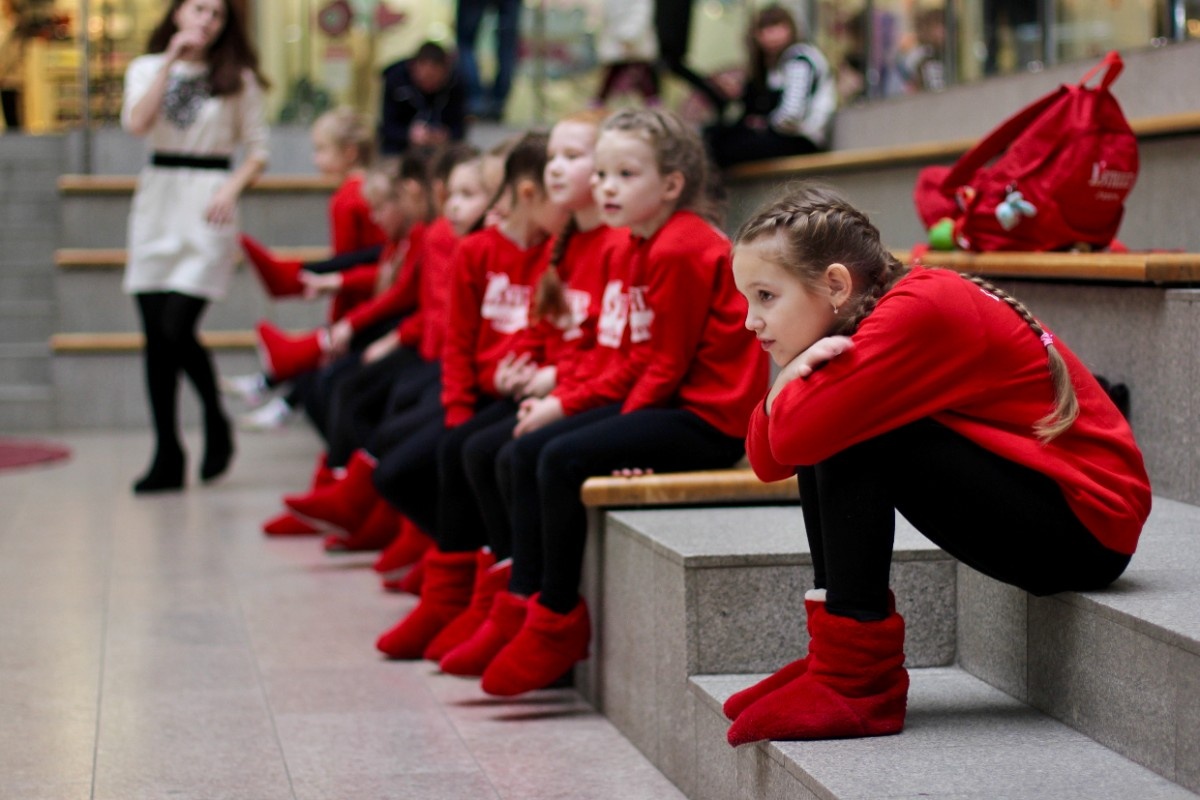
Young little girls in sportive red wear waiting to perform at a dance competition

As you begin, it’s normal to feel a bit overwhelmed by the speed and precision required. However, most instructors are skilled at breaking down each step into manageable parts, ensuring that even the fastest sequences become approachable with practice. A common piece of advice for beginners is to focus on mastering the timing of the music. Irish dance is deeply connected to its music, and having a good sense of rhythm is crucial.

Choosing The Right Irish Dance School in Dubai

When it comes to learning Irish dance in Dubai, the choice of a dance school can make a significant difference in your dance education. It’s important to consider what each school offers in terms of faculty expertise, class sizes, and available levels. Smaller class sizes mean more personalized attention, which can be crucial when you’re trying to nail down the nuances of Irish dance steps.

Some schools might also offer performance opportunities, which can be a fantastic way to gain stage experience and enjoy the thrill of dancing in front of an audience. Additionally, check if the school participates in competitions, which can provide a goal to strive for and a community to engage with.

If you live outside Dubai, consider looking into options in Abu Dhabi. Many schools offer similar programs and might be a good fit depending on your location and schedule. Finding the right environment that supports your learning style and connects you with a community of dancers is key to your growth and enjoyment in Irish dance.

The Physical And Cultural Benefits Of Learning Irish Dance

Learning Irish dance is not just about mastering the steps; it’s also a great workout and a deep dive into a rich cultural tradition. Physically, Irish dance is demanding. It requires stamina, flexibility, and strength, particularly in the legs and core. Regular practice can significantly improve your physical health, providing a cardiovascular workout that is both fun and challenging.

Culturally, engaging with Irish dance offers a unique insight into Irish heritage and traditions. The dance is steeped in history, and each movement and routine has its own story and significance. This cultural aspect adds depth to the practice, making it more than just an exercise—it becomes a meaningful connection to a rich heritage.

Moreover, the Irish dance community is known for its welcoming spirit and strong camaraderie. As you attend classes and events, you’ll likely find yourself becoming part of a tight-knit group that shares a passion for dance and a love for the arts. This social aspect can be particularly rewarding, providing a sense of belonging and an opportunity to make new friends who share your interests. Whether you’re looking to improve your physical fitness, explore a new culture, or connect with others, Irish dance offers a comprehensive experience that goes beyond the dance studio.

Preparing For Your First Irish Dance Class

As you get ready for your first Irish dance class, it’s essential to dress appropriately to move comfortably and safely. Typically, dancers wear light, breathable clothing that allows for full range of motion. Fitted garments are preferred because they enable instructors to see your body alignment and movements clearly. For footwear, beginners can start with any soft dance shoe, though you might want to invest in Irish dance shoes or ‘ghillies’ as you progress.

In addition to the right attire, bringing a water bottle and a small towel can help as Irish dance is an energetic activity, and staying hydrated is key. Also, having a notebook can be handy to jot down steps, corrections, or any insights you gain during the class. Being well-prepared not only boosts your confidence but also helps you make the most of each session.

Progressing In Irish Dance

As you continue your Irish dance education, you’ll discover that the learning never really stops. Once you’ve mastered the basics, you can move on to more advanced techniques, like intricate footwork and increased speeds. It’s important to be patient with yourself as you tackle these new challenges. Progress can sometimes feel slow, but consistency is your greatest ally.

To keep yourself motivated, set personal goals, whether they’re related to technique, stamina, or performance. Some dancers find that participating in competitions or public performances gives them targets to aim for. Others may enjoy the personal satisfaction of mastering complex routines. Whatever your goals, the key is to enjoy the journey and celebrate the small victories along the way.

Conclusion

Irish dance is more than just an art form; it’s a vibrant, engaging, and fulfilling activity that enriches both body and soul. If you’re curious about Irish dance or looking for a new way to connect with culture, community, and fitness, why not give it a whirl? Dubai’s welcoming dance schools and enthusiastic community make it the perfect place to start or continue your dance adventure. Lace up your dancing shoes and step into the lively world of Irish dance—you won’t regret it!

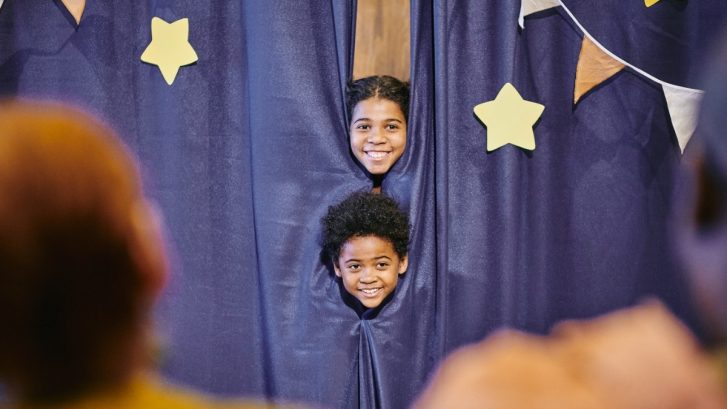
Two children peeping on stage as they get ready to perform

Children’s Drama Classes In Dubai

The stage is set in Dubai for young minds to explore their creativity and emotional expression through drama classes. These classes offer more than just acting skills; they are a playground for children to grow in confidence and social skills. As parents, understanding how drama classes can benefit your child will help you make an informed decision about involving them in the arts from an early age.

Understanding Drama Classes

Drama classes for children are more than just learning how to act. They are about storytelling, understanding emotions, and expressing oneself without hesitation. Young children, especially those around 5 years old, benefit greatly from drama as it introduces them to new vocabulary, helps them understand different emotions, and teaches them the basics of teamwork and communication. Through engaging stories and playful activities, children learn to articulate their thoughts and develop empathy, which are crucial skills in any child’s early education.

Choosing the Right Drama Class

When looking for the right drama class in Dubai, several factors should guide your choice. Location is key; it needs to be convenient enough so that the travel does not tire out the child. The qualifications of instructors are also crucial. Trained professionals who are skilled in working with children and have a passion for the arts can make a significant difference in the learning experience. Additionally, consider the class size. Smaller groups ensure more personalized attention, which is essential for younger children, such as those aged 5, who might need guidance to come out of their shells.

When assessing a program, think about the age-appropriateness of the content. Drama classes for kids in Dubai vary widely; some are geared towards performance, while others focus more on the educational aspects of drama. For younger children, classes that balance play with structured activities tend to work best, as they keep learning both fun and engaging.

Popular Drama Programs in Dubai

kids on stage at a drama class

Dubai offers a variety of drama programs that cater to children of all ages. These programs are often part of larger cultural institutions or independent drama schools that specialize in performing arts. Each program has its unique approach, but the best ones share a few common features: experienced educators, a well-rounded curriculum, and a focus on child-centric learning. When exploring options, look for programs that have a track record of successful shows and happy participants. It’s also a good idea to ask for testimonials from other parents or even attend a trial session to see how the classes are run and whether they fit your child’s temperament and interests.

Curriculum and Learning Outcomes

A well-designed drama curriculum for children will typically include a mix of activities—improvisation games, script reading, character play, and public speaking drills. The goal is to develop not only acting skills but also broader competencies such as creative thinking, public speaking, and emotional intelligence. For instance, through role-playing, children learn to step into someone else’s shoes, seeing the world from different viewpoints. This builds empathy and social awareness.

Expected learning outcomes vary by age and program focus, but generally, parents can expect their children to gain improved speech clarity and vocabulary, better emotional control, and enhanced confidence. These skills are especially beneficial for young children, helping them in everyday interactions and school presentations. Additionally, the teamwork involved in putting on a play teaches children about collaboration and working towards a common goal, skills that are valuable throughout life.

A Typical Day in Drama Class

A day in a children’s drama class is dynamic and filled with various engaging activities. Classes usually begin with warm-up exercises that help children shake off any shyness and get comfortable with their peers. These might include simple games that involve movement and voice exercises, which are great for breaking the ice and fostering a sense of group cohesion.

Next, the instructor might introduce a short story or concept, around which the day’s activities will be centered. Children might then engage in improvisation exercises based on this theme, which encourages them to think quickly and creatively. For the younger kids, such as 5-year-olds, these activities are often guided very closely by the instructors to ensure that all children are participating and absorbing the lessons.

As the class progresses, children might work on specific scenes, either from well-known plays adapted for children or original scenes that fit their age and skills. This part of the class often involves practicing lines, understanding stage directions, and learning how to express emotions through facial expressions and body language. The session might end with a group discussion or feedback session where children can reflect on what they learned and express what they enjoyed the most.

Benefits of Drama Classes for Children

The benefits of enrolling your child in drama classes are vast and varied. At a basic level, children enhance their ability to communicate and express themselves more clearly and confidently. Drama activities require children to articulate their thoughts and feelings, which improves their verbal and nonverbal communication skills.

Moreover, participating in drama helps to boost self-esteem as children accomplish tasks they might have thought beyond their capabilities, such as performing in front of an audience. Additionally, drama classes foster creativity and imagination. Children are encouraged to think outside the box and are often tasked with creating their own stories and characters, which stimulates creative thinking and problem-solving skills. This creative freedom allows them to explore different scenarios and outcomes, enhancing their ability to adapt and think quickly on their feet.

Parental Involvement

As a parent, your role doesn’t end with just signing up your child for a drama class. Your involvement can greatly enhance your child’s learning experience. This could be as simple as discussing what they learned in class on the drive home, or helping them practice their lines for a play. Your interest and encouragement can make a significant difference in how they perceive and engage with drama, turning it into a positive aspect of their growth and development.

Engaging further by attending their performances and giving feedback on their progress shows your child that you value their efforts and take pride in their achievements. This not only boosts their morale but also helps reinforce the skills they are developing. Additionally, such involvement gives you the opportunity to observe the teaching methods and the class environment, ensuring that it aligns with your child’s needs and your family’s values.

Overcoming Challenges

It’s common for children, especially the younger ones or those just starting, to face challenges such as stage fright or feeling overwhelmed by the attention. One effective way to help them is by encouraging them to express what worries them about the class and discussing these feelings openly. Teachers also play a crucial role here, as they can use their experience to help children ease into the activities gradually, ensuring that each child feels comfortable and supported.

Another challenge is dealing with disappointment, such as not getting a desired role or facing criticism. Here, parents and teachers can work together to teach valuable lessons in resilience and the importance of constructive criticism. Helping children understand that every experience is a step towards improvement can transform potentially discouraging moments into opportunities for growth. Additionally, such supportive interactions foster a safe environment where children feel free to take creative risks and explore their abilities without fear of harsh judgment.

Conclusion

Drama classes offer more than just acting lessons; they provide a platform for children to grow in numerous essential life skills. Whether your child is naturally outgoing or needs a little help coming out of their shell, drama classes can be a valuable addition to their extracurricular activities. So why not look into some classes near you? It could be the first step towards nurturing a confident and expressive young individual.

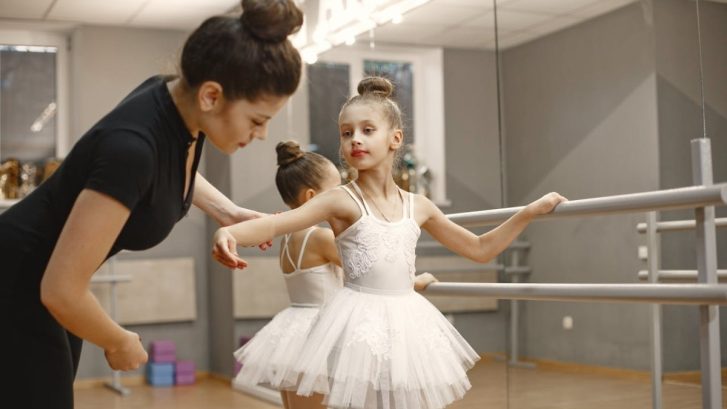
Two young ballerinas being taught how to stand by instructor

10 Fascinating Ballet Facts That Will Surprise You

Ballet, a dance form steeped in tradition, has been captivating audiences for centuries with its unique blend of artistry and athleticism. From its origins in the Italian Renaissance to the sophisticated stages of modern-day theaters, ballet has a rich history that reflects the evolving tastes and social changes of its times.

Origins Of Ballet

The story of ballet begins in the lavish courts of the Italian Renaissance where it was first developed as a form of entertainment for the aristocracy during the 15th century. The early performances were grand events, where dancing was just one of many entertainments, including music, poetry readings, and pageants. As these ballets grew in popularity, they began to incorporate more narrative and design elements, setting the stage for a form of art that was as much about storytelling as it was about movement.

Catherine de’ Medici, an Italian noblewoman who became the queen of France, is credited with introducing ballet to the French court. Her influence was pivotal as she brought her enthusiasm for dance along with her when she married King Henry II of France. It was in France that ballet began to flourish, developing its own language and etiquette. The first recorded formal ballet, “Ballet Comique de la Reine,” was performed in 1581, choreographed by Balthasar de Beaujoyeulx. This performance is often regarded as a turning point, marking ballet’s transformation into a more structured art form that emphasized the skill and grace of its dancers.

The Language Of Ballet

As ballet took root in France, it adopted French as the language of its technique. Today, regardless of where they are in the world, ballet dancers use French terminology to describe their movements and techniques. This tradition not only ties modern ballet dancers to their historical counterparts but also adds a layer of linguistic elegance to the physical elegance of ballet itself. Terms like “plié” (to bend), “jeté” (to throw), and “pirouette” (to spin) convey the precise and beautiful movements that ballet dancers strive to master.

This common vocabulary creates a universal language for ballet dancers, allowing them to train and perform anywhere in the world. It’s fascinating how a dance form that started in Italian courts and flourished in French palaces has now spread to all corners of the globe, yet still retains the French language as its medium of communication.

Ballet Shoes: Pointe And Flat

The evolution of ballet shoes is a testament to the changing demands and aesthetics of the dance. Originally, dancers wore heeled shoes, which suited the formal dances of the 16th and 17th centuries. However, as ballet evolved and the movement became more complex, the need for more flexible and accommodating footwear became apparent. By the 18th century, dancers had largely switched to soft, flat slippers, which allowed for a greater range of motion and more intricate footwork.

The introduction of pointe shoes in the early 19th century marked another significant evolution in ballet. These shoes, with their stiffened soles and structured boxes at the tips, allow dancers to rise to the tips of their toes, creating an ethereal, floating effect that has become synonymous with ballet. Pointe shoes elevated the aesthetic of ballet, enabling new choreographic possibilities and highlighting the superhuman grace and strength of ballet dancers.

The Physical Extremes Of Ballet

The elegance seen on stage belies the intense, often grueling physical effort that ballet requires. Dancers typically train for hours daily, honing their technique and building the stamina and strength necessary for their performances. This level of commitment to physical excellence is akin to that of professional athletes. Yet, unlike in many sports, ballet dancers must mask their effort, embodying grace and ease even in the most physically demanding sequences.

The training starts young, often in childhood, to mold the body’s flexibility and align it with ballet’s strict aesthetic requirements. This early start is crucial because it develops not only the physical capabilities required but also the muscle memory that allows dancers to perform complex combinations of steps with precision. The physical toll, however, is significant. Ballet dancers often face a high risk of injuries such as sprains, fractures, and chronic stress injuries, particularly to the feet, ankles, and spine, due to the repetitive strain of jumps and pointe work.

Role Of Male Dancers

Historically, ballet might conjure images of women in tutus and pointe shoes, but the role of male dancers has been just as pivotal. Originally, men dominated the stage, and it wasn’t until the 19th century that female dancers began to gain prominence. Today, male dancers are celebrated for their strength, agility, and ability to perform complex lifts and powerful jumps. They bring a dynamic presence to ballet that complements the elegance and finesse typically attributed to female dancers.

Great male ballet dancers like Rudolf Nureyev and Mikhail Baryshnikov have become legends, known not just for their technical prowess but for their ability to convey deep emotion and storytelling through dance. They have expanded the roles for men in ballet, moving beyond mere support to becoming central figures in performances. Their contributions have also helped to evolve ballet choreography and technique, pushing the envelope on what can be achieved on stage.

Pioneering Ballet Techniques And Styles

As ballet has evolved, so too have the techniques and styles that dancers learn and perform. Each school or style of ballet comes with its own set of principles and focuses that influence how dancers move and express themselves. For instance, the Vaganova method, developed in Russia, emphasizes the versatility and expressiveness of the upper body and arms, creating a fluid and dramatic style that is visually striking. This method has produced some of the world’s most famous dancers, who are known for their comprehensive ability to convey the story and emotion of the dance.

On the other hand, the Cecchetti method, Italian in its origins, focuses on the precision of movements and the purity of lines, and is celebrated for its detailed and meticulous technique. This method trains dancers to maintain balance and symmetry, which are crucial for executing the intricate choreography that ballet often demands.

In America, the Balanchine technique reshaped ballet with its emphasis on speed, athleticism, and clarity. Developed by George Balanchine, the Russian-born choreographer who co-founded the New York City Ballet, this style is characterized by its explosive jumps and extended lines, pushing dancers to new physical limits while maintaining a distinct aesthetic sharpness.

Iconic Ballets and Their Histories

“Swan Lake,” “The Nutcracker,” and “Giselle” stand as pillars of the ballet repertoire, cherished not just for their aesthetic and technical merits but also for their rich storytelling. “Swan Lake” offers a deep dive into themes of romance, deception, and duality, compelling audiences with its emotional resonance and the technical challenge of the lead’s dual role. “The Nutcracker,” with its magical Christmas setting, transforms theaters into winter wonderlands, appealing to families and introducing many to ballet for the first time.

“Giselle” transports audiences into a world of romantic tragedy and spectral beauty, showcasing ballet’s ability to explore complex emotional landscapes. The historical depth of these ballets reflects the changing tastes and societal attitudes over the centuries, offering a window into the past while remaining timeless in their appeal. Their continued popularity underscores ballet’s capacity to connect with audiences on a profound level, transcending cultural and temporal boundaries.

Ballet In Popular Culture

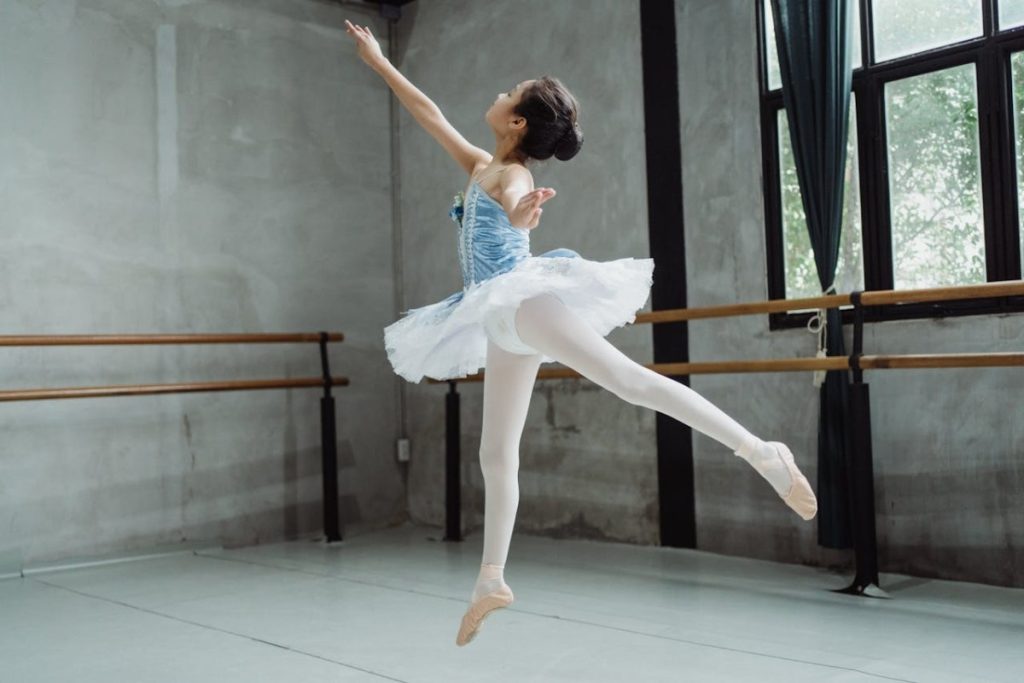
Ballerina girl performing ballet jump in studio

Ballet’s influence extends far beyond the stage, seeping into movies and television, where it often serves as a backdrop for exploring deeper psychological and social issues. Films like “Black Swan” have brought the rigor and intensity of ballet to the forefront, showcasing the demanding nature of the art and the dedication required of its practitioners. This portrayal helps demystify the art form and broadens its appeal, attracting viewers who might not typically attend a ballet.

Television series and documentaries about ballet also play a crucial role in bringing the nuances of this art form to a broader audience. They highlight the behind-the-scenes work and the personal stories of dancers, presenting ballet as an accessible and relatable form of expression. By showcasing the dedication and resilience of ballet dancers, these media help foster a deeper appreciation and understanding of ballet as a demanding physical and artistic pursuit.

Ballet Companies Around The World

The world’s leading ballet companies, such as the Bolshoi Ballet, The Royal Ballet, and American Ballet Theatre, are custodians of the ballet tradition, dedicated to preserving its heritage and advancing the art form. These institutions not only perform the classic repertoires but also commission new works that reflect contemporary themes and experiment with modern choreography. This balance between tradition and innovation helps keep ballet vibrant and relevant in the global arts scene.

These companies also act as cultural ambassadors, bringing ballet to international audiences and facilitating cultural exchange. Their tours and performances around the globe play a vital role in spreading ballet’s aesthetic and educational value, making it a global art form. Through their commitment to excellence and creativity, these companies inspire new generations of dancers and choreographers, ensuring the continued evolution and longevity of ballet.

Modern Ballet: Evolution And Innovation

Contemporary ballet represents a dynamic evolution of the form, as choreographers integrate modern dance elements and push the boundaries of traditional ballet. This innovation is not just about new movements but also includes using technology to create multimedia performances, enhancing both the storytelling and visual impact. These contemporary productions make ballet relevant to today’s audiences, who appreciate seeing current societal themes reflected on stage.

This modern approach also helps attract a younger, more diverse audience, ensuring the future sustainability of ballet. By embracing change and reflecting contemporary life, ballet remains a compelling and vibrant form of artistic expression. Choreographers like Wayne McGregor and Crystal Pite, known for their innovative approaches, have been instrumental in this modern transformation, ensuring that ballet continues to be a dynamic and evolving art form.

Conclusion

Ballet is more than just a dance form; it’s a dynamic art that has adapted and evolved through the ages, appealing to people across the globe and from all walks of life. Whether you’re a long-time aficionado or new to the world of ballet, there’s always something new and exciting to discover. So why not catch a performance or explore some ballet history online? Dive into the beautiful, challenging world of ballet and see for yourself how this art form continues to inspire and captivate.

Young ballerina with trainer practicing ballet near barres

Master the Basics: Essential Beginner Ballet Moves You Need to Know

Welcome to the world of ballet—a dance form renowned for its grace and technical precision. If you’re just stepping into your ballet shoes, mastering the basics is your first leap toward becoming proficient in this classic art. This guide will walk you through the essential beginner ballet moves, giving you a solid foundation to build upon.

Ballet Terms and Meanings: The Language of Dance

Before mastering the moves, it’s essential to learn ballet’s vocabulary—a French-rooted language that defines every step and position. Key terms like plié (to bend), tendu (to stretch), and relevé (to rise) aren’t just words; they’re the building blocks of technique. Understanding these terms will help you follow instructions in class and connect movements with precision. As you progress, you’ll discover how terms like arabesque (a poised one-legged balance) and glissade (a gliding step) translate into the graceful storytelling ballet is known for.

Understanding Ballet Foundations

Ballet isn’t just a dance; it’s a language spoken through movements that convey stories and emotions. For beginners, appreciating the structure of a ballet class can significantly enhance learning efficiency. Classes typically start at the barre, where dancers practice basic exercises before moving to the center, where they perform without support. This progression not only helps in building strength and technique but also instills discipline, a quality as crucial as physical agility in ballet.

Ballet Warm-Up Exercises

Before you dive into ballet footwork or attempt any positions, warming up is crucial. Skipping this step can lead to injuries, and that’s the last thing you want. A good warm-up routine begins with gentle stretches to loosen your muscles. Start with neck rolls, shoulder shrugs, and arm circles to release tension in your upper body. Progress to leg stretches and gentle bends. Not only do these exercises prepare your muscles and joints for the strains of ballet, but they also set the stage for a session where body awareness is paramount.

After stretching, incorporate some basic Pilates or yoga moves into your routine. Exercises like the plank, downward dog, or even simple leg lifts improve your core strength, balance, and overall body alignment. These qualities are vital as they form the basis of all ballet movements. Remember, each exercise should be performed with the utmost care to form and posture, setting a high standard for the training session ahead.

Basic Ballet Positions

Once your body is warmed up, it’s time to tackle the basic ballet positions. These foundational stances are crucial; think of them as your ABCs in the language of ballet.

First Position

Start by placing your heels together, toes pointing outwards making a wide angle. Your arms should be rounded with the palms facing inward, as if hugging a giant beach ball. This position teaches balance and alignment.

Second Position

From first, step your feet apart (about a foot or so), still keeping your toes pointing out. Arms extend to the sides, curved slightly, strong but graceful. This position enhances your sense of space and lateral balance.

Third Position

Here, one foot crosses in front of the other, heel to arch. Arms remain curved—one held overhead, the other extended forward. Third position is less commonly used but serves as a good stepping stone to more complex positions and movements.

Fourth Position

Move your front foot about 12 inches forward from third, toes pointing out. One arm is overhead, the other in front with both curved. This position challenges your balance and prepares you for fluid motion in dance sequences.

Fifth Position

Bring your front foot to meet the back foot, heel to toe. Both arms are rounded above your head, closing the circle. This position demands a high degree of discipline and control as it forms the basis for many turns and elegant poses in ballet.

Each position requires careful attention to form—misalignment can lead to habits that are hard to break and can hinder your progression in more advanced techniques.

Ballet Footwork for Beginners

Now that you’re familiar with the basic positions, let’s transition into actual footwork, which brings the dance to life. Understanding and mastering these initial steps will pave the way for more complex sequences as you progress.

Ballerina stands on one foot and holds the other behind her head

Plie

This is essentially a ballet squat. Starting in first or second position, bend your knees over your toes, keeping your heels on the floor as long as possible. The plie is foundational for almost every jump in ballet, helping to absorb shock and provide power.

Tendu

From any of the five positions, slide your foot out along the floor until it is fully extended with only the toes touching, then slide it back in. Tendus train foot articulation, a critical element for fluid, graceful movements.

Glissade

This is a slide rather than a step. Start in fifth position, plie slightly, then glide one foot to the side, followed by the other, to land softly in fifth again. It’s a connecting step that teaches you to move smoothly and maintain poise between more dramatic movements.

Pas de bourrée

This involves a sequence of steps usually executed in three parts: back, side, front. It’s a staple in choreographies for navigating small distances elegantly. Start with the right foot behind, step onto it, bring your left foot to the side, and then step your right foot in front. Reverse the order for the opposite direction.

These steps might seem minor, but they are building blocks for all ballet choreography. Practice them slowly and deliberately, focusing on precision and fluidity. As your confidence grows, so will your ability to execute these steps with the effortless appearance that ballet is known for.

Core Ballet Movements and Sequences

After mastering basic footwork, integrating core ballet movements into sequences can begin. These are more about the artistry of ballet—the expressive movements that often captivate audiences.

Arabesque

In this position, balance on one leg while extending the other behind you at hip height, toes pointed, creating a beautiful long line from your fingertips down to your toes. Your arms can vary in position, but typically one arm extends forward and the other aligns with your leg. The arabesque tests balance and strength and is fundamental for developing a dancer’s center.

Échappé

This jump involves moving from a closed position (like fifth) to an open one (like second) and back again. It’s a lively movement that helps build leg strength and agility. Start with a plie in fifth, then jump and slide your feet out to second, landing with soft knees, and then spring back to the starting position.

Relevé

Literally meaning ‘raised,’ this involves rising onto the balls of your feet (demi-pointe) or full pointe for more advanced dancers. You can perform relevé from any position, and it’s essential for developing calf strength and stability.

By integrating these movements into sequences, you begin to see how individual elements blend into the fluid dance that ballet is celebrated for. For instance, a simple combination could start with a plie, transition into a tendu to the side, move into an arabesque, and finish with a graceful échappé. Each sequence teaches transitions and how to maintain grace under the physical demands of dance.

Building a Practice Routine

Consistency is key when it comes to mastering ballet. Establishing a regular practice routine not only sharpens your skills but also deepens your understanding of the dance. Start with setting a specific time each day for your ballet practice. This helps create a habit and a rhythm, making it easier to stay committed.

Begin every session with a thorough warm-up to prepare your body, focusing on stretches that enhance flexibility and exercises that strengthen your core and legs. This preparation is crucial in preventing injuries and ensuring your body can handle the physical demands of ballet.

After warming up, spend significant time at the barre. Here, you’ll practice the basic positions and fundamental footwork you’ve learned. This repetition is vital; it reinforces muscle memory and helps refine your technique. As you become more comfortable with the basics, gradually introduce more complex combinations and sequences, pushing your limits but always mindful of maintaining proper form.

Once you’ve covered technique practice, devote some time to learning and rehearsing choreographies. This is where you can apply the moves and combinations you’ve practiced into fluid, expressive dance sequences. It’s also a chance to inject some creativity into your routine, experimenting with different expressions and emotional deliveries through your movements.

Finally, end each session with a cool-down. Gentle stretching helps relax your muscles and reduce soreness, ensuring you’re ready for your next practice. Reflect on what went well and identify areas where you might need more focus next time, setting goals for your upcoming sessions.

Conclusion

Mastering the basics of ballet is a journey that involves patience, persistence, and a lot of practice. Whether you’re dreaming of taking the stage or simply looking to embrace the art form as a new hobby, remember that every dancer started where you are now. Keep pushing your limits, practicing regularly, and embracing each new challenge with an open heart.

And if you ever feel stuck, remember: every plié and tendu takes you one step closer to your dance goals. So, lace up those ballet shoes, hit the barre, and let’s dance our way to grace and finesse. Ready to take the next step in your ballet journey? Keep practicing, and maybe I’ll see you at the barre!

Top 10 Ballet Dancers You Should Know in 2024

Ballet has always held a special place in the hearts of those who appreciate the arts. This year, as we look at the scene, a new wave of talent is making its mark. The world of ballet is alive with artists who not only honor the rich traditions of the dance but also push boundaries to create something truly exciting. As we spotlight the top ballet dancers of 2024, we find individuals who blend athleticism with artistry, bringing fresh creativity and passion to stages across America.

The Current State Of Ballet

This year has seen ballet leap into the forefront of the performing arts, thanks to the daring and innovative efforts of today’s dancers. These artists have managed to keep the traditional essence of ballet alive while weaving in modern elements that resonate with today’s audiences. This blend of old and new keeps ballet relevant and thrilling, allowing it to appeal to a wider audience. The dancers we celebrate today are not just performers; they are ambassadors of an art form that continues to evolve and inspire.

Ballet companies across the nation are supporting this evolution with new productions that challenge the norms and encourage a dialogue between the classical and the contemporary. This willingness to experiment and embrace change is what makes the current ballet scene so vibrant. Each performance is a conversation between dancer and viewer, a narrative told through movement and music.

The Evolution of Ballet In The Modern Era

The journey of ballet into the modern era is marked by an ever-growing interest in fusing genres and exploring new storytelling techniques. This has expanded the scope of what ballet can convey and the themes it can explore. From incorporating technology on stage to adopting themes that speak directly to contemporary issues, ballet is stretching its wings. Today’s top performers are not only skilled in the technical aspects of dance but also in connecting with their audiences on an emotional level.

The role of technology in transforming performances cannot be overstressed. With advancements in stage design, lighting, and sound, ballet performances have become more immersive. Dancers now perform in settings that enhance their storytelling, making each leap and twirl more impactful. This technological support does not overshadow the dancer’s skill but instead enhances the audience’s experience, making each performance a memorable spectacle.

Criteria For Selection

Selecting the top 10 ballet dancers of 2024 was no small feat. The criteria focused on a blend of technical excellence, creative innovation, and the ability to engage and inspire audiences. Each dancer on this list has made significant contributions to the ballet world this year, through standout performances and a commitment to pushing the artistic limits of the form.

These dancers have also been chosen for their role in elevating ballet’s profile in the broader cultural conversation. They are the ones who have stood out in prestigious national competitions, headlined major ballet events, and garnered critical acclaim for their performances. Their work is a testament to their dedication and their drive to keep ballet a dynamic and captivating art form.

Top 10 Ballet Dancers You Should Know In 2024

As we dive into the lives and careers of the dancers who are redefining ballet in 2024, it becomes clear just how much talent and passion drives this art form forward. Here’s a look at some of the standout artists making waves this year.

Ballerinas on their toes performing in class

Misty Copeland

Still an influential figure, Misty Copeland continues to captivate audiences as a principal dancer with the American Ballet Theatre. Her pioneering journey and ongoing commitment to the arts make her performances a must-see, and she remains a powerful advocate for diversity and inclusion in ballet.

Isabella Boylston

As a principal dancer with the American Ballet Theatre, Isabella Boylston is celebrated for her impeccable technique and emotional expressiveness. Her performances are noted for their clarity and intensity, making her one of the top ballet performers of 2024.

Precious Adams

An advocate for diversity, Precious Adams’ performances are as compelling as her advocacy. Dancing with the English National Ballet, she brings a unique blend of grace and strength to her roles, pushing the boundaries of traditional ballet narratives.

Madison Keesler

Having performed with the San Francisco Ballet and the English National Ballet, Madison Keesler is known for her versatility and deep artistic expression. Her dedication to exploring complex characters and stories through ballet has earned her critical acclaim.

Yasmine Naghdi

Principal at The Royal Ballet, Yasmine Naghdi is known for her technical precision and emotional depth. Her performances are marked by a remarkable ability to convey deep feelings through movement, making her one of the modern ballet stars of today.

Daniil Simkin

Originally a standout at American Ballet Theatre and now with Staatsballett Berlin, Daniil Simkin is known for his exceptional technical skills and magnetic stage presence. His performances are a blend of athleticism and precision, capturing the essence of modern ballet.

Kimin Kim

A principal dancer with the Mariinsky Ballet, Kimin Kim, originally from South Korea, is celebrated for his breathtaking leaps and profound technical prowess. His performances are a testament to his dedication and skill, making him one of the top ballet performers of 2024.

Olga Smirnova

Having transitioned from the Bolshoi Ballet to the Dutch National Ballet, Olga Smirnova is renowned for her classical technique and commanding stage presence. Her performances are deeply moving, characterized by a mastery of the traditional ballet repertoire and innovative modern works.

Cesar Corrales

Now a principal dancer at The Royal Ballet, Canadian-born Cesar Corrales is celebrated for his dynamic energy and compelling performances. His ability to infuse traditional roles with new life and interpretation makes him a standout figure in the ballet world.

Francesca Hayward

A principal dancer with The Royal Ballet in London, Francesca Hayward is acclaimed for her lyrical performances and versatility. Her ability to adapt to a wide range of styles makes her a pivotal figure in the current ballet scene, bridging classical and contemporary with finesse.

The Impact of These Dancers on the World of Ballet

When we think about the influence these ten ballet dancers have on the world of dance, it’s clear they’re not just part of the conversation—they’re leading it. Their unique approaches and undeniable skills have not only enriched the performances they partake in but have also encouraged a wave of innovation within the ballet community. They inspire young dancers to push their limits and redefine what’s possible in ballet. These artists have sparked new interest in ballet schools, increased attendance at performances, and expanded ballet’s reach through social media and other digital platforms, making ballet more accessible and relatable than ever.

Each dancer’s impact extends beyond their physical performances. They serve as role models, teaching workshops, participating in community outreach, and often speaking about the importance of arts in education. Their influence helps ensure that ballet is seen as a dynamic, evolving art form that is relevant in any era. By challenging traditional norms and integrating modern influences, they keep ballet vibrant and exciting for new generations of audiences and performers alike.

Conclusion

This year’s top ballet dancers have set the stage for a thrilling future in dance. They bring a combination of raw talent, innovative thinking, and a deep passion for the arts, which is evident in every performance. Watching them perform is a reminder of the power of dance to convey emotion, tell stories, and bring people together.

If you’re inspired by the art of movement, take the time to see these performers in action. Whether you’re a longtime ballet enthusiast or just getting interested in the world of dance, their performances are not to be missed. Let’s continue to support and celebrate the remarkable talents that keep the art of ballet alive and thriving. After all, ballet is more than just a dance—it’s a celebration of human expression at its most profound. So grab a ticket, take a seat, and prepare to be moved.

1 2 3 4 5 6