music lessons for kids

The Neurological Benefits of Music Lessons for Kids

Music lessons offer more than just an artistic outlet for children; they are a gateway to enhanced neurological development. Engaging in music education from a young age can sharpen a child’s cognitive abilities, emotional skills, and social interactions. This exploration reveals why hitting those notes can be as beneficial for the brain as it is for the soul.

Cognitive Enhancements

Music lessons serve as a mental gym where children can flex and grow their cognitive muscles. Memory improvement is one of the most significant benefits. Learning to play pieces from memory or remembering complex rhythms can enhance a child’s ability to store and retrieve information. This is crucial during school years when memory plays a central role in learning and academic performance.

Attention and concentration are also honed through music education. Playing an instrument requires a child to focus on a range of elements simultaneously — from reading music and keeping tempo to the physical act of playing the notes correctly. This intense focus can spill over into other academic subjects, aiding concentration and the ability to multitask.

Moreover, engaging with music sharpens executive functions, which include higher-level thinking skills like planning, organizing, and strategizing. These are developed through activities such as interpreting a composer’s intentions and expressing them through performance, or by adapting to the immediate feedback received during music lessons.

Emotional and Behavioral Benefits

Music not only develops the mind but also nurtures the heart. The emotional benefits of music education can be profound. It allows children to express themselves in ways that words cannot, providing an outlet for complex emotions. This expression can lead to greater emotional regulation and reduced anxiety, as children use music as a form of emotional release and personal reflection.

The discipline of regular practice and the patience required to learn an instrument are invaluable life skills. Children learn that progress in music, as in life, comes from persistence and hard work. These lessons in discipline and delayed gratification are critical as they grow into young adults.

Language Skills and Communication

Music education influences language development too. Numerous studies suggest that musical training can improve verbal skills, enhance reading abilities, and even make learning new languages easier. Music involves a lot of decoding, which is similar to reading text. Children who can read music are often proficient in quickly recognizing patterns in written language as well.

Additionally, music can enhance listening skills, vital for language comprehension and effective communication. Musicians learn to distinguish subtle differences in sounds, a skill that translates into better auditory processing in day-to-day conversations and in academic settings.

Social Advantages

Learning music doesn’t only happen in isolation. When children participate in band rehearsals, orchestras, or choirs, they learn how to harmonize not just musically but socially as well. Teamwork is inherent in these group activities, requiring each member to listen attentively to others and adjust their own playing to support the collective sound. This ability to collaborate effectively is crucial in any group setting, whether in school projects or later in professional environments.

Moreover, music can serve as a bridge to cultural heritage and community values. Participating in local music groups or performing at community events helps children feel connected to their community. It fosters a sense of belonging and can be especially powerful in diverse societies, where music acts as a universal language that brings people together.

Building confidence through music is another significant social advantage. Performing in front of an audience teaches children to overcome anxiety and to present themselves confidently. These experiences help them develop public speaking skills and self-assurance in their abilities. Music encourages children to express their ideas and emotions openly, which is vital for personal development and effective interpersonal communication.

Long-Term Neurological Impacts

The benefits of musical training extend far into the future. Engaging with music from a young age can influence brain plasticity, the brain’s ability to change and adapt as a result of experience. Research indicates that those who play music regularly have more robust brain structures and connections. These changes can enhance cognitive functions across the lifespan, aiding in everything from problem-solving to emotional regulation.

Moreover, the discipline of learning music can also lead to improved neurological resilience. Early musical training can delay cognitive decline and enhance the brain’s ability to adapt to aging and environmental demands. This suggests that the skills learned from music lessons can provide a buffer against typical age-related challenges.

Music education not only supports academic achievement during school years but also contributes to lifelong learning capabilities. Adults who had music lessons as children often find it easier to learn new skills and adapt to changes. This continuous capacity for learning is crucial in the rapidly evolving world, where adaptability is key to personal and professional success.

Enhancing Everyday Life Through Music

Beyond the structured environments of school and music lessons, the skills gained through musical training permeate all aspects of life. Music helps develop a disciplined approach to tasks and a creative problem-solving mindset, which are valuable in any career. Moreover, the social connections made through music can lead to lasting relationships and networks, enriching a person’s social and professional life.
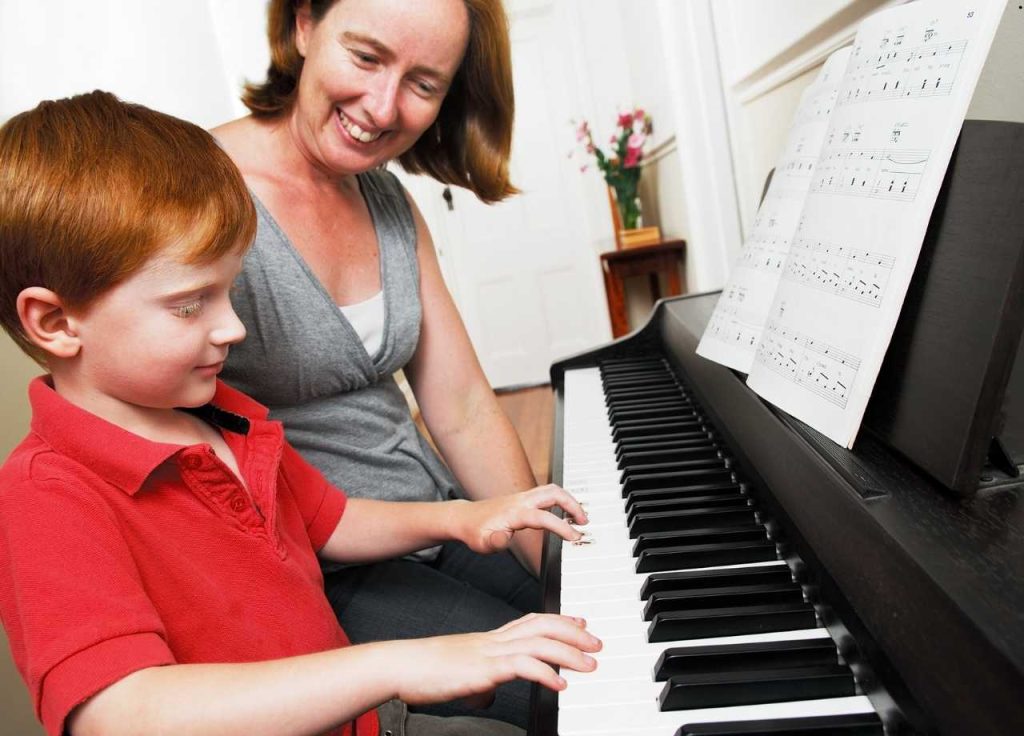
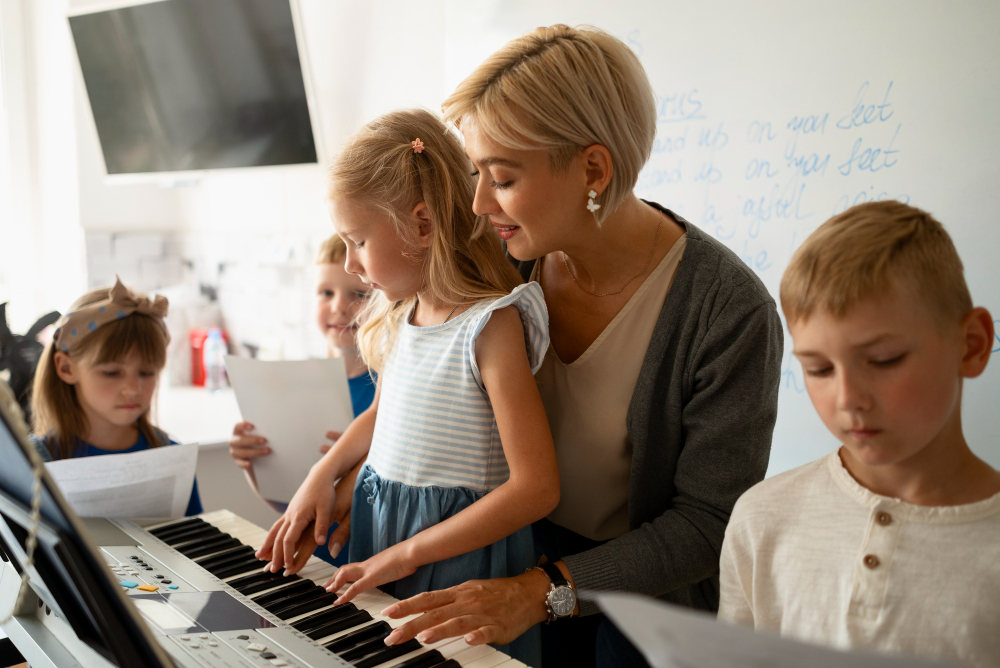
A little boy and his mom smiling as she teaches him how to play piano

The relaxation and joy that music can bring into everyday life also contribute to overall well-being. Whether playing an instrument at home, sharing a musical experience with friends, or enjoying live performances, the personal satisfaction and happiness derived from music are immeasurable.

Brain Plasticity and Lifelong Benefits

The ongoing engagement with music has profound effects on brain structure and functionality. Known as brain plasticity, this aspect refers to the brain’s ability to form and reorganize synaptic connections, especially in response to learning or experience. Music, with its complex cognitive and sensory demands, enhances this plasticity, leading to improved brain function throughout a person’s life. Regular musical practice strengthens these connections, which supports other cognitive abilities such as learning, memory, and problem-solving.

Children who study music often develop a higher resilience to cognitive decline as they age. This is because music training can bolster the brain’s ability to counteract the effects of aging and maintain cognitive functioning longer. The discipline and patience learned through music not only build a strong work ethic but also an adaptable and resilient brain.

Cultural and Creative Impact

Engagement in music also exposes children to different cultures and historical periods, enhancing their cultural appreciation and empathy. Learning about the origins of different music styles and instruments can broaden a child’s understanding of the world, promoting inclusiveness and diversity awareness. Additionally, music stirs creativity. By encouraging interpretation and improvisation, music lessons make children better problem solvers and innovators, skills highly valued in any professional field.

Conclusion

The benefits of music lessons extend far beyond the basic skills of playing an instrument. They encompass significant cognitive, emotional, and social growth, not to mention the lifelong joy and satisfaction music brings. If you’re considering enrolling your child in music lessons, think of it not just as an investment in their musical skills but in their overall development and future potential. Why not explore local music programs today and see how they can enrich your child’s life? Let’s make music a key part of growing up!
Cello Lessons: Shaping Behavior and Focus in Children

Exploring the gentle strings and deep resonances of the cello can do more than just teach a child to play music—it can transform them. This blog delves into how cello lessons can profoundly shape a child’s focus, behavior, and overall development, opening up a world of possibilities for their future.

Understanding the Cello’s Complexity And Appeal

The cello, with its deep, resonant tones and elegant form, is more than just a musical instrument; it’s a gateway to a rich learning experience for children. Unlike smaller string instruments, the cello demands a certain physicality that can be both challenging and rewarding for young players. This challenge is part of what makes the cello so appealing to children and their parents alike. Its sound, capable of producing everything from powerful, bold pitches to soft, melodic whispers, captures the imagination and encourages emotional expression in ways few other instruments can.

Playing the cello requires understanding its unique mechanics and learning to interpret musical notation, which can significantly boost cognitive skills such as critical thinking and spatial awareness. As children navigate through these complex tasks, they not only learn music; they learn how to learn, setting a foundation for all future educational endeavors.

Cognitive Benefits of Learning The Cello

The process of mastering the cello offers profound cognitive benefits. Studies have shown that children who engage in music education tend to perform better in areas requiring high levels of concentration and detailed analysis. Learning to play the cello involves both hemispheres of the brain, which enhances memory and problem-solving skills. It also improves children’s ability to process multiple types of information simultaneously, a skill that translates well beyond the music room.

Moreover, the discipline of regular practice and the need to focus during lessons can heighten children’s overall attention span and their ability to concentrate on tasks in more academic settings. These skills are often visible in improved performance in subjects like math and reading, where attention to detail and systematic thinking are crucial.

Emotional and Behavioral Advantages

The emotional benefits of cello lessons are equally significant. Learning any musical instrument can be a deeply emotional experience, but the cello, known for its closeness to the human voice in tone, can particularly help children express and manage their feelings. Playing music can serve as an outlet for emotions, which is crucial during the often tumultuous years of childhood and adolescence. This emotional release can lead to better mood regulation, reduced stress, and a healthier mental state overall.

Discipline is another critical aspect that music education fosters. Regular practice sessions require commitment and patience, qualities that, once developed, are likely to spill over into other areas of life. Teachers and parents often report noticeable improvements in behavior and increased responsibility in children who take music lessons. This discipline can lead to better habits at home, such as regular homework completion and chores, demonstrating how musical training can reinforce positive behavior.

Physical Development Through Cello Lessons

Playing the cello is not just an art; it’s also a physical workout that involves the whole body. From maintaining the right posture to managing precise finger movements on the strings, cello playing helps enhance children’s physical coordination and strength. Such physical engagement promotes overall motor skills that are beneficial in many other activities and sports.

Furthermore, the act of holding the bow and drawing it across the strings develops fine motor skills and hand-eye coordination. These are critical developmental areas for children, impacting everything from writing to sports and other instruments. The physical demands of playing the cello can also contribute to better overall physical health and encourage a lifelong habit of good posture.

Social Skills Enhancement

Group settings in music education, such as ensemble playing and public performances, provide rich soil for nurturing social skills. When children participate in cello lessons, they often have opportunities to engage with peers through recitals or even small group practices. This engagement requires communication and cooperation, which are crucial components in any collaborative effort.

Children learn to listen to each other’s parts, time their own entries, and adjust their playing in response to the group’s needs. These activities foster a sense of community and support among young musicians, encouraging them to work together harmoniously. Performing in front of an audience also boosts children’s confidence and helps them manage anxiety related to public speaking and performance, skills that are valuable throughout life.

Impact on Academic Performance

The discipline and focus required to learn the cello have positive repercussions in the classroom as well. There’s a well-documented link between musical training and academic success, particularly in disciplines like mathematics and language arts. Music education emphasizes patterns, fractions, and rhythm, which directly correlate with mathematical concepts. Reading music also enhances language skills, as it involves decoding symbols and interpreting them to create meaning, much like reading text.

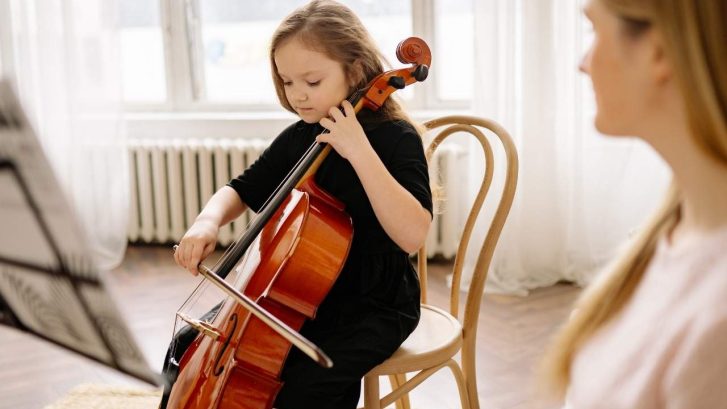
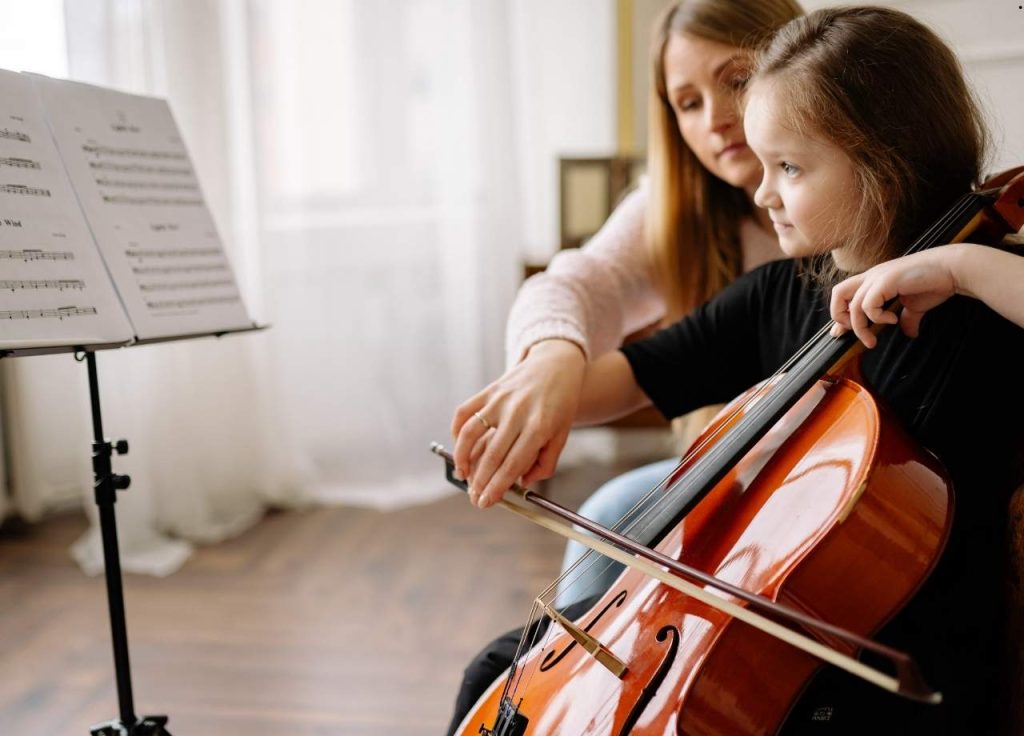
little girl playing chello while looking at music sheet as her mother guides her

Additionally, the concentration that music demands can lead to improved attention spans in children. This enhanced ability to focus is a significant advantage in any academic setting, where children need to absorb and process new information, participate in discussions, and complete exams. Teachers often notice more diligent and attentive behavior in students who are involved in music lessons, showing how these skills transfer to academic achievements.

Long-term Effects Of Cello Instruction

The benefits of learning the cello extend far beyond childhood, influencing a person’s life and career well into adulthood. Early musical training shapes traits such as resilience and perseverance. The effort required to master challenging pieces or improve technique through repetitive practice teaches children that persistence pays off. These are the same traits that stand individuals in good stead in their professional lives, promoting a work ethic that is likely to lead to success in various fields.

Moreover, the self-expression and emotional intelligence developed through music can enhance interpersonal skills and empathy, qualities that are increasingly recognized as important in any career. Many adults who took cello lessons as children speak of music as a lifelong companion that provides stress relief, joy, and a creative outlet.

Conclusion

Cello lessons offer far more than just music education. They shape young minds and bodies, preparing them for the challenges of life with skills that extend well into adulthood. From enhancing academic performance to boosting social skills and emotional intelligence, the benefits of learning this profound instrument are comprehensive and impactful.

For parents thinking about enriching their child’s life with music, starting cello lessons could be a key step towards fostering not just a talented musician but a well-rounded, thoughtful individual. If you’re interested, why not explore local music schools or independent instructors? It could be the beginning of a beautiful journey for your child, filled with growth, discovery, and the joy of music. Let’s give our children the tools they need to build a confident, capable future, starting with the enriching power of the cello.

Violin for Beginners: Why Kids Find It Easier Than You Think

The violin, a mainstay in both classical orchestras and modern music settings, stands out as a versatile and enduring instrument. Known for its vibrant tone and emotional range, the violin has captured the hearts of audiences and players for centuries. Originating in the early 16th century, it has evolved through craftsmanship and performance into an instrument that speaks a universal language of emotion.

Why Children Excel at Violin

Parents often wonder whether a musical instrument as sophisticated as the violin is suitable for their children. The truth is, children have certain advantages when it comes to learning the violin that adults might not. The plasticity of the young brain is extraordinarily receptive to musical training. The earlier a child begins to learn an instrument, the more profound the impact on their cognitive development, including areas such as problem-solving, memory, and language skills.

Moreover, physically, children are adaptable. Their hands and fingers can learn to navigate the fingerboard with surprising agility. With guided practice, they develop coordination and muscle memory more quickly than adults. This natural growth in skills is often visible in just a few months of consistent practice, providing visible progress that is incredibly rewarding for both the child and their supportive family.

Simplifying the Learning Process

Learning the violin is perceived as daunting due to its complex posture requirements and the need for precise finger placements. However, this challenge is being met with innovative teaching strategies tailored for young learners. For instance, the use of color-coded strings and fingerboard stickers helps demystify the early stages of learning notes and scales. Teachers now commonly incorporate elements of play into lessons, such as using storytelling or rhythmic games, making the learning process less about memorization and more about engaging interaction.

Technology, too, plays a pivotal role. Interactive apps that provide real-time feedback and gamified learning experiences make practice sessions both fun and productive. These tools not only help in teaching music reading and ear training but also keep the child engaged through visual and auditory cues, which are particularly appealing to the tech-savvy younger generation.

Parents are essential in this educational journey. Their role isn’t just to remind their children to practice but to participate actively. This could be as simple as showing interest in the pieces they are learning, attending their performances, or playing music at home to cultivate an enriching musical environment. This type of involvement shows the child that their efforts are valued, boosting their motivation and enthusiasm for learning.

Common Challenges and Solutions

Embarking on the journey of learning the violin comes with its set of challenges, especially for young students. One of the initial obstacles is the discomfort of holding the violin and bow correctly. It’s not unusual for children to feel a bit frustrated as they learn to balance the violin between their chin and shoulder while maneuvering the bow. However, these are temporary hurdles that can be overcome with patient guidance and consistent practice.

Teachers often introduce ergonomic aids like shoulder rests and specially designed chin rests to make this learning curve less steep. These tools not only make playing more comfortable but also prevent the development of poor posture habits that could lead to strain or injury. Parents can help by ensuring practice sessions are short but frequent, allowing the child to gradually build up their endurance without feeling overwhelmed.

Another common issue is the quality of sound produced by beginners, which can be less than musical. This can discourage not just the learner but their audience at home. Encouragement is crucial here, as well as understanding that every violinist starts at this point. Recording sessions to track progress or setting up mini-concerts for family can turn practice into a rewarding showcase of improvement, which is motivating for young musicians.

Learning Methods for Children

The choice of learning method can significantly influence a child’s success and enjoyment in playing the violin. Two popular methods are the Suzuki Method and traditional music reading.

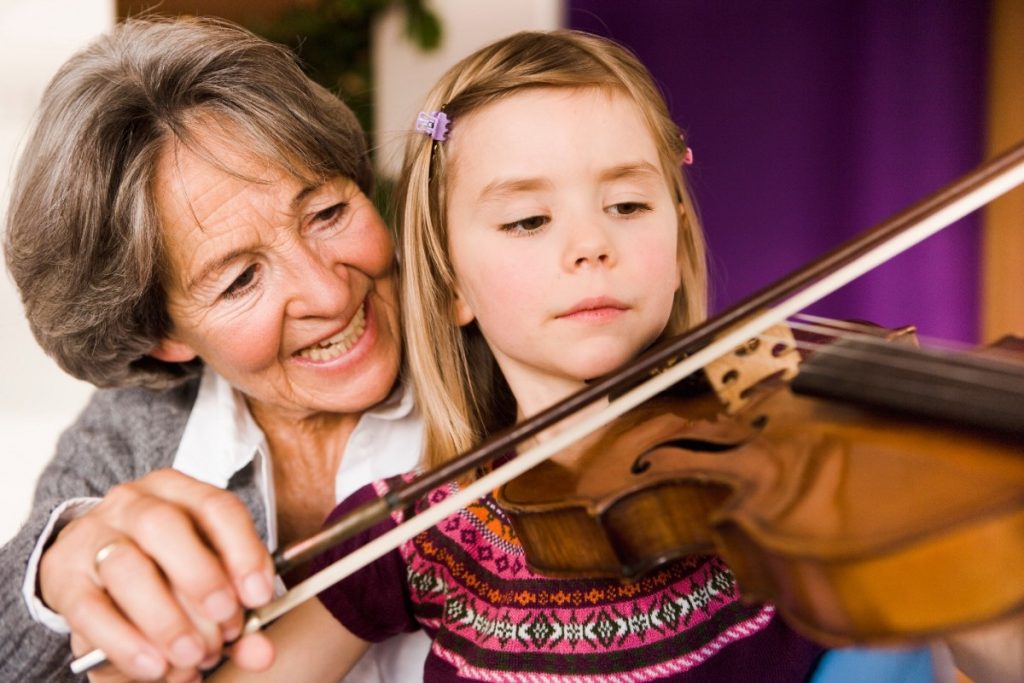
Grandmother teaching young girl to play violin

The Suzuki Method is particularly well-suited for children because it mimics the process of learning a language, which is a natural and familiar process for them. It emphasizes learning by ear and encourages starting at a young age. Students learn to play music by listening to pieces repeatedly before attempting to play them. This method also involves a lot of parental involvement, where parents are expected to participate in lessons and practice at home, making it a collaborative effort.

On the other hand, the traditional method focuses on reading music from the start. This approach teaches children how to read and interpret music notation, which is a valuable skill for any musician. It tends to be more structured than the Suzuki Method, with a clear progression through different levels of music theory and technique.

Both methods have their merits, and sometimes, a combination of both can be effective depending on the child’s learning style, their musical goals, and the resources available. Discussing these options with a qualified teacher can help tailor the approach to best fit the child’s needs.

Practice Makes Perfect

The saying “practice makes perfect” holds particularly true when learning an instrument like the violin. However, the key to effective practice, especially for children, is not just the duration but the quality and consistency of practice. Setting a regular schedule helps young learners develop a routine and treats violin practice as a normal, enjoyable part of their day rather than a chore.

Effective practice sessions are those that are focused and goal-oriented. Instead of practicing for an hour at a time, children benefit more from shorter, more frequent practices. Using a practice journal can help track what was practiced, the progress made, and what needs improving. This not only helps the child see their progress but also teaches them how to set goals and achieve them.

Interactive play, such as playing duets with peers or participating in group classes, can also enhance the learning experience. It introduces a social element to practice, which is often motivating for children. They get to see their peers play, share their own experiences, and learn together, making the entire learning process more enjoyable and less isolating.

Selecting the First Violin

Choosing the right violin is crucial for a beginner, especially a child. The size of the violin must be appropriate for the child’s age and physique to ensure comfortable playing. Violins come in various sizes, and a music teacher or violin shop can help you find the right fit. As for quality, while it’s tempting to opt for the least expensive option when starting out, poor-quality instruments can make learning more difficult due to issues with tuning and sound production.

Many parents choose to rent a violin initially. This can be a practical choice as it allows for flexibility in sizing and quality as the child grows and their needs change. When you’re ready to buy, seek advice from experienced musicians or teachers who can guide you toward a good-quality violin that fits your budget. Remember, a good instrument can make all the difference in maintaining a child’s interest and progress.

Community and Support

Building a supportive community around young violinists can greatly enhance their learning experience. Look for local youth orchestras, ensembles, or violin clubs where children can play with others. This not only helps improve their skills but also builds their social network, making the learning process more engaging and less isolated.

Having a support system in place also provides opportunities for children to perform, which is crucial for building their confidence and stage presence. Encourage participation in recitals, competitions, and other public performances. Positive feedback from these experiences is incredibly affirming for a child’s musical journey.

Continued Growth and Development

Once a child masters the basics of the violin, the next step is to deepen their skills and perhaps specialize in a particular style of music, be it classical, jazz, or folk. Advanced lessons can introduce more complex techniques and broader musical concepts that challenge the student and fuel their passion for music.

Encouraging children to explore different styles and composers can also keep their interest alive and allow them to find their own unique voice within the music world. As they grow, they may choose to participate in more competitive settings or aim for higher achievements like joining a prestigious youth orchestra or preparing for a conservatory audition.

The violin is not just an instrument; it’s a pathway to discipline, creativity, and lifelong enjoyment of music. If your child shows interest, why not explore violin classes in your area? Who knows, this could be the start of a wonderful musical adventure that contributes to their personal and artistic growth. Let’s make music part of their world!

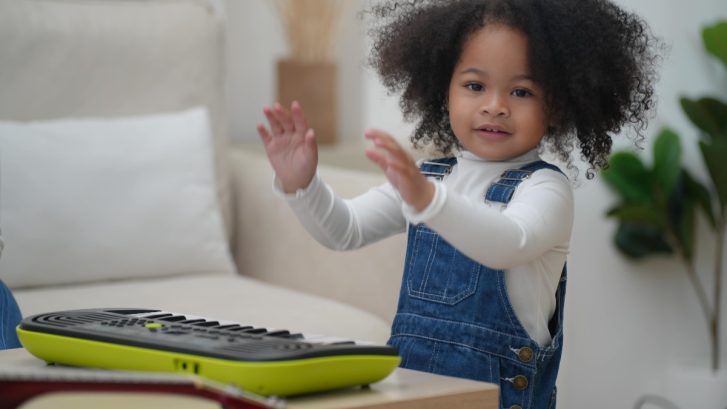
young girl smiling with hands raised with a keyboard in front of her

The Power of Music: How Learning an Instrument Boosts Kids’ IQ

Music isn’t just a way to fill a quiet room. It’s a bridge to better brainpower, especially for children learning to play an instrument. Let’s explore how this artistic endeavor can shape a young mind, enhancing everything from memory to math skills.

The Science of Music and Brain Development

When children learn to play a musical instrument, they’re not just mastering scales and notes—they’re also giving their brains a full workout. Research shows that engaging with music activates diverse areas of the brain. For instance, when kids work on timing and rhythm, they’re tapping into the same brain regions involved in mathematical thinking and reasoning. This overlap suggests why kids who study music often excel in math and logic tasks.

It’s about more than just numbers, though. Music sways its way into the centers of the brain responsible for emotional processing and creativity. Early musical training can help strengthen these neural networks, making them more adaptable and resilient. This isn’t just about building a more efficient brain in childhood; these benefits extend well into adulthood. Musical experiences in early life can pave the way for a sharper, more alert mind later on.

Cognitive Benefits of Learning an Instrument

Let’s break down the cognitive perks of picking up an instrument. First off, there’s memory. Learning music improves both working and long-term memory. Children need to remember chords, music readings, and hand positions, which exercises their memory muscles regularly.

Then there’s the boost to concentration skills. Music practice requires focus (no texting or video games in the background). This concentration can spill over into other academic areas, helping kids stay on task during homework or exams. Plus, the analytical skills gained from interpreting musical pieces can make problem-solving in other subjects seem like less of a chore.

Emotional and Social Benefits

Switching gears to emotional skills, playing an instrument can be a powerful outlet for expression. It allows children to communicate feelings they might not be able to put into words, from the highs of a fast-paced number to the poignant lows of a minor key. This emotional engagement can lead to deeper empathy and a better understanding of others’ emotions, key components of social intelligence.

A man sitting down in his lounge with his guitar by his side.

Moreover, music can be a solo act or a group effort. Participating in a band or orchestra teaches children about teamwork and collaboration. These are not just musical skills; they’re life skills. Playing with others also helps build a sense of community and belonging, important factors in emotional well-being.

Educational Outcomes

There’s a strong tie between musical education and better grades. This link isn’t just about the direct cognitive benefits of music; it’s about the broader habits and skills that musical training instills. For instance, studies have shown that children who learn an instrument often perform better on standardized tests. This improvement is especially notable in subjects like math and reading. The discipline of regular practice translates into more disciplined study and work habits.

Music also teaches patience and persistence. Learning an instrument isn’t a quick or easy feat—it takes years to master. This long-term commitment to a goal is a valuable mindset for academic success. Kids learn early on that persistence pays off, not just in music but in their studies and future careers as well.

Personal Stories

Consider Maya, a nine-year-old who started playing the violin at the age of five. Initially, she struggled with the basics, which was frustrating for a child accustomed to instant gratification. However, as she progressed, not only did her violin skills improve, but her parents and teachers also noticed a significant boost in her focus and determination in school. Her ability to stick with challenging math problems increased, and her reading comprehension scores shot up. Maya’s story is just one of many where music education plays a key role in broader academic achievements.

Then there’s Ethan, a student who had trouble fitting in and cooperating in group activities. Joining the school band changed that. The experience of working towards common goals in band practice helped him feel part of a team. His teachers reported that his improved cooperation skills were evident in other classroom activities too.

These stories reflect common outcomes reported by educators across various settings. They see students who are engaged in music becoming more resilient, cooperative, and motivated in their general education.

Tips for Integrating Music Into Everyday Learning

If you’re a parent thinking about how to integrate music into your child’s life, it doesn’t have to mean private lessons right away, which can be expensive and time-consuming. Start simple. Encourage your kids to sing along to songs on the radio, introduce them to different types of music, or enroll them in a school music program.

For those with the means and interest to invest further, consider instruments that align with your child’s interests and temperament. A child who loves to be the center of attention might thrive with a trumpet, while a more introspective child might connect with the piano or guitar.

Schools can also play a critical role. By providing robust music programs, they can offer all children, regardless of background, the opportunity to explore music. These programs can be incorporated into the regular school day, making music an integral part of the curriculum rather than an extracurricular activity. This accessibility ensures that every child gets the chance to experience the benefits of music education.

Encouragement for Wider Adoption

The value of music education extends beyond the individual to enrich our broader educational system. Schools with strong music programs often report a more engaged student body and a positive school culture. This positive atmosphere can decrease absenteeism and disciplinary issues, showcasing how music education contributes to a more dynamic and supportive learning environment.

Parents and educators alike can advocate for greater inclusion of music in the curriculum, not as a luxury but as a vital component of well-rounded education. By pushing for policies that support music programs in schools, we can ensure that these benefits reach as many children as possible.

The evidence is clear: learning an instrument can significantly boost a child’s IQ and overall educational experience. If you’re a parent, consider the lasting impact music could have on your child’s life. Why not explore local music classes or start with some fun, music-related activities at home? And if you’re involved in education, think about how you can support or expand music programs at your school.

best way to learn to play the piano

Learning To Play Piano With Precision And Speed

Mastering the piano requires more than just hitting the right notes; it demands precision and speed, two qualities that can elevate your playing from good to great. This post will explore effective methods to enhance these skills, ensuring you play beautifully and efficiently.

Understanding The Basics Of Piano Playing

The journey to becoming a proficient pianist starts with a solid grasp of piano mechanics. Every key you press, every note you play, involves a complex interaction between your fingers and the piano’s intricate design. This interaction is crucial because it influences not only the sound produced but also the ease with which you play. To achieve speed and precision, you need to start with the correct finger positioning and hand posture. Keeping your fingers curved and relaxed, and your wrists flexible, helps in minimizing effort while maximizing impact on the keys.

Another fundamental aspect is your sitting position. Aligning yourself comfortably at the middle C of the keyboard provides easy access to the entire keyboard, which is essential for playing complex pieces that require quick movements across the keys.

Fundamental Techniques For Precision

Once you’re comfortable with the basic posture and positioning, the next step is to refine your precision. This is where scales and arpeggios come into play. Practicing these might seem repetitive, but they are the building blocks of piano mastery. They help you develop muscle memory for common key patterns found in music, making it easier to hit the right notes even when playing at high speeds.

But how do you practice these scales? Slowly, at first. The goal is to be accurate. Speed is secondary. As you practice, listen carefully. Are the notes sounding clear and distinct? Is your timing consistent? These details matter because precision is not just about playing the right notes but playing them well. Incorporate different rhythms and articulations into your scale practice to challenge your fingers further and prevent boredom.

Developing Speed Through Strategic Practice

With a foundation of precision in place, you can start focusing on building speed. One effective method is to use a metronome. Start with a slow tempo that allows you to play a piece perfectly. Once you can handle it without mistakes, gradually increase the speed. This incremental approach helps build both confidence and capability without sacrificing accuracy.

Speed also involves physical comfort and muscle memory. Exercises that require you to play notes in quick succession can improve your finger independence and agility. For example, practice playing chords and note sequences that force you to stretch your fingers across the keyboard while maintaining your hand posture.

Developing speed isn’t just about moving your fingers faster. It also means thinking ahead. While playing a piece, your mind should be a few notes ahead of your fingers, planning the next movements. This mental preparation is key to not only playing faster but also playing more fluidly.

Advanced Techniques To Enhance Performance

As your skills develop, you’ll want to start adding more expression to your music. This isn’t just about playing notes faster or with precision; it’s about making the piano sing. Dynamics and articulation are critical here. You can practice this by varying the pressure on the keys to create soft and loud sounds, which adds emotion and depth to your performance. Don’t just play the notes—play with them, giving life to the melodies through your touch and timing.

Using the pedal is another technique that can help smooth out transitions between notes, especially at higher speeds. It can sustain a note or a chord, allowing you to move to the next note or section without a jarring silence. Experiment with the sustain pedal to see how it can enhance your playing, but be careful not to overuse it, as it can muddy the sound if not used judiciously.

Challenging yourself with advanced compositions is also a fantastic way to push your limits. Pick pieces that stretch your abilities in terms of both speed and complexity. This might be frustrating at first, but overcoming these challenges is what leads to significant improvement. Each new piece teaches you a new way to approach the keyboard and broadens your musical vocabulary.

Common Challenges And Solutions

Every pianist, no matter how experienced, runs into challenges. One of the most common issues is maintaining a consistent speed and rhythm. This might be due to tension in your hands or body, which not only slows you down but can also lead to injuries. To combat this, make relaxation a part of your practice routine. Stretch your hands and fingers before and after playing, and ensure you’re not stiffening your shoulders or back while you play.

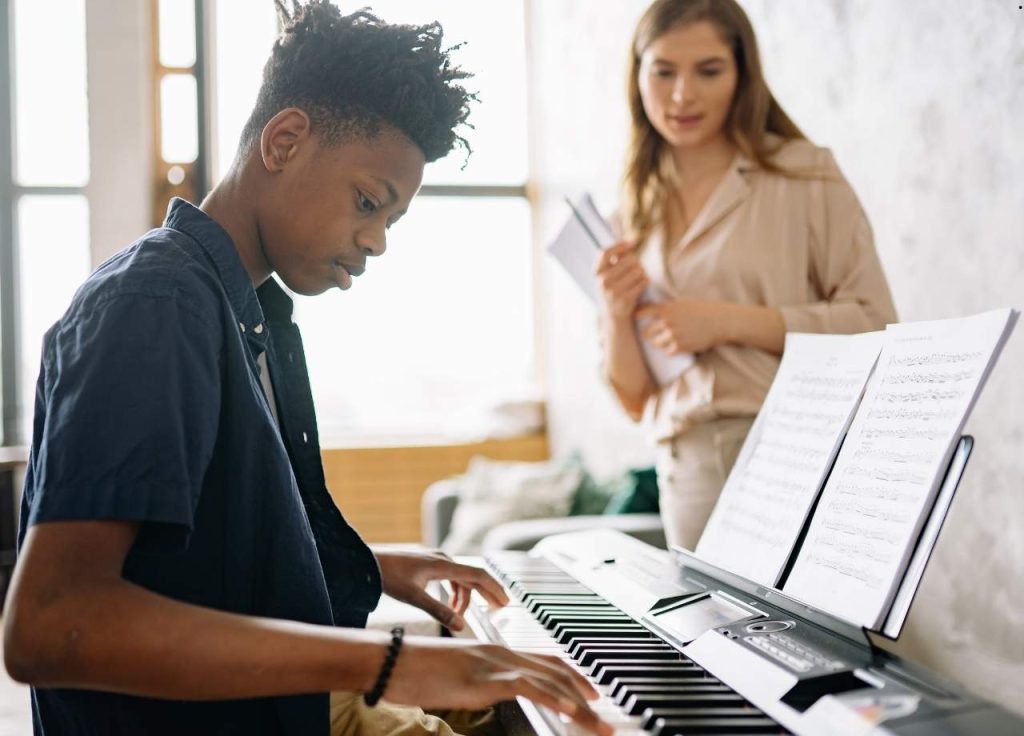
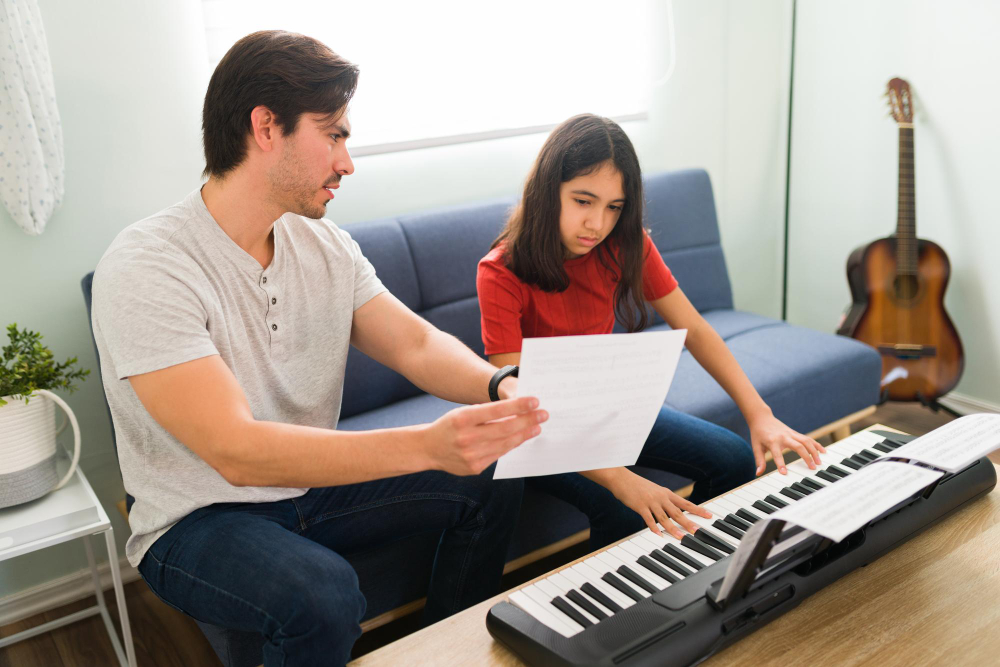
Young boy playing piano while teacher looks on

Timing issues often arise when transitioning between slow and fast sections of a piece, or when playing with others. Here, listening is as important as playing. Use recordings to play along with, or better yet, practice with other musicians. This not only makes your sessions more enjoyable but also hones your ability to keep time in a dynamic setting.

Uneven playing, where some notes are louder than others or played with a different tone, can also be a stumbling block. This usually stems from a lack of finger strength or independence. Regular practice focusing on finger drills can remedy this. Each finger needs to be able to act independently and with equal force to achieve evenness across your playing.

Routine And Practice Habits For Long-Term Improvement

A well-rounded practice routine is crucial for continuous improvement on the piano. Begin by setting clear, achievable goals for each session—whether it’s mastering a particular scale or working through a challenging passage in a piece. This focus prevents aimless playing and ensures you make the most of your practice time.

Balancing your routine is also important. Include a mix of technical exercises, theory work, and repertoire practice. This not only improves your playing but also deepens your musical understanding, making you a more well-rounded musician. For instance, you might start with warm-up exercises, move on to scale practice, then spend time on a new piece, and finish by playing a piece you enjoy.

Incorporating rest into your routine cannot be overstated. Regular breaks during practice sessions help prevent strain and fatigue. It’s not just about stopping when you’re tired; it’s about proactive rest, which can significantly enhance your performance and longevity as a musician.

Conclusion

Remember, mastering piano with precision and speed is a marathon, not a sprint. Be patient with your progress, and enjoy each step of your musical journey. Keep your practice sessions diverse and engaging, and don’t shy away from challenging yourself with new pieces or techniques. Most importantly, listen to yourself play, appreciate the music you create, and always strive for that next level of mastery.

Feel free to share your piano journey and the techniques that have helped you along the way. Let’s keep learning from each other and keep the music playing!

difference between fiddle and violin

Differences In Benefits Between Fiddle & Violin Classes For Kids

Parents often have to choose between violin and fiddle lessons for their children when considering music lessons. Though the two instruments look similar, they offer unique experiences and benefits. This guide aims to shed light on these differences, helping you make an informed decision that aligns with your child’s interests and personality.

Understanding the Instruments

The violin, often associated with classical music, is revered for its refined tone and the rigorous discipline it demands from its players. This instrument has carved its niche in orchestras and solo performances worldwide. Its music is written in sheet form, which requires the player to read and interpret complex musical notations.

On the flip side, the fiddle, while physically identical to the violin, dances to the beat of a different genre. Fiddles are staples in folk music, particularly in styles like bluegrass and Celtic. The music here is more about tradition and often passed down by ear, allowing a more freestyle form of play. This distinction highlights not just a different musical style but also a different approach to learning and playing.

Physical and Technical Differences

The physical differences between a fiddle and a violin might not be apparent to the untrained eye, but they influence how each is played. Fiddles often have a flatter bridge compared to violins. This subtle change allows fiddlers to play three or four strings at once, producing a rhythmically dense sound typical of many folk tunes. In contrast, the violin’s curved bridge is designed for clarity and precision, facilitating the clean playing of one string at a time.

This setup reflects in the playing techniques as well. Violinists are known for their strict form, with precise bowing and finger placements, which is crucial for the complex compositions they perform. Fiddlers, however, enjoy more freedom to improvise, making their style more relaxed and personal. This difference in technique not only affects the sound produced but also the learning curve and enjoyment of the student.

Musical Styles and Repertoires

The repertoire of each instrument underscores the cultural lineage and the musical environment the student will immerse in. Violin classes typically explore a wide array of compositions from renowned composers like Bach and Mozart, offering students a rich foundation in classical music history and theory.

Fiddle music, however, tends to be more community-oriented and informal. It includes a variety of folk tunes that are often learned through listening and played in a group setting. This social aspect can be particularly appealing and beneficial for kids who thrive in less structured, more interactive learning environments.

Learning Outcomes for Kids

The benefits of music education extend well beyond mastering an instrument—they foster cognitive development, emotional maturity, and social skills. When deciding between violin and fiddle lessons, it’s important to consider how each instrument can uniquely contribute to your child’s growth.

Violin lessons often involve a structured learning environment, which can significantly enhance a child’s ability to concentrate and improve their detail-oriented skills. Reading music, for instance, requires attention to rhythm, pitch, and dynamics, all of which are crucial for developing mathematical and language skills. Moreover, the discipline required to master classical pieces on the violin teaches patience and perseverance, qualities that are beneficial in academic and personal pursuits.

In contrast, fiddle lessons can be particularly effective in boosting a child’s confidence and social interaction. Since fiddle music is frequently played in group settings like folk gatherings and family reunions, it encourages kids to connect with others through music. This communal aspect of fiddle playing helps children learn teamwork and social engagement, as they often play by ear and improvise with fellow musicians, fostering a sense of community and belonging.

Educational Approaches and Curriculum

The educational path for violin and fiddle students can differ significantly, influenced by the traditions and expectations associated with each style. Violin education typically follows a formal curriculum, which includes graded levels and standardized examinations. This methodical approach ensures a comprehensive understanding of musical theory, technique, and history, preparing students for performances in solo and ensemble settings.

Fiddle instruction, however, might not adhere to the same formal standards. It’s commonly taught in a more relaxed setting, where learning by ear is encouraged, and personal expression is valued over technical perfection. This approach can be particularly appealing to kids who prefer a more hands-on, interactive learning style. It allows them to experiment and express themselves creatively, making music education a fun and engaging part of their lives.

These differing educational styles mean that the choice between violin and fiddle lessons should be guided by a child’s learning preferences. Kids who thrive in structured environments may benefit from the systematic nature of violin classes, while those who enjoy learning through doing may find fiddle classes more rewarding.

Suitability Based on Interest and Personality

The decision between fiddle and violin classes often boils down to a child’s personal interests and personality. For a child fascinated by classical music and who shows an inclination towards disciplined study, violin lessons can be incredibly fulfilling. The intricate compositions and the challenge of mastering complex pieces can provide a profound sense of accomplishment.

Conversely, if a child shows a natural inclination towards a more relaxed atmosphere and enjoys being part of a group, fiddle lessons might be the better option. The lively tunes and the communal play encourage spontaneity and joy in music-making, traits that resonate with outgoing or socially driven children.

Moreover, the choice can also reflect a child’s adaptability and learning style. A child who is detail-oriented and appreciates a challenge might excel with the violin, whereas a child who enjoys improvisation and prefers a flexible learning structure might find more joy in playing the fiddle.

Performance Opportunities

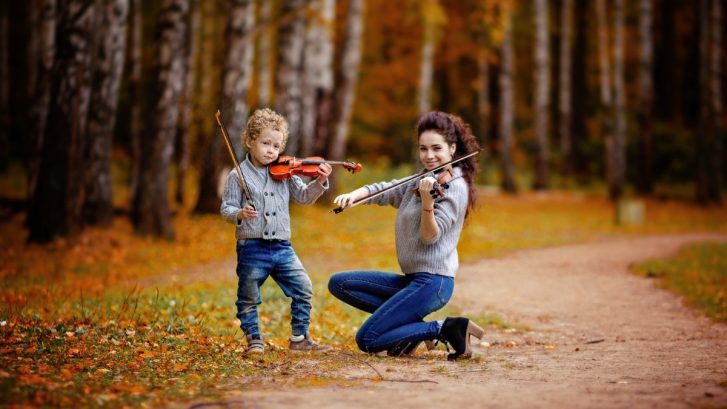
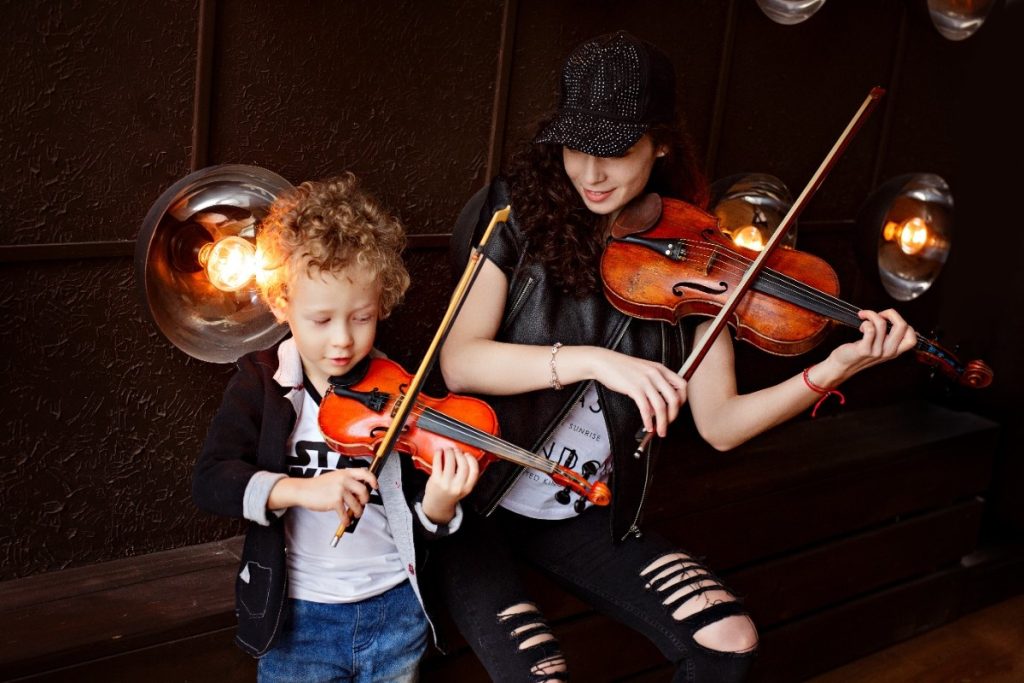
A young beautiful girl in black clothes sits next to her curly blonde with her son

The opportunities for performances also vary significantly between violin and fiddle lessons, impacting the kind of exposure and experience your child receives. Violin students often participate in formal recitals, competitions, and orchestra concerts. These events are excellent for teaching children about preparation, presentation, and the rewards of hard work. They also provide a platform for young musicians to showcase their skills in a structured environment, often bringing a sense of prestige and accomplishment.

Fiddle players, on the other hand, often find their performance venues in more casual settings like folk festivals, community gatherings, and jam sessions. These informal venues offer a different kind of thrill and excitement. They encourage spontaneity and foster an environment where children can feel comfortable experimenting and enjoying themselves without the pressure of formal judgment. This type of performance is excellent for building social skills and a sense of community among players.

Community And Cultural Engagement

Engaging with a community through music can be profoundly impactful for children, and both the violin and fiddle offer distinct cultural connections. The violin is often associated with classical music and high cultural events, providing children with an opportunity to connect with a rich historical tradition and partake in a globally recognized form of artistic expression. This can be particularly enriching for children who have a deep appreciation for history and a keen interest in global cultures.

Conversely, fiddle playing is deeply rooted in local traditions and folk music. It connects players to their cultural heritage and the local community in a tangible way. This connection can be especially strong in areas with a rich folk music history, where fiddle music is a vibrant part of local festivities and community life. For children, this fosters a strong sense of identity and belonging, which can be invaluable during their formative years.

Pros And Cons Of Each For Kids

Every child is unique, and the best musical education for them should cater to their individual needs, interests, and personality. Violin lessons offer rigorous training that enhances discipline and technical skill, suitable for children who thrive in structured environments and seek to achieve a high level of musical proficiency. However, this can sometimes be demanding and potentially overwhelming for some.

Fiddle lessons, on the other hand, emphasize a more relaxed and communal approach to music learning. They allow for a greater expression of creativity and spontaneity, making them ideal for children who prefer a more laid-back and engaging environment. This can lead to a joyful experience of music but might lack the formal training and discipline that classical violin lessons offer, which some parents might value for their educational benefits.

The less formal structure of fiddle lessons can be a double-edged sword; while it encourages fun and innovation, it may not provide the same level of technical mastery or preparation for classical music careers. This could be a consideration if your child has professional aspirations in the classical music sphere.

Choosing between violin and fiddle lessons for your child involves more than just selecting an instrument; it’s about matching the learning style, personality, and interests of your child with the type of music education that will benefit them the most. Whether it’s the disciplined beauty of classical violin or the joyful community experience of the fiddle, each offers unique advantages that can enrich your child’s life.

Take some time to talk with your child about what excites them in music. Consider attending a few concerts or watching performances online to get a feel for each style. Most importantly, choose a path that feels rewarding and fun for your child, as a happy musician is always the best kind. Ready to explore the wonderful world of music with your child? Let’s pick up an instrument and start playing!

childrens guitar

Children’s Guitar – How To Nurture Your Child’s Talent

Spotting a musical spark in a child can be as thrilling as it is daunting. How do you nurture this budding interest without overwhelming them or, worse, extinguishing that initial curiosity? As parents or caregivers, understanding the gentle balance between guiding and allowing space for self-exploration is key in fostering a child’s musical abilities, especially with an instrument as soulful as the guitar.

Recognizing Musical Interest

Children often show early signs of musical interest that can be easy to spot if you know what to look for. It might be the foot tapping along to the beat of a song, a fascination with musicians on TV, or a joyful reaction when they hear music. These moments are your cues to introduce them to the world of musical instruments. The guitar, with its tactile strings and harmonious sounds, often captures the imagination of young ones. It’s not just about noticing these signs but also about reacting positively to them. Show excitement in their interest, and if they point out a guitar in a store or on television, talk to them about it. Share stories of musicians or play songs that feature distinctive guitar solos to gauge and nurture their interest.

Encouraging Initial Exploration

Once you see that your child is intrigued by guitars, the next step isn’t to immediately sign them up for lessons but to let them explore the instrument in a no-pressure environment. You might start with a toy guitar or a ukulele, which is smaller and easier for tiny hands to manage. The goal here is to let them have fun. They can strum aimlessly, enjoy the vibrations of the strings, or simply hold and get accustomed to the feel of the instrument. This phase is about building a comfortable and joyful association with the guitar, which is crucial before any formal instruction begins.

Choosing The Right Guitar

Picking the right guitar is critical. For children, a guitar that is too large or has strings that are too tough to press down can quickly lead to frustration. Guitars come in various sizes, and the quarter, half, and three-quarter sizes are specially designed for younger students. Nylon strings are easier on the fingers than steel strings, making them a better choice for beginners. When selecting a guitar, involve your child in the decision. They might be drawn to a certain color or style, and incorporating their preference can make them even more enthusiastic about playing. It’s also useful to seek advice from a music store where staff can help you choose an instrument that fits your child’s size and age.

Creating A Supportive Learning Environment

The environment in which a child practices is almost as important as the instrument itself. Designate a specific area in your home for music practice. This doesn’t need to be a soundproof studio; a quiet corner in a living room or a bedroom can work just as well. Make sure this space is inviting and clutter-free, with everything your child might need within reach. This includes their guitar, a music stand, a comfortable chair (of the right height), and perhaps a small amplifier if they are using an electric guitar. It’s essential that this space feels special to them, a place where they’re happy to spend time.

Additionally, balance structured practice time with periods of free play. Especially in the early days, let them pick up the guitar and noodle around without any expectations. You might also play music in the background to inspire them, choosing songs with prominent guitar parts. Encouraging them to play along as they feel comfortable can bridge the structured and free play elements effectively.

Finding The Right Instruction

Choosing the right type of instruction for your child can profoundly impact their motivation and progress. While some children thrive under self-directed learning from online tutorials or books, most benefit significantly from having a teacher. A good guitar instructor can provide not only technical guidance but also motivational support and feedback that is crucial in the early stages.

When searching for a teacher, consider your child’s personality and learning style. Does your child respond better to a gentle, encouraging approach, or do they need a more structured and disciplined style to keep them engaged? It’s also important to find a teacher who has experience with children and understands how to make lessons enjoyable and appropriately paced. You can check local music schools, ask for recommendations from other parents, or even attend a few local music events where teachers often perform and interact with the community.

Once you find a potential teacher, don’t hesitate to ask for a trial lesson to see how they interact with your child. This can be a great way to gauge the chemistry between the teacher and your child before making a long-term commitment.

Practical Tips for Daily Practice

Consistent practice is essential for mastering any musical instrument, and the guitar is no exception. However, the challenge with children is to keep the practice sessions appealing and avoid them becoming a tedious chore. Here are some practical tips to help your child get the most out of their practice time:

1. Set A Regular Schedule:

Having a regular schedule helps instill a habit. Try to incorporate at least 15-30 minutes of practice a day, depending on your child’s age and concentration span. Ensure this happens at a time when your child is usually alert and happy, not when they are tired or hungry.

2. Break it Down:

Long practice sessions can be daunting for children. Instead, break the practice time into smaller, manageable segments. For instance, spend a few minutes on warm-up exercises, then switch to learning new chords, followed by song practice.

    3. Use Technology:

    There are numerous apps and online resources that make learning music theory and practicing fun. These can complement traditional learning by turning exercises into games and allowing children to learn at their own pace.

    4. Play Along Tracks:

    Playing along with music tracks can make practice more exciting. This helps children understand how the guitar fits within the context of a band or an ensemble and keeps them engaged.

    Encouraging your child to stick with a routine while keeping practice sessions light and fun can significantly improve their skill over time without burning them out.

    Encouraging Persistence and Patience

    Learning to play an instrument is a journey filled with highs and lows. Children, in particular, can feel frustrated when they don’t see immediate results. It’s important to teach them that persistence and patience are part of learning an instrument. Share stories of musicians who struggled initially but succeeded through perseverance. Remind them that every musician, no matter how skilled now, started as a beginner and had to overcome challenges.

    Celebrate small victories together. Did your child master a new chord or play through a song without mistakes? These are significant achievements worth celebrating. Recognition of these small successes helps build confidence and reinforces the value of persistence.

    Engaging with the Music Community

    Engagement with a broader community of musicians can be incredibly motivating for children learning the guitar. Look for local or online music communities that welcome young learners. Many communities and schools organize “jam sessions” where learners can come together to play music in a non-judgmental setting. These sessions are invaluable for building confidence and social skills.

    Additionally, attending live music performances can also be inspiring. Watching other musicians, especially those who are at different stages of their learning journey, can provide both motivation and a sense of what is possible to achieve with dedication.

    Tracking Progress and Celebrating Milestones

    Keeping track of progress is more than just noting what songs have been learned. It involves observing the improvement in skills, the complexity of the pieces they can handle, and their confidence in playing. Create a simple log book or digital document where you and your child can note these milestones. This log can be as straightforward as a list of new songs learned, new chords mastered, or performances they felt particularly proud of.

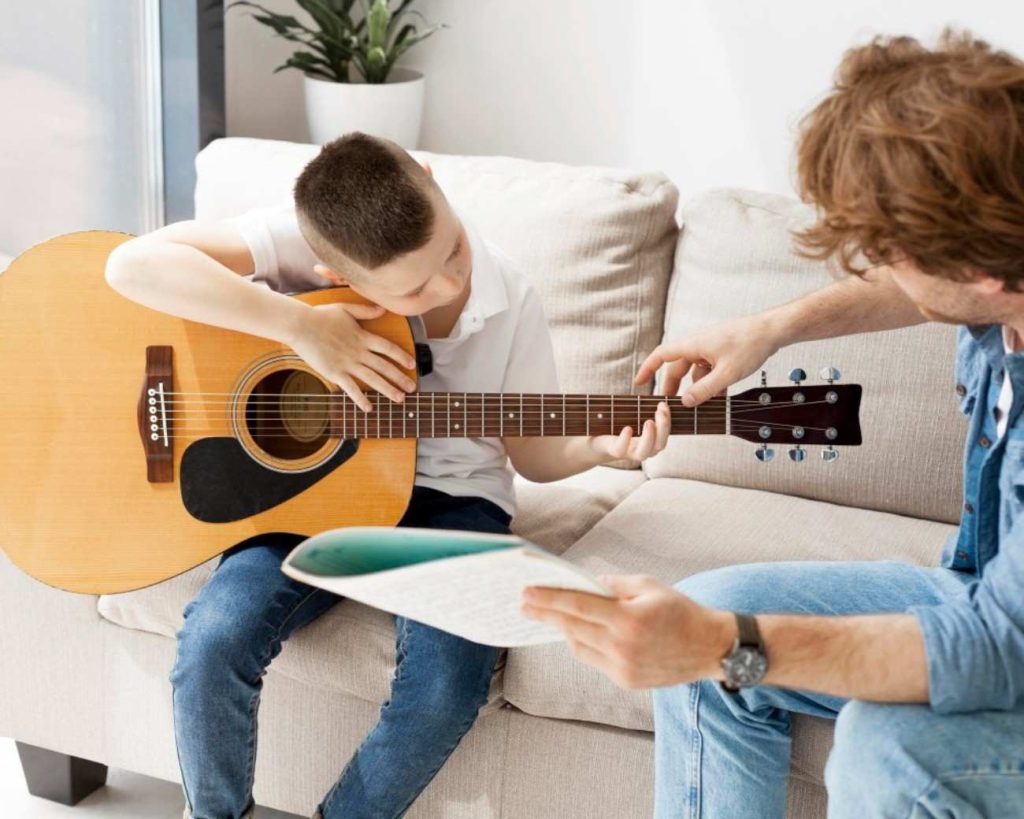
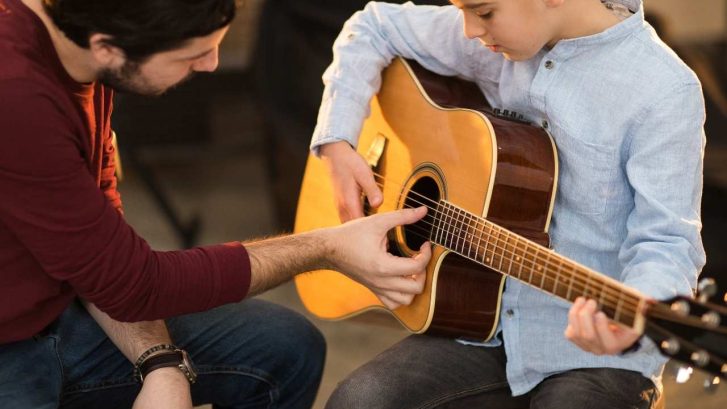
    Young boy holding guitar as he is taught how to hold and play it by male instructor

    Celebrating these milestones is key. Whether it’s mastering a tricky solo, playing in front of an audience for the first time, or simply committing to practice regularly for a month, recognition of these efforts is vital. You might celebrate with a special family dinner, a new set of guitar strings, or a new piece of music they’ve been wanting to learn. The act of celebration emphasizes that their hard work is appreciated and valued, reinforcing their motivation to continue.

    Adapting To Your Child’s Evolving Interests

    Children’s interests can change as they grow, and their musical tastes are likely to evolve. They might show interest in different music styles or even different instruments. Encouraging this exploration is important. If they express interest in jazz instead of classical music, for example, finding resources that help them explore these new genres can reinvigorate their passion for music.

    Sometimes, a child’s interest in guitar might wane in favor of another instrument. If this happens, supporting their desire to learn something new can contribute significantly to their overall musical education. Each instrument can provide a new perspective on music, enhancing their skills and knowledge.

    Conclusion

    Helping your child learn guitar is a journey that goes beyond just playing notes on a string. It’s about inspiring them to discover music as a source of joy and a means of expression. Stay involved, be patient, and above all, make sure the music stays fun. Remember, every little note counts towards building a lifelong love of music. Why not pick a day this week to sit down with your child and plan the next steps in their musical adventure together?

    music schools in dubai

    How To Choose Music Schools In Dubai

    Choosing the right music school in Dubai is a significant decision that can shape your or your child’s artistic future. This vibrant city is renowned for its diverse cultural landscape, which includes a thriving music education scene. Whether you’re a budding classical musician or an aspiring producer, the choice of school can profoundly influence your skills development, network, and career trajectory. In this guide, we delve into the key considerations to help you navigate the decision-making process with confidence.

    Understanding Music Education in Dubai

    Music education in Dubai is as diverse as the city itself, catering to a broad range of musical interests and career aspirations. The landscape of music schools in Dubai includes everything from small, focused institutions dedicated solely to music, to comprehensive academies that offer both music and dance programs. Additionally, some schools are integrated within larger educational institutions offering a broad array of extracurricular activities.

    Before diving into your options, it’s important to understand what each type of school offers. Dedicated music schools typically provide a rich, immersive experience in music education, with programs tailored to serious students seeking intensive training. On the other hand, music and dance schools in Dubai offer a more rounded approach, ideal for students interested in exploring multiple performing arts disciplines simultaneously. Those embedded within larger institutions might offer greater flexibility and resources but could have less specialized programs in music.

    Factors to Consider When Choosing a Music School

    Selecting the right music school involves more than just opting for the most renowned or conveniently located institution. Several critical factors should influence your decision, ensuring that the chosen school aligns with your educational and career goals.

    Curriculum and Programs Offered

    The curriculum is the backbone of any educational institution, and in music schools, it dictates the scope and depth of your learning experience. Prospective students should look for a curriculum that not only covers the basics of music theory and practice but also offers advanced courses in specific areas of interest. For instance, if you’re interested in contemporary music, seek out programs that offer courses in modern music styles, music production, and technology.

    The best music schools in Dubai will offer a blend of classical training and innovative courses, preparing students for a dynamic musical environment. Look for programs that provide a balanced approach, with both individual instrument training and ensemble participation, as well as opportunities for composing and arranging music.

    Faculty and Teaching Staff

    The quality of the faculty can significantly impact your learning experience. A school with experienced and highly qualified instructors, who are active musicians or respected figures in the music industry, can offer invaluable insights and mentorship. Investigate the faculty’s credentials and their engagement in the music scene, both locally and internationally. Learning from accomplished musicians who share real-world experiences can provide a deeper understanding and appreciation of the craft.

    Facilities and Resources

    The availability of high-quality facilities is crucial in music education. State-of-the-art facilities like soundproof practice rooms, recording studios, and concert halls not only enhance the learning experience but also prepare students for the professional environment. Additionally, access to a variety of musical instruments and the latest music technology can significantly enrich the educational process.

    Evaluating Music Schools in Dubai

    After considering the practicalities, it’s essential to evaluate the music schools on your list critically.

    Reputation and Reviews

    A school’s reputation can speak volumes about the quality of its programs and the success of its graduates. Researching reviews and feedback from current students and alumni can provide insight into the real-world experiences and satisfaction levels within the school community. Online forums, social media, and education websites often feature discussions that can reveal the strengths and potential weaknesses of each institution.

    Performance and Opportunities

    The opportunities a school provides can significantly enhance your educational experience. Look for schools that actively organize recitals, invite guest artists, and facilitate student participation in local and international music competitions. These experiences are invaluable for growing your skills and building a comprehensive portfolio.

    Community and Networking

    The music community you immerse yourself in can greatly influence your career opportunities. Schools with strong industry connections often facilitate networking events, master classes with music professionals, and internships at local music companies. Such environments can be pivotal in launching a successful music career by connecting you with mentors and industry insiders.

    Practical Considerations

    Selecting the right music school is not just about the quality of education you will receive. There are also practical matters to consider that will affect your daily life and overall experience.

    Location and Accessibility

    The location of the school is more important than it might initially seem. You’ll want to consider how easy it is to get to the school from your home or work. Is it accessible by Dubai’s public transportation, or will you need a car? The answers to these questions can significantly impact your daily routine and the convenience of attending classes, especially if you or your child are juggling multiple commitments.

    Additionally, the environment surrounding the school can play a role in your education. A location in a vibrant, culturally rich area may offer more opportunities for live performances and artistic inspiration. Conversely, a school situated in a quieter, more secluded area might provide the calm necessary for focused study. Each has its benefits depending on your personal preferences and lifestyle.

    Tuition and Financial Aid

    Cost is often one of the most significant factors in choosing a music school. Tuition for music schools in Dubai can vary widely based on the prestige of the institution, the type of program, and the facilities offered. It’s essential to get a clear picture of the tuition fees and any additional costs such as for materials, instruments, or performance trips.

    However, don’t let the sticker price deter you without first exploring financial aid opportunities. Many of the best music schools in Dubai offer scholarships, bursaries, or payment plans that can make the fees more manageable. Some schools also offer merit-based scholarships, which can be a great way to reduce costs if you or your child has a strong music background.

    best music schools in dubai

    How to Make the Final Decision

    With all this information in hand, you are well-equipped to make a well-informed decision. However, there are a few more steps you can take to ensure you choose the right school.

    Visiting Schools

    Nothing can replace the experience of actually visiting a school. This visit can provide insight into the atmosphere and dynamics of the place. Observe the interaction between students and teachers, check out the facilities, and get a feel for the overall environment. Are the practice rooms bustling with activity? Is the equipment well-maintained? These observations can tell you a lot about how the school is run and its priorities.

    Trial Lessons and Workshops

    Many schools offer trial lessons or free workshops for prospective students. These opportunities allow you to experience the teaching style first-hand and see how you connect with the faculty. They can also be a great way to assess the level of instruction and whether it matches your expectations and needs.

    Consulting with Current Students and Alumni

    Speaking with current students and alumni can give you invaluable insights that you cannot get from a brochure or website. They can provide honest feedback about their experiences, the challenges they faced, and what they like most about their school. Alumni success stories can also be a testament to the school’s efficacy and the opportunities it can provide post-graduation.

    Choosing the right music school in Dubai involves a blend of personal, practical, and professional considerations. From the quality of the curriculum and faculty to the school’s culture and networking opportunities, every aspect plays a crucial role in your music education journey. By visiting schools, attending trial sessions, and speaking with current students and alumni, you’ll gather the insights needed to make an informed decision.

    centre for musical arts dubai

    Centre for Musical Arts Dubai

    The importance of creative outlets for children cannot be overstated in today’s fast-paced world. From developing cognitive abilities to enhancing emotional well-being, engaging in the arts provides children with a well-rounded education that extends far beyond the confines of traditional academic subjects.

    Among the many forms of artistic expression, music stands out as a universal language that transcends cultural and linguistic barriers. As a result, centers for musical arts have become invaluable institutions, offering young minds the opportunity to explore and cultivate their musical talents. This blog post delves into the significance of such centers, the benefits they provide to children, and why they are essential for fostering a lifelong love for the arts.

    The Role of Music in Child Development

    Music is more than just a form of entertainment; it is a powerful tool for child development. Studies have shown that children who engage in musical activities from a young age demonstrate improved language skills, better memory retention, and enhanced spatial-temporal skills. Learning to play an instrument or sing in a choir also promotes discipline, patience, and perseverance—qualities that are essential for success in all areas of life.

    Moreover, music has a profound impact on a child’s emotional development. It serves as a medium for self-expression, allowing children to explore and communicate their feelings in a safe and supportive environment. Whether through the soothing melodies of a piano or the energetic beats of a drum, music enables children to connect with their emotions and develop a deeper understanding of themselves and others.

    Why Centers for Musical Arts Matter

    Centers for musical arts play a crucial role in providing children with access to high-quality music education. These institutions are dedicated to nurturing the musical abilities of young learners, offering a structured yet creative environment where they can thrive. Unlike private lessons or school-based music programs, centers for musical arts often offer a wide range of classes and programs tailored to different age groups, skill levels, and musical interests.

    One of the key advantages of enrolling a child in a center for musical arts is the opportunity for social interaction. Music is inherently collaborative, and participating in group classes, ensembles, or orchestras helps children develop teamwork and communication skills. They learn to listen to others, synchronize their efforts, and contribute to a collective goal—all while building lasting friendships with their peers.

    In addition to social benefits, centers for musical arts provide children with access to experienced instructors who are passionate about teaching. These educators are often accomplished musicians themselves, bringing a wealth of knowledge and expertise to their classes. Their guidance not only helps students develop technical skills but also fosters a deep appreciation for music as an art form. Whether it’s mastering the basics of an instrument or exploring advanced techniques, the personalized attention and encouragement from skilled instructors make a significant difference in a child’s musical journey.

    A Safe and Supportive Learning Environment

    One of the hallmarks of a center for musical arts is its commitment to creating a safe and supportive learning environment. These institutions understand that every child is unique, with their own strengths, challenges, and learning styles. As such, they offer a nurturing atmosphere where students are encouraged to take risks, make mistakes, and learn at their own pace.

    For many children, the fear of failure can be a significant barrier to learning. However, in a supportive environment, mistakes are viewed as valuable learning opportunities rather than setbacks. This approach not only builds confidence but also fosters a growth mindset—an essential trait for success in both music and life.

    Centers for musical arts often emphasize the importance of holistic education. This means that in addition to developing technical skills, students are encouraged to explore the broader aspects of music, such as composition, improvisation, and music theory. This well-rounded approach ensures that children not only become proficient musicians but also develop a deep understanding and appreciation of the art form.

    Fostering Creativity and Imagination

    One of the most significant benefits of attending a center for musical arts is the opportunity to foster creativity and imagination. Music, by its very nature, encourages children to think outside the box and explore new ideas. Whether it’s composing a piece of music, improvising a melody, or interpreting a song in their unique way, children are constantly challenged to use their creativity.

    This creative process is not only enjoyable but also immensely beneficial for cognitive development. It encourages critical thinking, problem-solving, and innovation—skills that are highly valued in today’s rapidly changing world. Moreover, the ability to think creatively and express oneself through music can have a positive impact on a child’s self-esteem and confidence.

    In addition to fostering creativity, centers for musical arts often provide opportunities for performance. Recitals, concerts, and other events allow children to showcase their talents and share their music with others. These experiences are invaluable, as they help students develop stage presence, overcome performance anxiety, and gain a sense of accomplishment.

    pianos music & art centre

    The Long-Term Benefits of Music Education

    The benefits of music education extend far beyond childhood. Research has shown that individuals who engage in music from a young age continue to reap the rewards throughout their lives. For instance, adults with a background in music are often more adept at managing stress, have better memory retention, and exhibit higher levels of creativity.

    Moreover, the discipline and perseverance required to master a musical instrument can translate into success in other areas of life. Whether it’s excelling in academics, pursuing a career, or maintaining healthy relationships, the skills and qualities developed through music education are invaluable.

    Additionally, music has the power to bring joy and fulfillment throughout one’s life. For many, playing an instrument or singing provides a lifelong source of relaxation, self-expression, and connection with others. Whether as a hobby, a profession, or a means of personal growth, music remains an integral part of many people’s lives.

    Conclusion: The Importance of Centers for Musical Arts

    In conclusion, centers for musical arts play a vital role in nurturing the musical talents and creative potential of children. These institutions offer a structured and supportive environment where young learners can explore their passion for music, develop essential life skills, and build a lifelong appreciation for the arts. By providing high-quality music education, experienced instructors, and opportunities for social interaction and performance, centers for musical arts help shape well-rounded individuals who are not only skilled musicians but also confident, creative, and emotionally resilient.

    For parents seeking to enrich their child’s education and provide them with the tools for personal and academic success, enrolling in a center for musical arts is an investment that pays dividends for a lifetime. Whether your child dreams of becoming a professional musician or simply enjoys making music as a hobby, the experiences and lessons gained at a center for musical arts will leave a lasting impact on their lives.

    music classes in dubai

    Music Classes in Dubai

    Dubai, a city known for its vibrant culture and cosmopolitan lifestyle, has seen a growing interest in music education over the past decade. As a hub of cultural exchange, Dubai offers a unique environment where individuals can explore a wide range of musical traditions from around the world. Whether you’re a beginner looking to discover a new hobby or an experienced musician aiming to hone your skills, the music classes in Dubai provide opportunities for people of all ages and backgrounds to engage with music in meaningful ways.

    Music education is more than just learning to play an instrument or sing a song. It’s about developing a deeper understanding of the art form, improving cognitive abilities, and fostering personal growth. In Dubai, music classes are not only about skill acquisition but also about cultivating creativity and discipline. The city’s diverse and multicultural population makes it an ideal place to learn and experience different music styles, offering a rich educational journey that goes beyond traditional learning.

    Why Choose Music Classes in Dubai?

    Choosing to enroll in music classes in Dubai comes with a variety of benefits, thanks to the city’s unique attributes. Dubai is home to a melting pot of cultures, each bringing its own musical heritage. This cultural diversity is reflected in the variety of music classes available, allowing students to explore different genres and traditions from around the globe. Whether you’re interested in Western classical music, traditional Arabic music, or contemporary genres like jazz and rock, you can find a class that caters to your interests.

    Another significant advantage of taking music classes in Dubai is the quality of instructors. Many music teachers in Dubai have international experience, having studied or performed in major music capitals around the world. This level of expertise ensures that students receive top-notch education, whether they are learning the basics or mastering advanced techniques. Moreover, the instructors often bring with them a wealth of knowledge about different teaching methodologies, allowing them to tailor their lessons to the individual needs of each student.

    Dubai’s music schools are also known for their state-of-the-art facilities. From fully equipped music studios to acoustically designed classrooms, these institutions provide an environment conducive to learning and creativity. Students have access to high-quality instruments and technology, which enhances the learning experience. Additionally, many schools in Dubai offer opportunities for students to participate in public performances, recitals, and competitions. These events not only help students build confidence but also give them a platform to showcase their talents to a broader audience.

    Types of Music Classes Available in Dubai

    Dubai’s music schools and academies offer a wide range of classes to suit different interests and skill levels. Whether you want to learn to play an instrument, improve your vocal skills, or delve into music theory and composition, there is something for everyone.

    Instrumental Music Classes are among the most popular options. These include classes for piano, guitar, violin, drums, and wind instruments like the flute and saxophone. Whether you’re drawn to the elegance of the piano or the energy of the drums, you can find classes that cater to both beginners and advanced players.

    Vocal Music Classes are equally diverse. Students can choose between classical vocal training, which includes Western and Eastern traditions, and contemporary singing classes that focus on genres like pop, rock, and jazz. For those interested in group dynamics, choir and ensemble singing classes are also available, offering a collaborative and socially engaging way to learn.

    For those with a more theoretical bent, Music Theory and Composition Classes provide the foundation needed to understand the structure and principles behind music. These classes cover everything from basic music theory to advanced composition techniques, making them ideal for aspiring composers and songwriters. Specialized courses in electronic music production and DJing are also available, reflecting Dubai’s dynamic music scene and its embrace of modern music trends.

    In addition to these, Dubai also offers Specialized Music Classes that cater to specific needs and interests. For example, music therapy classes use music as a tool for healing and emotional well-being, while classes designed for children focus on early childhood music education, helping young learners develop a love for music from a young age.

    Finding the Best Music Classes in Dubai

    Finding the right music class in Dubai can feel overwhelming, especially with so many options available. However, with a few simple steps, you can ensure that you choose the best music classes in Dubai that align with your goals and interests.

    Start by researching the different music schools and academies in the city. Look for institutions with a strong reputation and positive reviews from students. It’s also a good idea to check if the school is accredited or recognized by any international music education bodies. Accreditation can be a good indicator of quality, as it often means the school adheres to certain standards in teaching and facilities.

    Once you have a list of potential schools, consider attending a trial class. Many music schools in Dubai offer trial sessions that allow you to experience their teaching style, facilities, and environment firsthand. This is an excellent way to get a feel for whether a particular class or instructor is the right fit for you. During the trial class, pay attention to how the instructor interacts with students and whether the teaching methods resonate with you.

    Another crucial factor is location. Dubai is a large city, and traffic can be unpredictable, so it’s essential to choose a music school that is conveniently located, either near your home, workplace, or a place you frequent. This can make it easier to maintain a regular schedule, which is key to making progress in your music education.

    Cost is another important consideration. While music education is an investment, it’s essential to compare prices to ensure you’re getting good value for your money. Some schools may charge higher fees because they offer additional benefits like performance opportunities, personalized lessons, or access to high-quality instruments. Make sure to weigh these factors against the cost to determine what works best for your budget.

    Finally, take the time to evaluate the curriculum and teaching methods. Some schools follow a structured curriculum, which can be beneficial if you’re looking for a systematic approach to learning. Others may offer more flexible, student-centered teaching methods, which can be ideal if you prefer a more personalized learning experience. Understanding the curriculum can help you set realistic expectations and ensure that the class meets your learning objectives.

    Popular Music Schools and Academies in Dubai

    Dubai is home to several renowned music schools and academies, each offering unique programs and specialties. Some of the best music classes in Dubai are found in these institutions, known for their commitment to excellence in music education.

    One of the most well-known music schools in Dubai is Melodica Music and Dance Institute. With multiple locations across the city, Melodica offers a wide range of classes, from piano and guitar to vocal training and dance. Their instructors are highly qualified, with many having international experience. Melodica is particularly noted for its focus on both classical and contemporary music, making it a great choice for students looking to explore different genres.

    Centre for Musical Arts (CMA) is another top choice for music education in Dubai. Located in the heart of the city, CMA offers comprehensive programs for both children and adults. Their classes cover a broad spectrum of musical disciplines, including instrumental lessons, vocal training, and music theory. What sets CMA apart is their community-driven approach, offering numerous opportunities for students to perform and collaborate with others, which can be incredibly enriching for your musical journey.

    For those interested in more specialized training, SAE Institute Dubai offers courses in electronic music production and audio engineering. Known for its industry-focused curriculum, SAE is ideal for students looking to pursue a career in music production or sound design. The institute’s facilities are top-notch, equipped with professional-grade studios and cutting-edge technology, providing an immersive learning experience that prepares students for the demands of the music industry.

    Another noteworthy mention is The Dubai Music School, one of the oldest music institutions in the city. Established in 1979, the school has a long history of nurturing musical talent in Dubai. They offer a wide range of classes, including instrumental lessons, vocal training, and music theory. The Dubai Music School is particularly popular for its personalized approach, with instructors tailoring lessons to each student’s needs and goals.

    Each of these schools brings something unique to the table, so it’s worth exploring them to find the one that aligns best with your musical aspirations.

    Benefits of Enrolling in Music Classes in Dubai

    Enrolling in music classes in Dubai offers a multitude of benefits that go beyond just learning to play an instrument or sing. One of the most significant advantages is personal development. Music education has been shown to boost confidence, improve discipline, and enhance creativity. As you progress in your music classes, you’ll likely notice these qualities growing in other areas of your life as well.

    Academic advantages are another key benefit. Studies have consistently shown that music education can improve cognitive skills, such as memory, attention, and problem-solving abilities. These skills are transferable and can help you perform better in academic settings, whether you’re a student in school or someone pursuing further education.

    Music classes also offer social benefits. By participating in group lessons, ensembles, or choirs, you’ll have the opportunity to meet new people and build connections with others who share your passion for music. This sense of community can be incredibly rewarding, offering both friendship and a support network as you progress in your musical journey.

    For those considering a career in music, Dubai’s music classes can serve as a stepping stone to professional opportunities. Whether you aspire to be a performer, composer, or music producer, the skills and knowledge gained in these classes can help you achieve your goals. Many of Dubai’s music schools have connections with the broader music industry, providing students with valuable networking opportunities and exposure to potential career paths.

    Enrolling in music classes in Dubai can also be a way to engage with the city’s rich cultural landscape. Dubai’s diverse population means that students have the chance to learn and perform a wide range of musical styles, from traditional Arabic music to Western classical and contemporary genres. This exposure to different musical traditions can broaden your horizons and deepen your appreciation for music as an art form.

    A father holds sheet music for his daughter who is playing a keyboard

    Finding the Right Piano Teacher in Dubai for Personalized Learning

    If you’re looking to master the piano, finding a piano teacher in Dubai who aligns with your learning style is key to success. Dubai offers a wealth of highly skilled instructors, many with international training, ensuring students receive top-quality musical education. Whether you’re a beginner seeking foundational skills or an advanced player refining your technique, a professional piano teacher can tailor lessons to your pace and goals. With options ranging from classical to contemporary styles, Dubai’s diverse music scene provides the perfect environment to nurture your passion for the piano.

    What To Expect from Your First Music Class

    Starting your first music class can be an exciting experience, but it’s natural to have a few questions about what to expect. Knowing what lies ahead can help you feel more prepared and confident as you begin your musical journey.

    The enrollment process is typically straightforward. Once you’ve chosen a music school, you’ll likely go through a brief registration process, which may include selecting a class based on your skill level, choosing a preferred schedule, and discussing your musical goals with an instructor. Some schools also offer an assessment session to determine your current level, especially if you’re not a complete beginner.

    When you attend your first lesson, it’s important to come prepared. Depending on the class, you may need to bring your instrument, a notebook for taking notes, and any materials the school has recommended, such as sheet music or textbooks. Don’t worry if you don’t own an instrument yet; many schools provide rental options or have instruments available for use during class.

    A typical music class usually starts with a warm-up or introductory activity, especially in vocal or instrumental lessons. Your instructor will then guide you through the basics, whether it’s learning to hold the instrument correctly, understanding fundamental music theory, or starting with simple exercises. The first few lessons are often focused on building a solid foundation, so don’t be discouraged if you’re not playing full songs right away. This time is essential for developing the skills you’ll need as you progress.

    Tips For Success In Music Classes

    Succeeding in music classes requires more than just attending lessons; it involves dedication, practice, and a positive mindset. Here are a few tips to help you get the most out of your music education.

    First and foremost, regular practice is crucial. While it might be tempting to only practice when you have a class coming up, consistent daily practice—even if it’s just for a short time—will help you improve faster. Try to establish a routine that fits into your schedule and stick to it.

    Staying motivated can sometimes be a challenge, especially when you hit a plateau or face difficult concepts. To keep your enthusiasm alive, set small, achievable goals and celebrate your progress. Whether it’s mastering a new chord, hitting a high note, or composing a short melody, recognizing these milestones can keep you motivated.

    Engaging with the local music community can also enhance your learning experience. Dubai has a vibrant music scene with various events, performances, and meet-ups. Joining a music group or attending local gigs can inspire you and provide additional learning opportunities outside the classroom.

    Conclusion

    Music classes in Dubai offer a wealth of opportunities for personal growth, skill development, and cultural exploration. Whether you’re a beginner or an experienced musician, the city’s diverse and high-quality music education scene has something to offer everyone. So why not take the next step? Explore the best music classes in Dubai, find the right fit for you, and start your musical journey today. The world of music is waiting for you—just a click or a call away.

    1 2 3 4