
Childrens Guitar: Lessons & Songs to Nurture Your Child's Talent
Nurture your child's talent with children's guitar lessons. Learn easy children's songs on guitar and inspire their musical journey.

Spotting a musical spark in a child can be as thrilling as it is daunting. How do you nurture this budding interest without overwhelming them or, worse, extinguishing that initial curiosity? As parents or caregivers, understanding the gentle balance between guiding and allowing space for self-exploration is key in fostering a child’s musical abilities, especially with an instrument as soulful as the guitar.
Recognizing Musical Interest
Children often show early signs of musical interest that can be easy to spot if you know what to look for. It might be the foot tapping along to the beat of a song, a fascination with musicians on TV, or a joyful reaction when they hear music. These moments are your cues to introduce them to the world of musical instruments. The guitar, with its tactile strings and harmonious sounds, often captures the imagination of young ones. It’s not just about noticing these signs but also about reacting positively to them. Show excitement in their interest, and if they point out a guitar in a store or on television, talk to them about it. Share stories of musicians or play songs that feature distinctive guitar solos to gauge and nurture their interest.
Encouraging Initial Exploration
Once you see that your child is intrigued by guitars, the next step isn’t to immediately sign them up for lessons but to let them explore the instrument in a no-pressure environment. You might start with a toy guitar or a ukulele, which is smaller and easier for tiny hands to manage. The goal here is to let them have fun. They can strum aimlessly, enjoy the vibrations of the strings, or simply hold and get accustomed to the feel of the instrument. This phase is about building a comfortable and joyful association with the guitar, which is crucial before any formal instruction begins.
Choosing The Right Guitar
Picking the right guitar is critical. For children, a guitar that is too large or has strings that are too tough to press down can quickly lead to frustration. Guitars come in various sizes, and the quarter, half, and three-quarter sizes are specially designed for younger students. Nylon strings are easier on the fingers than steel strings, making them a better choice for beginners. When selecting a guitar, involve your child in the decision. They might be drawn to a certain color or style, and incorporating their preference can make them even more enthusiastic about playing. It’s also useful to seek advice from a music store where staff can help you choose an instrument that fits your child’s size and age.
Creating A Supportive Learning Environment
The environment in which a child practices is almost as important as the instrument itself. Designate a specific area in your home for music practice. This doesn’t need to be a soundproof studio; a quiet corner in a living room or a bedroom can work just as well. Make sure this space is inviting and clutter-free, with everything your child might need within reach. This includes their guitar, a music stand, a comfortable chair (of the right height), and perhaps a small amplifier if they are using an electric guitar. It’s essential that this space feels special to them, a place where they’re happy to spend time.
Additionally, balance structured practice time with periods of free play. Especially in the early days, let them pick up the guitar and noodle around without any expectations. You might also play music in the background to inspire them, choosing songs with prominent guitar parts. Encouraging them to play along as they feel comfortable can bridge the structured and free play elements effectively.
Finding The Right Instruction
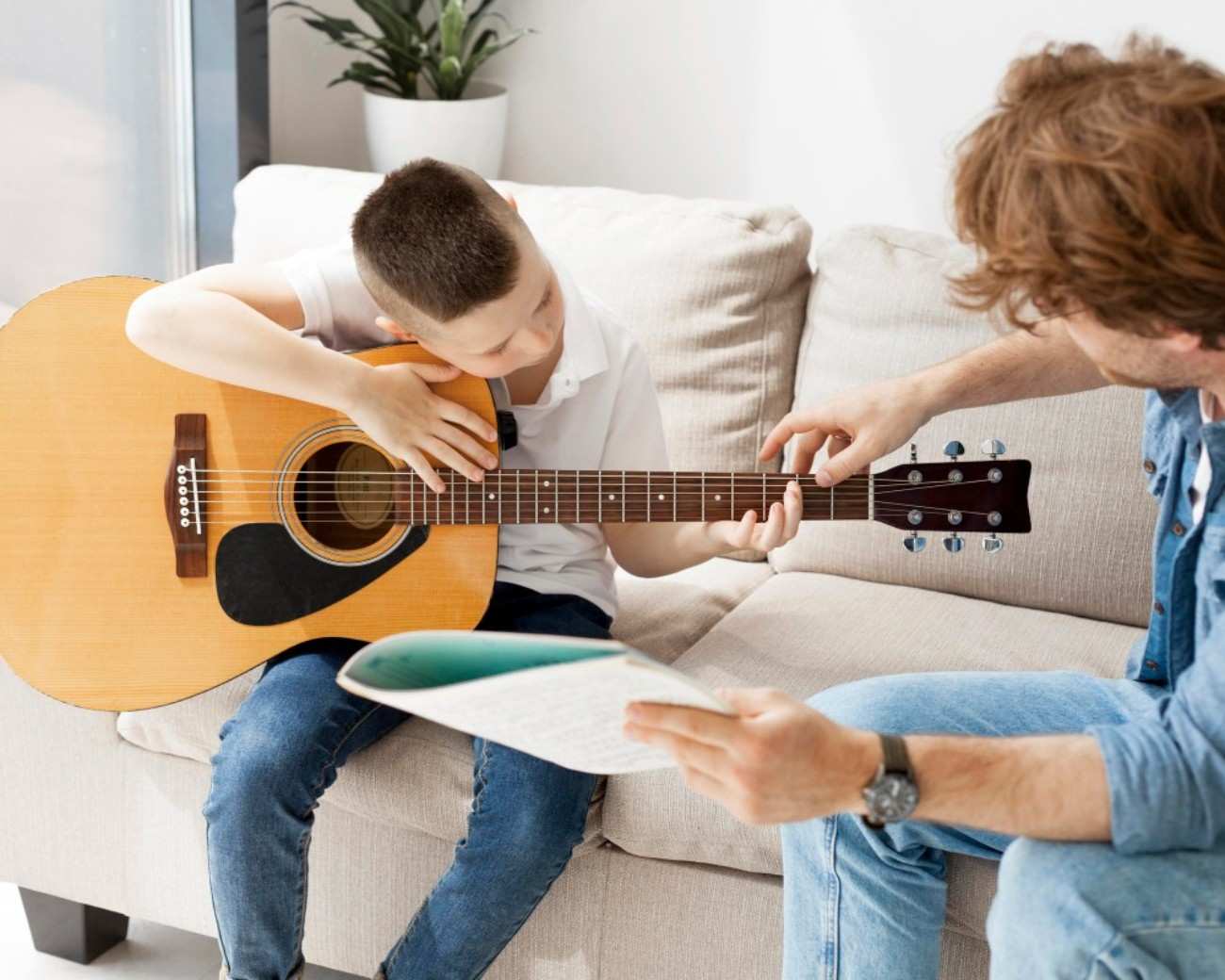
Choosing the right type of instruction for your child can profoundly impact their motivation and progress. While some children thrive under self-directed learning from online tutorials or books, most benefit significantly from having a teacher. A good guitar instructor can provide not only technical guidance but also motivational support and feedback that is crucial in the early stages.
When searching for a teacher, consider your child’s personality and learning style. Does your child respond better to a gentle, encouraging approach, or do they need a more structured and disciplined style to keep them engaged? It’s also important to find a teacher who has experience with children and understands how to make lessons enjoyable and appropriately paced. You can check local music schools, ask for recommendations from other parents, or even attend a few local music events where teachers often perform and interact with the community.
Once you find a potential teacher, don’t hesitate to ask for a trial lesson to see how they interact with your child. This can be a great way to gauge the chemistry between the teacher and your child before making a long-term commitment.
Practical Tips for Daily Practice
Consistent practice is essential for mastering any musical instrument, and the guitar is no exception. However, the challenge with children is to keep the practice sessions appealing and avoid them becoming a tedious chore. Here are some practical tips to help your child get the most out of their practice time:
1. Set A Regular Schedule:
Having a regular schedule helps instill a habit. Try to incorporate at least 15-30 minutes of practice a day, depending on your child’s age and concentration span. Ensure this happens at a time when your child is usually alert and happy, not when they are tired or hungry.
2. Break it Down:
Long practice sessions can be daunting for children. Instead, break the practice time into smaller, manageable segments. For instance, spend a few minutes on warm-up exercises, then switch to learning new chords, followed by song practice.
3. Use Technology:
There are numerous apps and online resources that make learning music theory and practicing fun. These can complement traditional learning by turning exercises into games and allowing children to learn at their own pace.
4. Play Along Tracks:
Playing along with music tracks can make practice more exciting. This helps children understand how the guitar fits within the context of a band or an ensemble and keeps them engaged.
Encouraging your child to stick with a routine while keeping practice sessions light and fun can significantly improve their skill over time without burning them out.
Encouraging Persistence and Patience
Learning to play an instrument is a journey filled with highs and lows. Children, in particular, can feel frustrated when they don’t see immediate results. It’s important to teach them that persistence and patience are part of learning an instrument. Share stories of musicians who struggled initially but succeeded through perseverance. Remind them that every musician, no matter how skilled now, started as a beginner and had to overcome challenges.
Celebrate small victories together. Did your child master a new chord or play through a song without mistakes? These are significant achievements worth celebrating. Recognition of these small successes helps build confidence and reinforces the value of persistence.
Engaging with the Music Community
Engagement with a broader community of musicians can be incredibly motivating for children learning the guitar. Look for local or online music communities that welcome young learners. Many communities and schools organize “jam sessions” where learners can come together to play music in a non-judgmental setting. These sessions are invaluable for building confidence and social skills.
Additionally, attending live music performances can also be inspiring. Watching other musicians, especially those who are at different stages of their learning journey, can provide both motivation and a sense of what is possible to achieve with dedication.
Tracking Progress and Celebrating Milestones
Keeping track of progress is more than just noting what songs have been learned. It involves observing the improvement in skills, the complexity of the pieces they can handle, and their confidence in playing. Create a simple log book or digital document where you and your child can note these milestones. This log can be as straightforward as a list of new songs learned, new chords mastered, or performances they felt particularly proud of.
Celebrating these milestones is key. Whether it’s mastering a tricky solo, playing in front of an audience for the first time, or simply committing to practice regularly for a month, recognition of these efforts is vital. You might celebrate with a special family dinner, a new set of guitar strings, or a new piece of music they’ve been wanting to learn. The act of celebration emphasizes that their hard work is appreciated and valued, reinforcing their motivation to continue.
Adapting To Your Child’s Evolving Interests
Children’s interests can change as they grow, and their musical tastes are likely to evolve. They might show interest in different music styles or even different instruments. Encouraging this exploration is important. If they express interest in jazz instead of classical music, for example, finding resources that help them explore these new genres can reinvigorate their passion for music.
Sometimes, a child’s interest in guitar might wane in favor of another instrument. If this happens, supporting their desire to learn something new can contribute significantly to their overall musical education. Each instrument can provide a new perspective on music, enhancing their skills and knowledge.
Conclusion
Helping your child learn guitar is a journey that goes beyond just playing notes on a string. It’s about inspiring them to discover music as a source of joy and a means of expression. Stay involved, be patient, and above all, make sure the music stays fun. Remember, every little note counts towards building a lifelong love of music. Why not pick a day this week to sit down with your child and plan the next steps in their musical adventure together?